

Don Johnson (@DonMiami3), Chief Economist
Good Friday morning MacroEdge Readers,
We don’t usually publish Macro Notes in the morning but I’ve been up since about 4:50 so it seems like a suitable time to, especially with the ‘festivities’ happening today. The SpaceX IPO will debut in about 20 minutes and is slated to open about 20% higher than the $135 price. Many holders are locked up for months in SPVs, and retail faces the same fate, and I expect employees and insiders that have the liquidity option to get very busy as the tape gets fired up.
Six will also provide a portfolio strategy update, and I will briefly cover the latest on the war & oil market… welcome to the ‘casino’, and have a fantastic weekend.
Not yet a MacroEdge Ozone subscriber? Upgrade your data & portfolio strategy inputs below:
SpaceX IPO - Sign of the Times
SpaceX contracts listed on ‘Hyperliquid’ -> trading about 20% higher than the IPO price, but still significantly off of the highest levels.
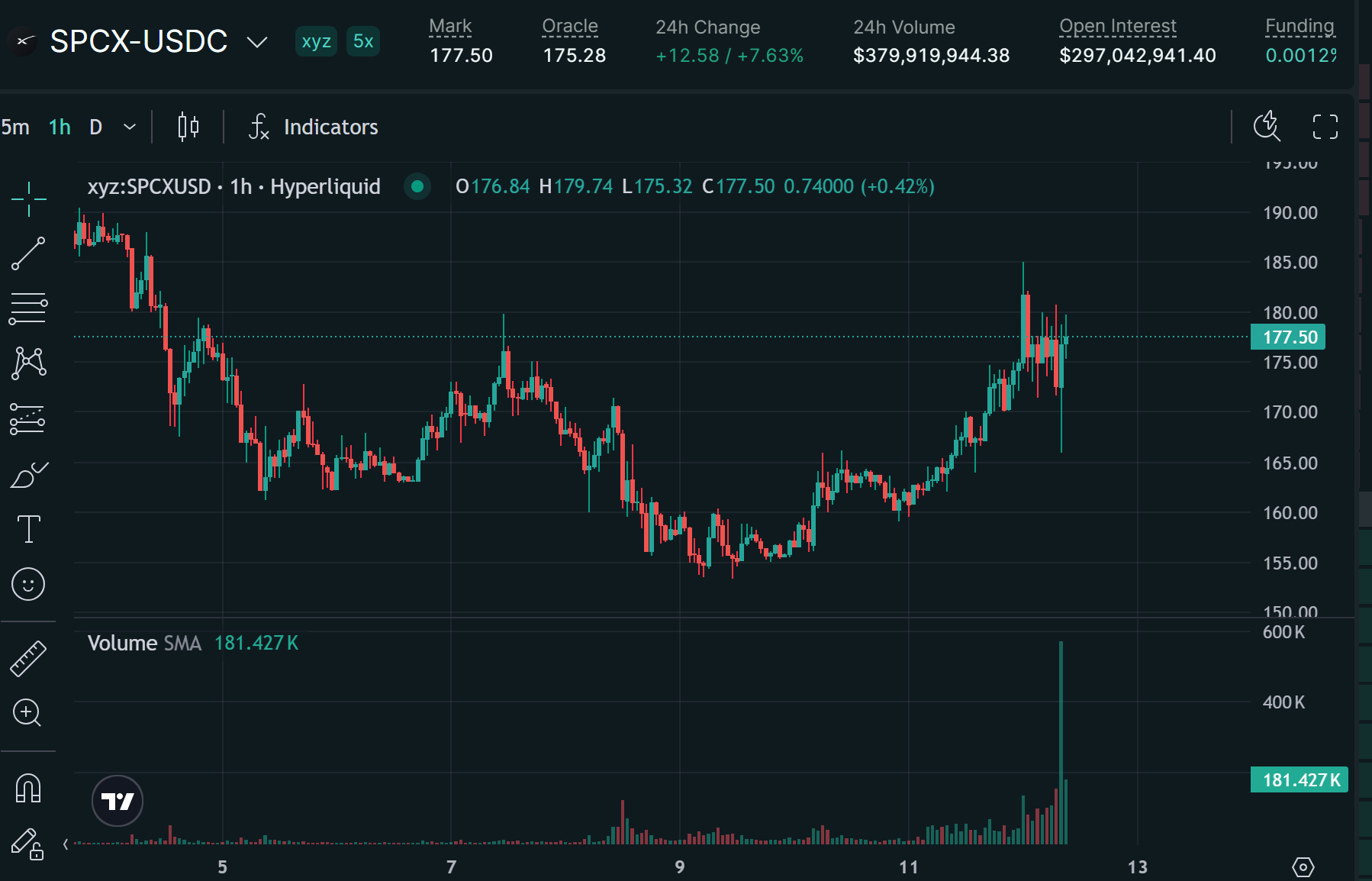
Given the volume and volatility of this event, I expect we can start to draw our real conclusions and determinations from it come mid-July. Elon runs a tight shop as an innovator, and his investor base is a religion that I refuse to fight, even though there are plenty of warning signs, and this IPO acts as a signpost, in my opinion, for US markets.
The key facts:
Valuation and Capital Raise: SpaceX is launching its IPO on the Nasdaq under the ticker SPCX, targeting a valuation between $1.77 trillion and $1.78 trillion. The company aims to raise $75 billion by offering 555.6 million shares at a fixed price of $135, making it the largest IPO in stock market history by total dollar volume.
Pricing and Lock-Up Structure: The company bypassed the traditional investment banking bookbuilding process by offering shares at a strictly fixed $135 price rather than a preliminary range. The offering also utilizes a multi-stage insider lock-up schedule tied to upcoming quarterly earnings reports, rather than a single 180-day restriction.
Financials and Investor Demand: For the fiscal year 2025, SpaceX reported a net loss of $4.9 billion on $18.7 billion in revenue. Despite the net loss, institutional demand for the shares reached approximately $250 billion, leaving the offering roughly 3.5 to 4 times oversubscribed ahead of final pricing.
Index Inclusion Rules: Nasdaq adjusted its fast-track rules to allow top-40 mega-cap companies to bypass the standard seasoning period, qualifying SpaceX for Nasdaq-100 inclusion within 15 trading days. The S&P 500 maintained its existing rules regarding profitability and seasoning, making SpaceX temporarily ineligible for that index.
Market Catalyst Effect: The debut has initiated a broader technology listing cycle in the United States. Following the SpaceX filing, companies including OpenAI and Anthropic filed confidential IPO paperwork, shifting market issuance from semiconductor infrastructure toward software and aerospace platforms.
The scale of the current IPO pipeline has led analysts to compare market conditions to previous periods of high valuation and high concentration.
1. 1987 United States Comparison
Current equity markets reflect a high concentration of capital in mega-cap technology firms, similar to the market structure observed prior to October 1987. SpaceX is entering the public market at approximately 92 to 95 times trailing sales. The accelerated index inclusion of a company this size forces passive index funds and ETFs to rebalance their portfolios rapidly to buy shares, creating structural liquidity pressures that mirror the automated trading risks seen in the late 1980s.
2. 1989 Japan Comparison
The valuation models for SpaceX incorporate long-term assumptions regarding orbital space data centers and interplanetary logistics. This reliance on future infrastructure growth parallels the 1989 Japanese asset bubble, where asset prices were driven by projections of multi-decade technological and real estate expansion. Independent analysts have noted a divergence between these long-range projections and current cash flows, raising concerns that valuation metrics are compressed beyond historical norms.
Mark Spitznagel, who has provided useful signposts on the way up, has been very, very quiet recently, during this ‘blowoff’ period. I still continue to expect that defense at all costs will be the norm for US equities - though it’s going to get more difficult to do that as AI eats into companies’ cash piles, and it becomes a risk ‘whack-a-mole’.
Latest Oil Market Update - Iran Deal or No Deal
Oil equities have been resilient in the face of a relentless beatdown of CL through various ‘deals’ and headlines. An early morning fake deal announcement sent spot back into the mid-80s, though WTI has now recovered above $87/bbl:
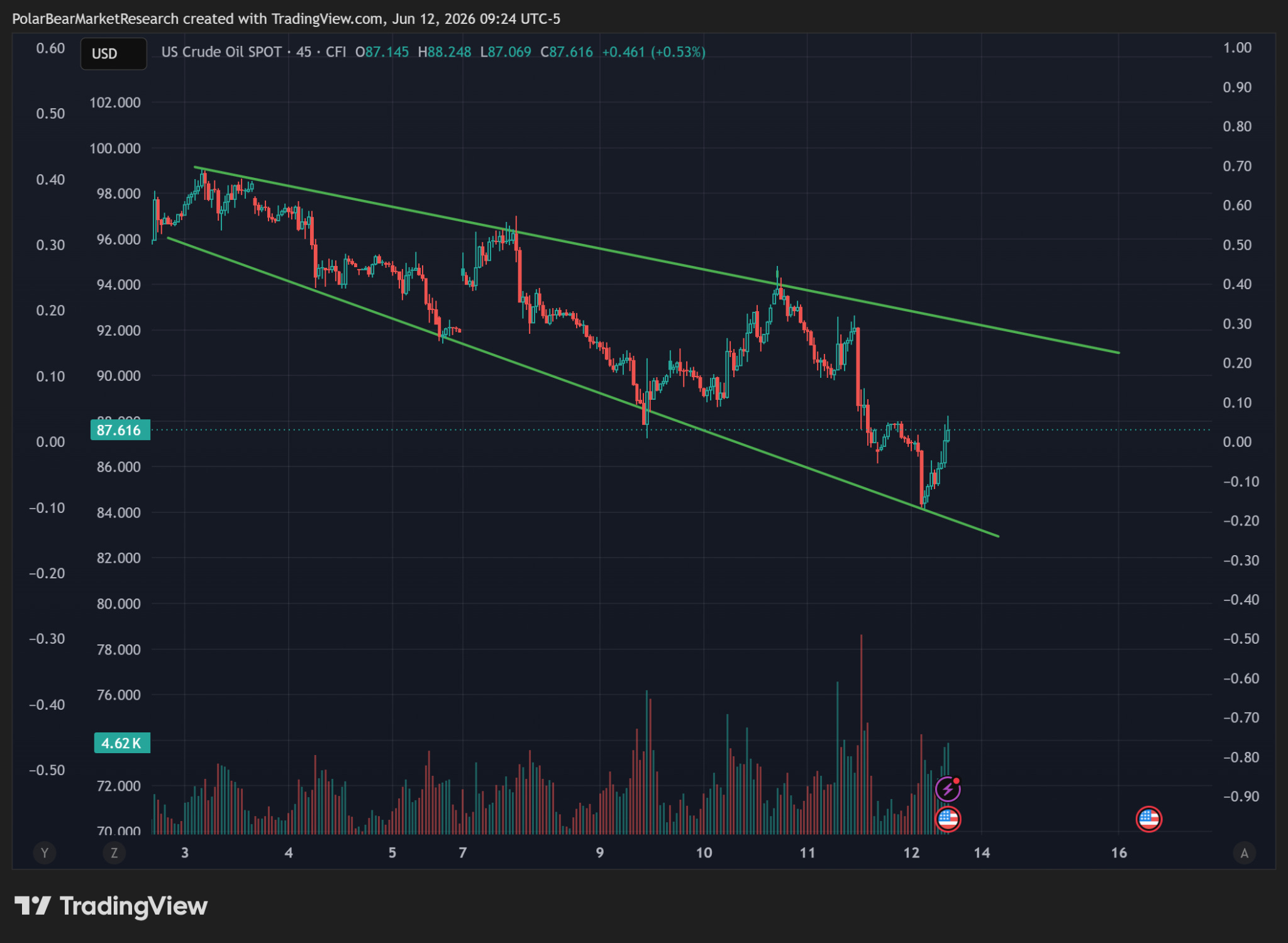
I do not expect that Trump will concede a lot of the terms outlined in the Iranian version of the ‘deal’ - if they are accurate - and giving up the war stance means the market would actually have to focus on the reality of things like AI starting to atrophy margins, etc. etc.
XLE - still consolidating in the war range:
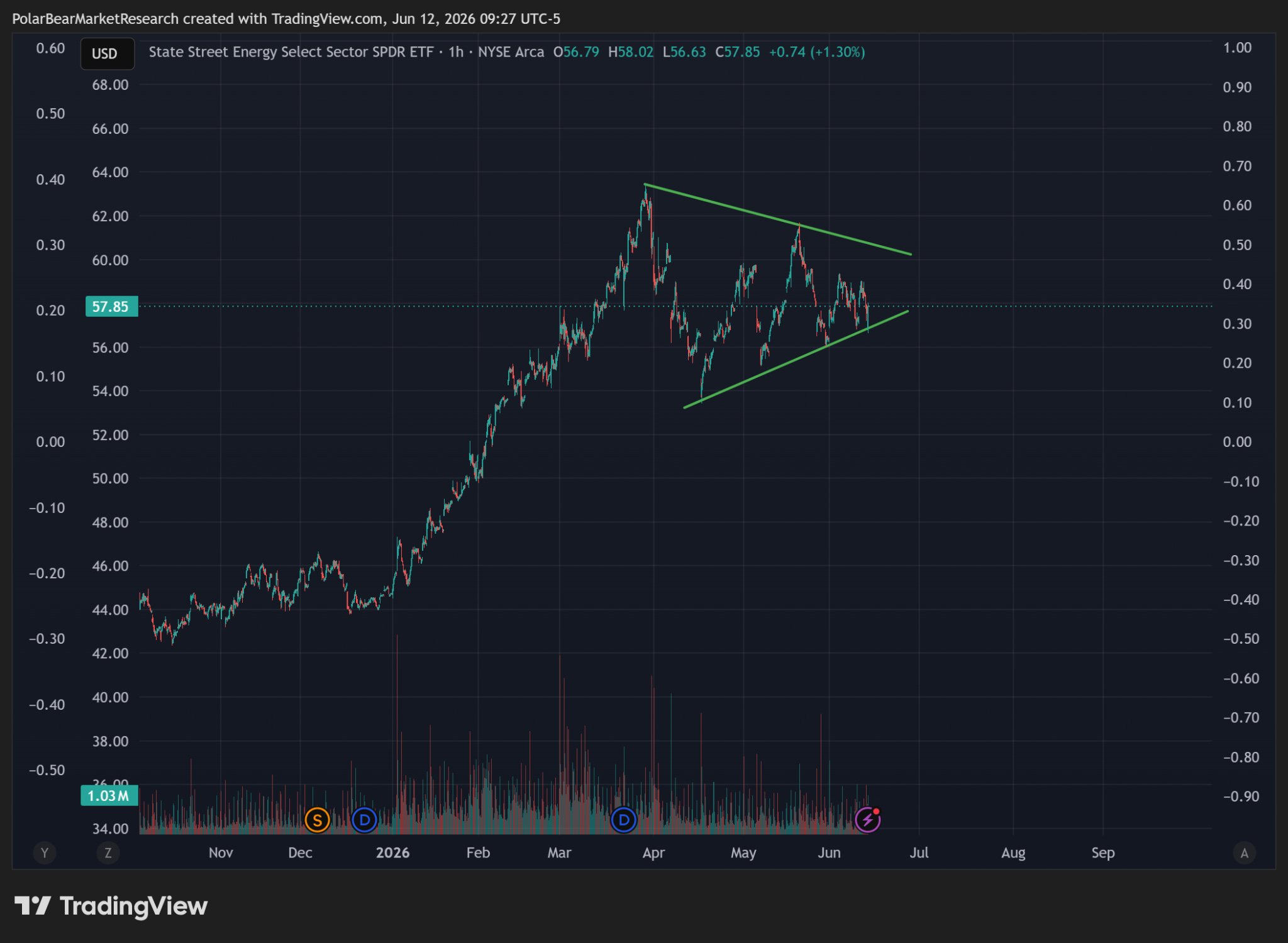
Tomorrow, I will provide a brief update on the oil market - including with inventory levels - and I would actually prefer that they get to a resolution at this point so we can get to price discovery. I expect that the 40mb SPR release announced this week will mark one of the last, though don’t underestimate their ability to run Cushing below operating minimums.
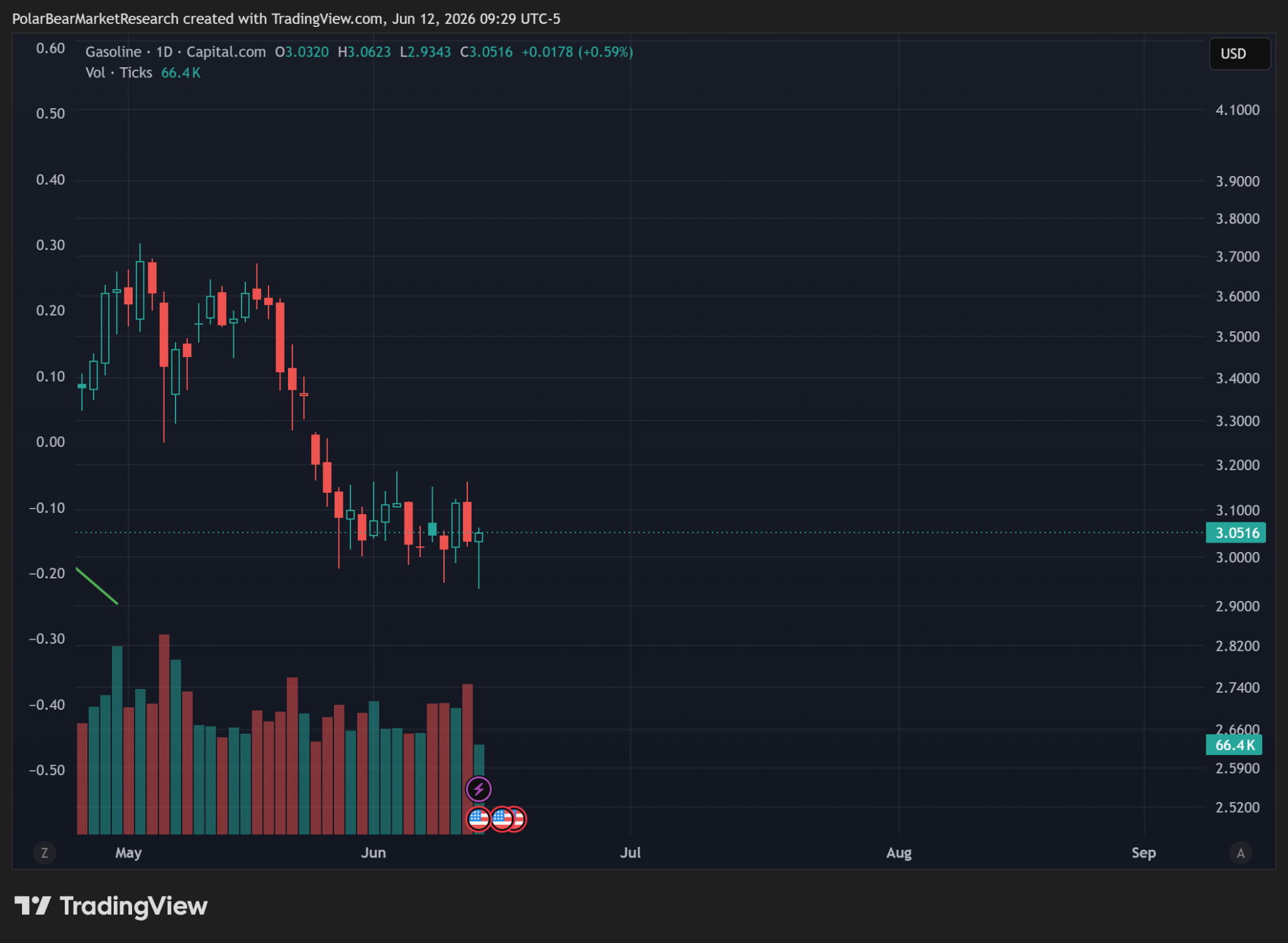
Gasoline has not fallen to the degree crude has in recent days, and I believe it is working on another base:
The Global Bubble Index - Warning Signals Flash, No Confirmation
Our Global Bubble Index was designed to track broad cycles from a global perspective. The KOSPI, Nikkei, IBEX, and TSX give us a solid view of where things are likely to go in the United States. Right now - we’re seeing momentum stall out in the index, but a new direction has not yet ‘snapped’ into place… That moment could be close.
Continued below: Big Tech is Selling Stock…? Should we?
