

(@DonMiami3), Chief Economist)
Good Saturday afternoon MacroEdge Readers & Community,
It’s a beautiful & cold day in the mountains of Northern Utah. This evening we have a ‘red carpet’ event hosted by a client, which should be a great time. There are a lot of interesting people in town with the festival going on, as it’s the last year of being hosted in Park City. I am no film fan of films of this nature (lots of bizarre films), but the people & being here with our team are fantastic.
Last week saw some whipsaw action in equity and bond markets. With the Greenland event, both sides got scared about their long ends rising and eventually fixed a brief impasse, and tariff threats were tempered. Those tariff threats have now shifted to a much smaller Canada, and for the time being, the Administration seems fixated back on Cuba and other foreign policy focus areas. For Trump’s tariffs currently in place, prediction markets are pricing low odds that they are upheld in the Supreme Court, which delayed its ruling last week:

On the foreign policy front, a revolving door foreign policy cannot be overlooked given the ‘armada’ currently heading to the Middle East.
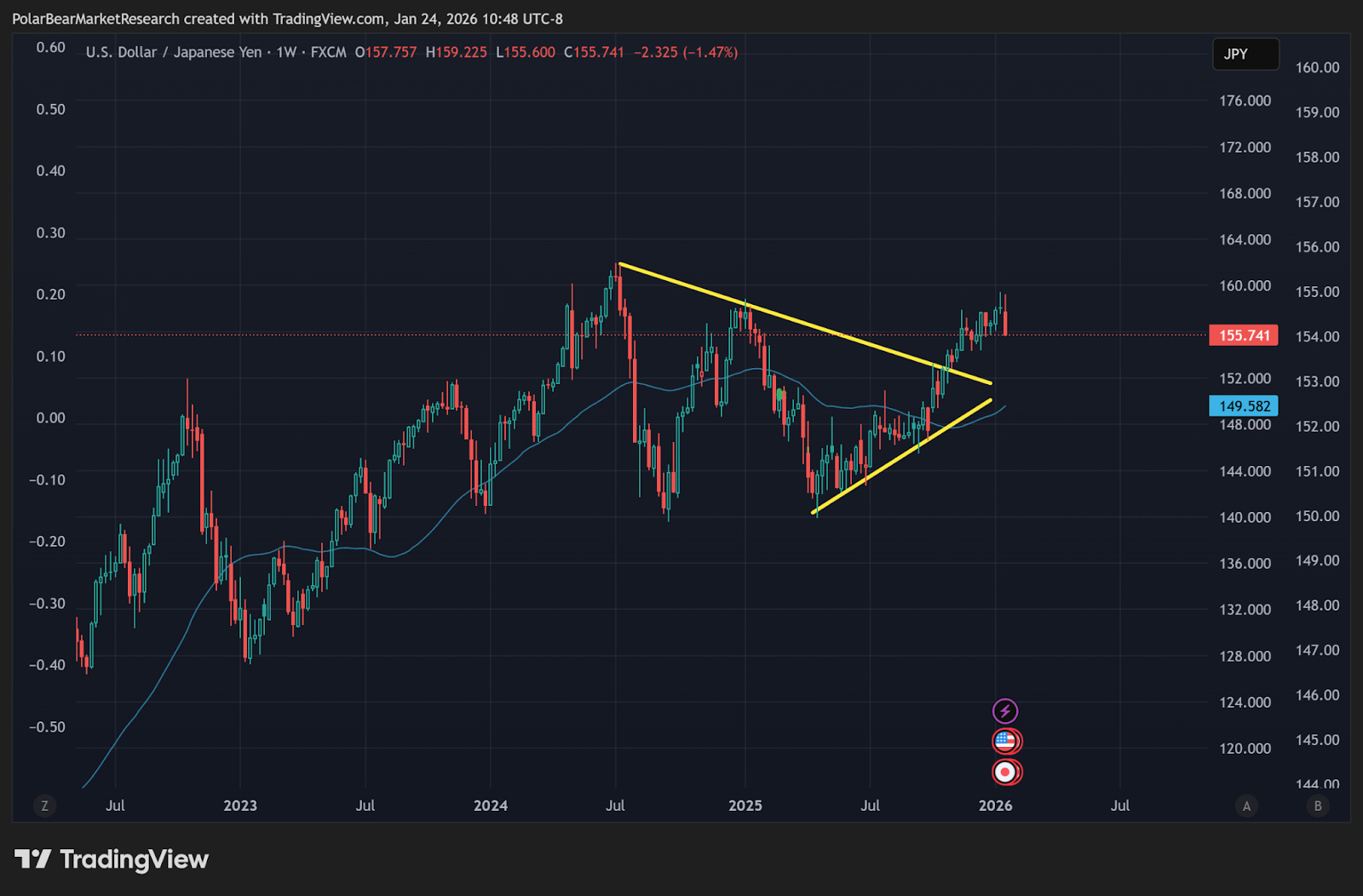
We also saw the New York Federal Reserve conduct rate checks, coordinated with the Bank of Japan, to halt the steep decline in the Yen. As the BoJ held rates steady as expected, global central banks are now playing an active role in attempting to control both currency pairs and bond markets as they enter precarious territories. In energy markets, natural gas hit its highest level since 2022, something we’ll talk more about tomorrow evening in the Weekly Macro Note as we continue to monitor the cold weather situation.
There’s so much to cover and discuss, and we’re going to make a dent in it today in this Saturday Macro Note.
Expanding our Focus on Portfolio Strategy
This year, we are placing a much higher emphasis on the portfolio strategy and equity research components under the Ozone umbrella. By leveraging our full data suite, we are transforming insights into real-time strategy and building a runway for success with initiatives like Trident and our Economic Advisory engagements. With our innovation-focused approach, things will be constantly shifting and improving for you all.
To experience MacroEdge Ozone for 7 days through Substack, you can subscribe to below:
Dollar at a Precarious Level
The dollar index (DXY) got crushed on Friday, selling off nearly a percent.
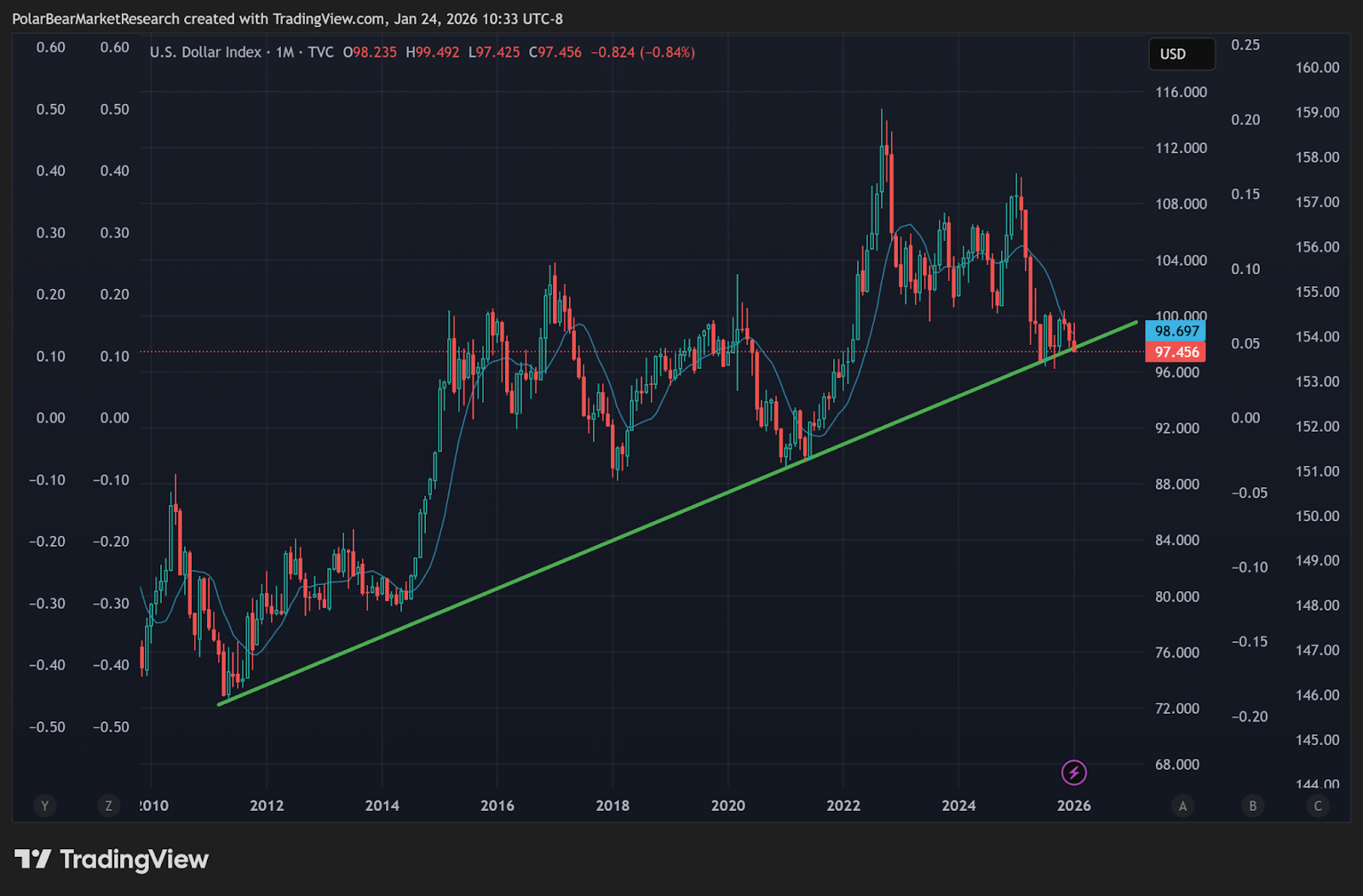
A breakdown here could send the dollar to much lower levels - around the 90-92 level on the index.
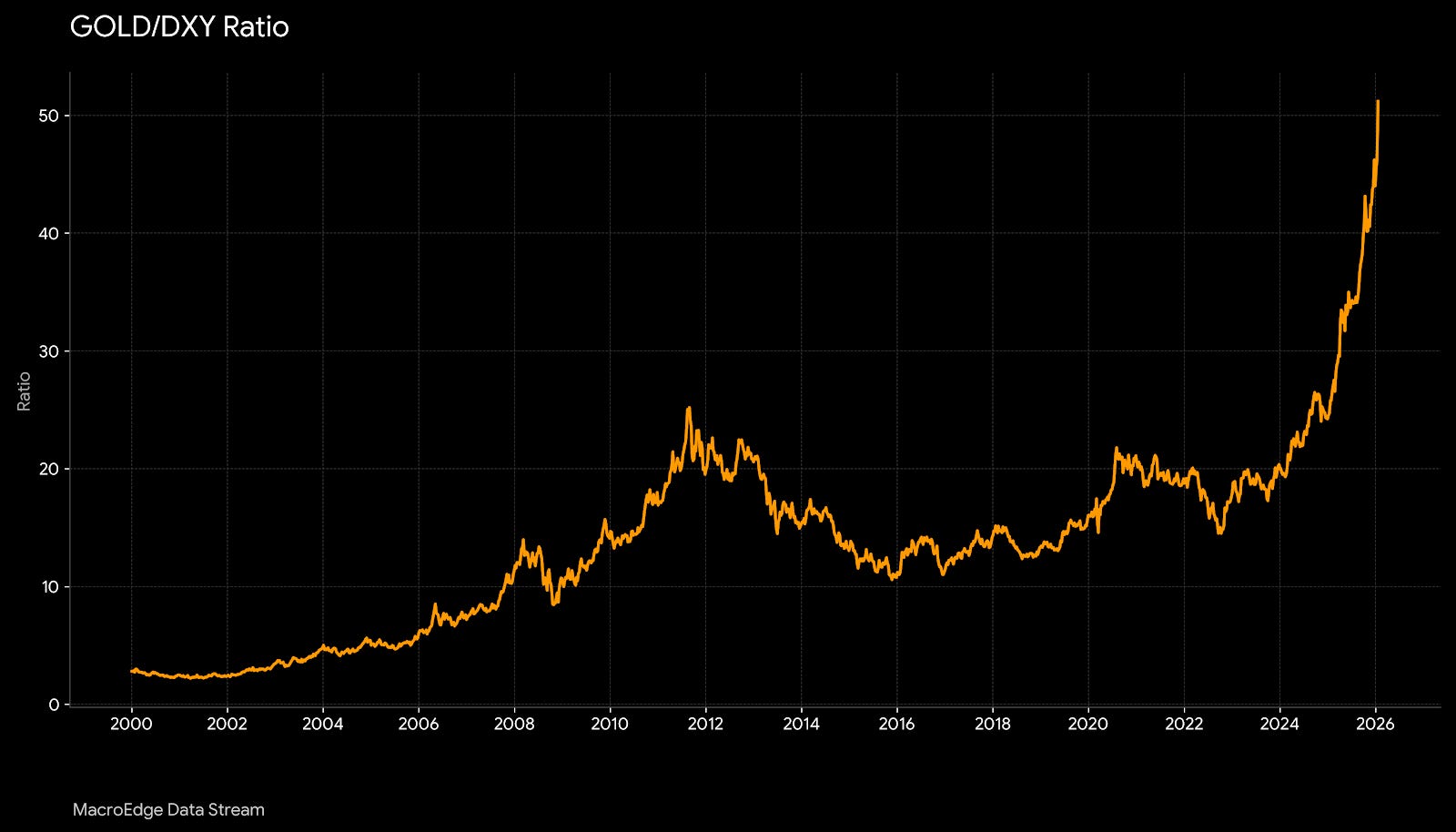
Gold is nearing a record at almost $5,000/oz, and priced in DXY index terms, continues its parabolic move:
(Continued below: Tourism & Airline Trends, Watching the Carry Trade, FOMC, Weekly Macro Note Preview, Credit Union Failure)
Get all of our research, reports, data, portfolio strategy, and more - now through Substack:
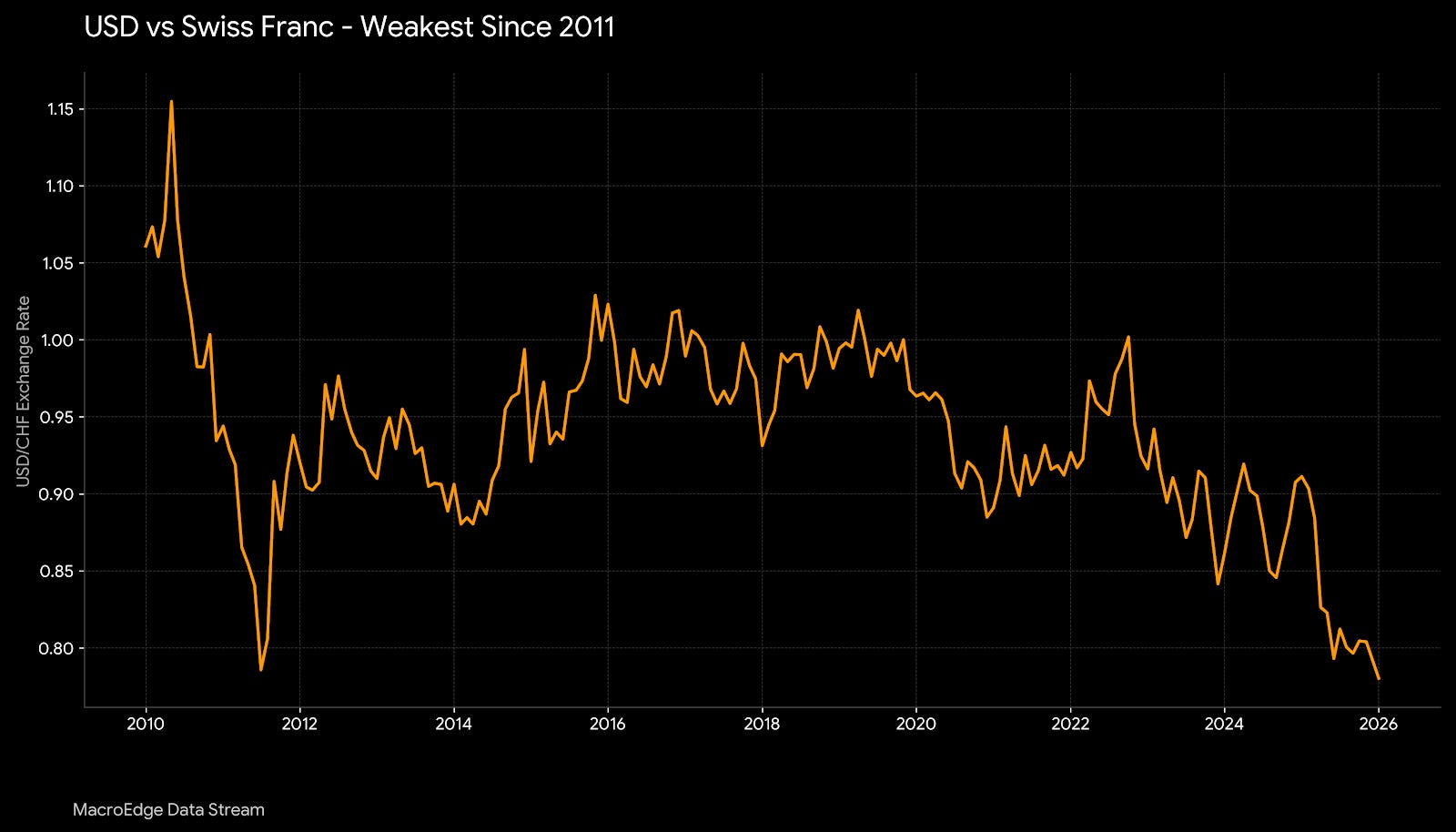
Versus the Swiss Franc, the dollar index declined to its weakest point since 2011:
Tourism & Airline Trends
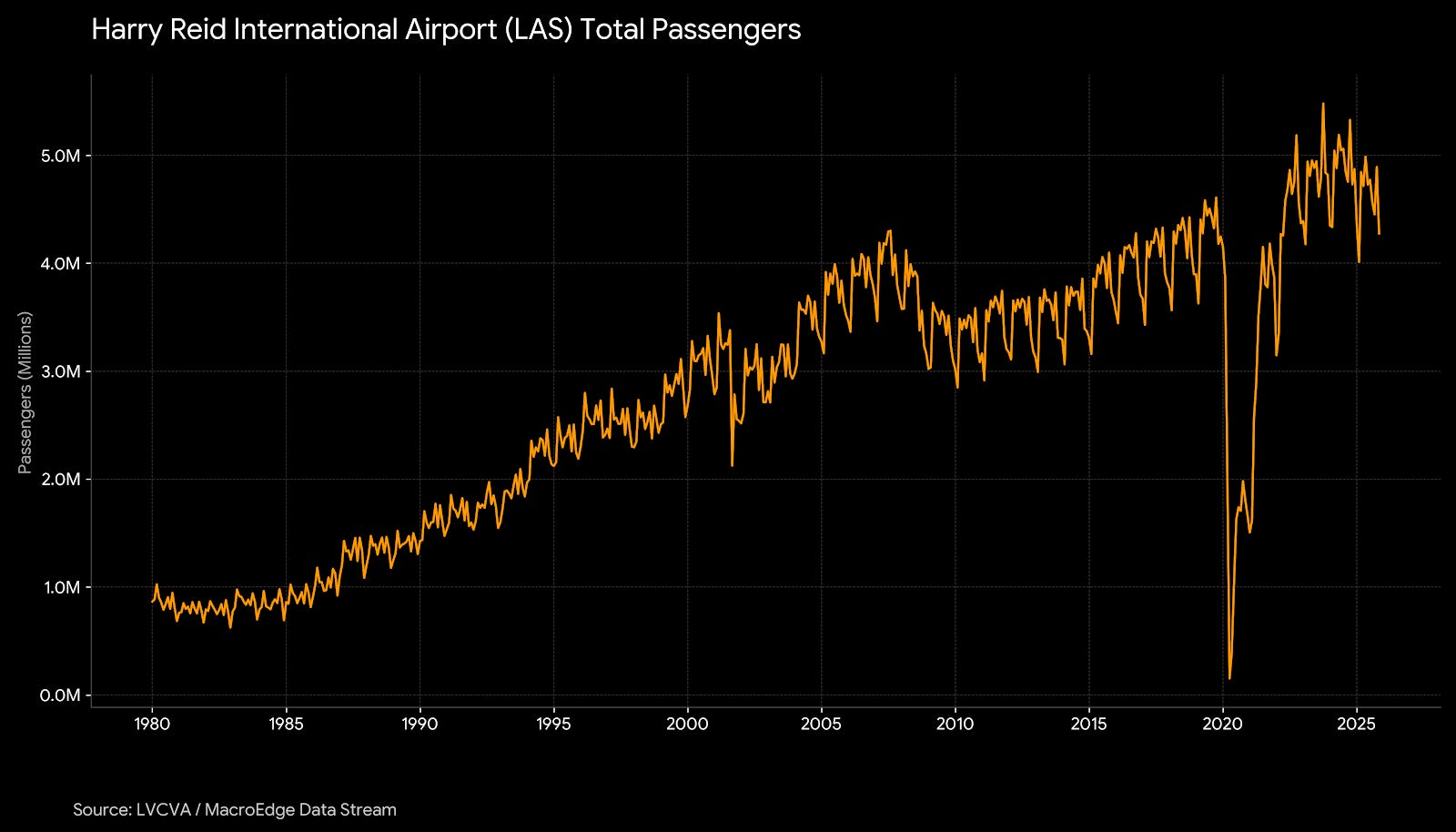
In looking at the latest tourism and air travel data, there’s a notable softening underway across the board - especially in leisure travel for foreigners coming into the United States. While a weaker dollar may have a net positive effect for tourists coming into the country, there aren’t that many coming, especially from Canada. In Las Vegas
Harry Reid International Airport is seeing a notable deceleration in air travelers - some of which is due to Spirit Airlines pulling out in a big way, but also due to the major decline in international arrivals. The city has priced itself like a luxury destination, when in reality, that was only ever a limited % of the Vegas consumer base (ie: the Wynn/Cosmo) properties, and companies are struggling due to their excessive cost increases across the board to tourists and conferences alike.
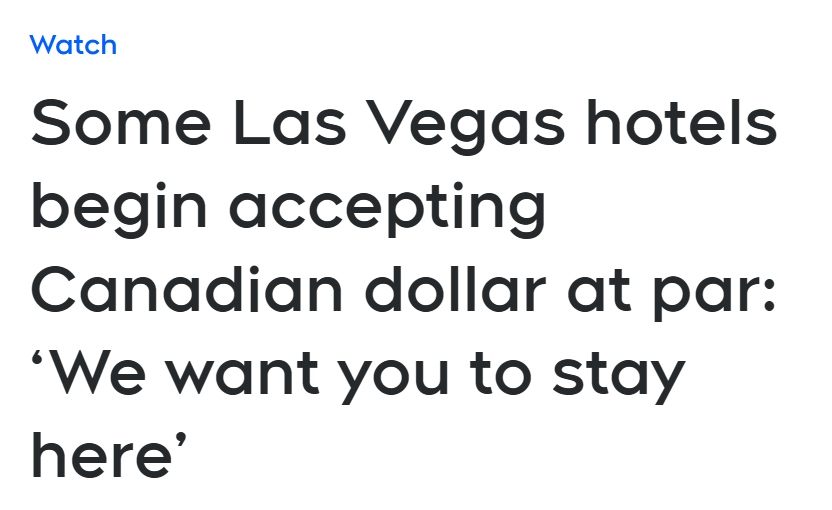
In Las Vegas, some hotels are now accepting the CAD at par, which is the first time I’ve heard of this happening in Sin City… clearly a sign of softening demand.
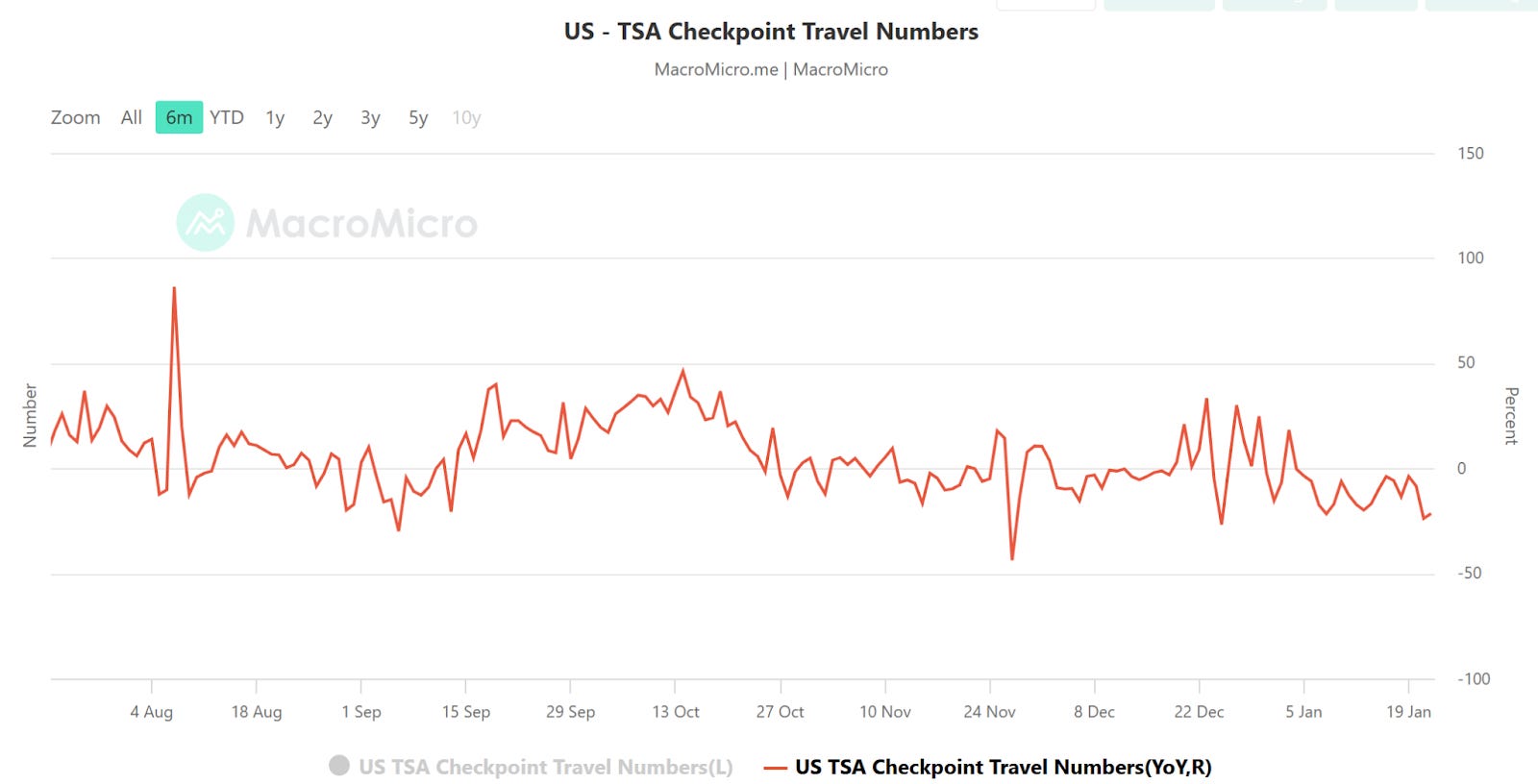
In the TSA travel data to start the year, we’ve run almost the entire month in the negatives on a Y/Y basis:
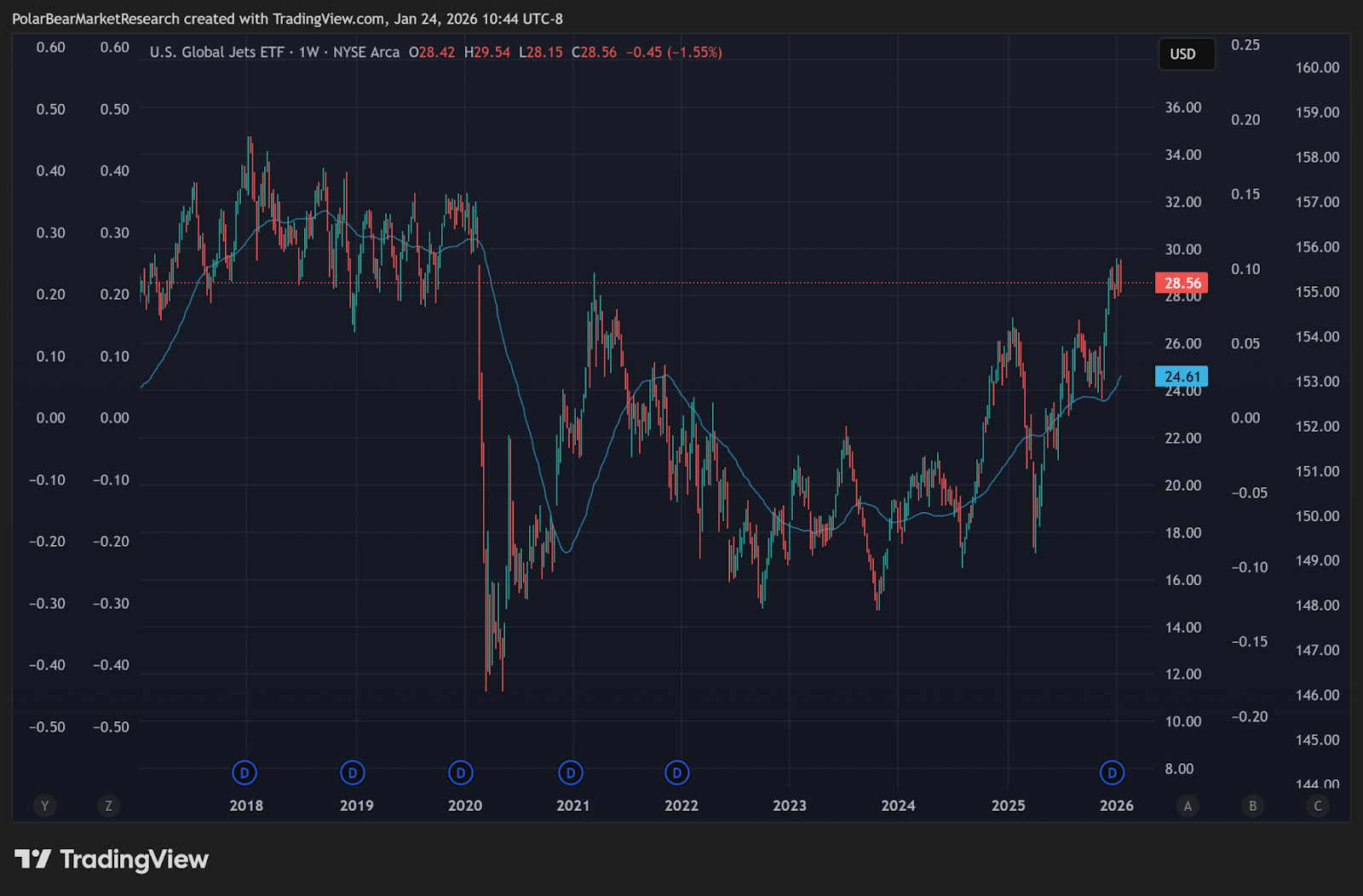
For JETS and airline equities - watch for a topping / distribution process now if this softer data continues:
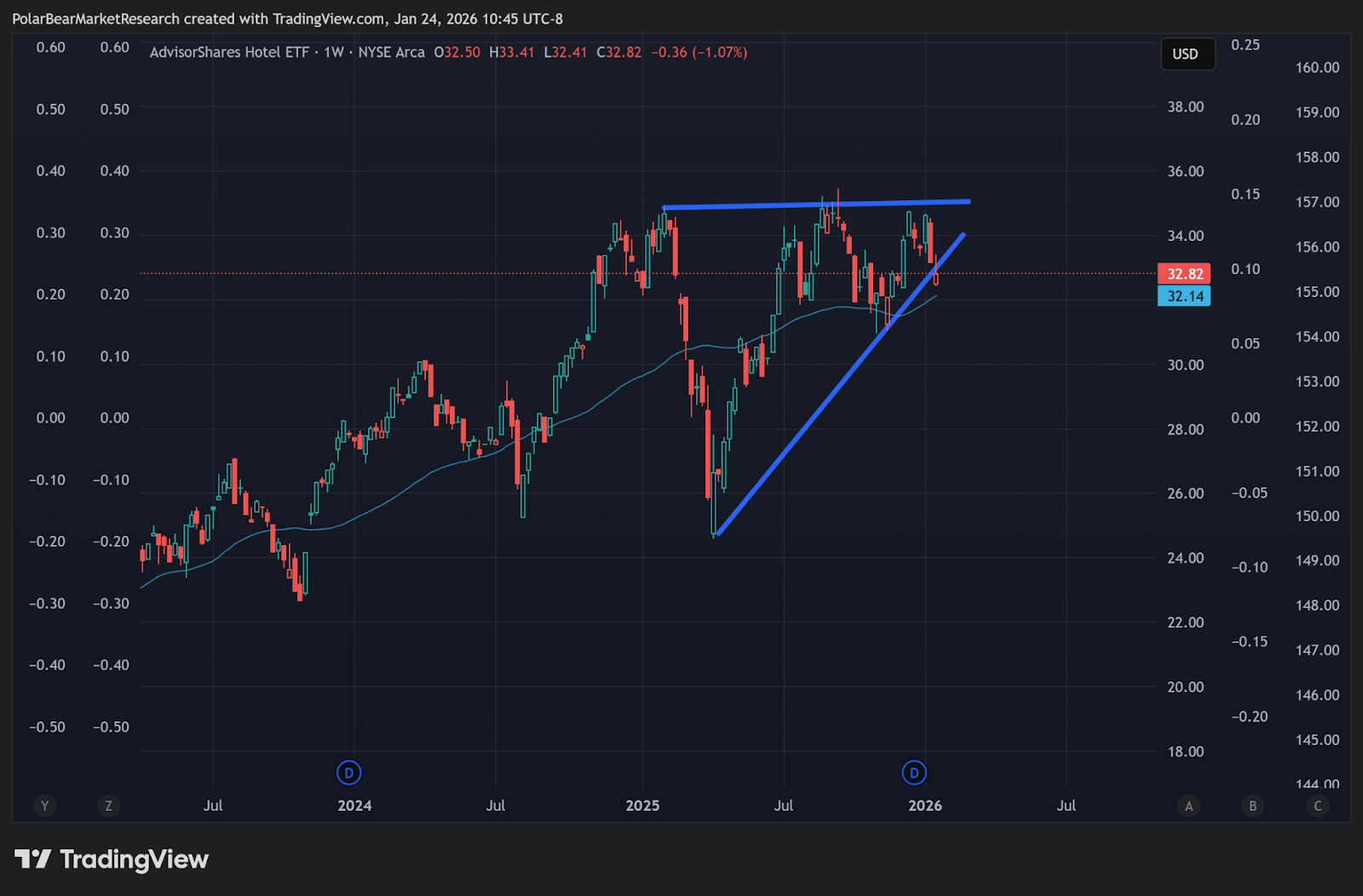
For hotels, that also means less revenue per night and difficulties in filling rooms. Prices for rooms have started to dip in major hospitality markets - and that means softer demand:
Watching the Carry Trade
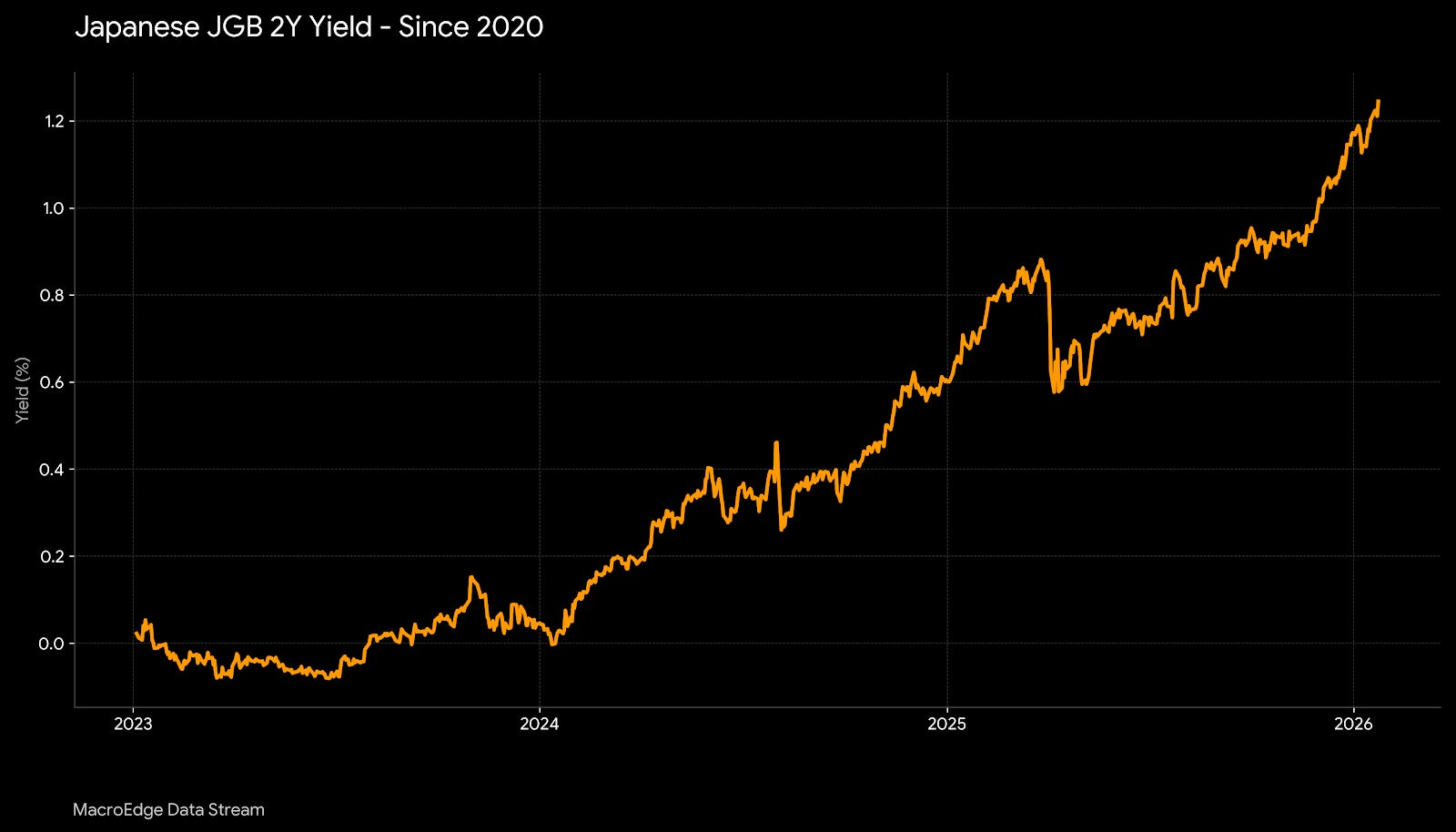
The Carry Trade remains tightly wound, and with the Friday NY Fed intervention, it’s very plausible that a stronger yen could put pressure on technology equities and the Nikkei. All of this has been happening while yields in Japan continue to surge to multi-decade and record highs.
The Japanese JGB 2Y continues to move higher:
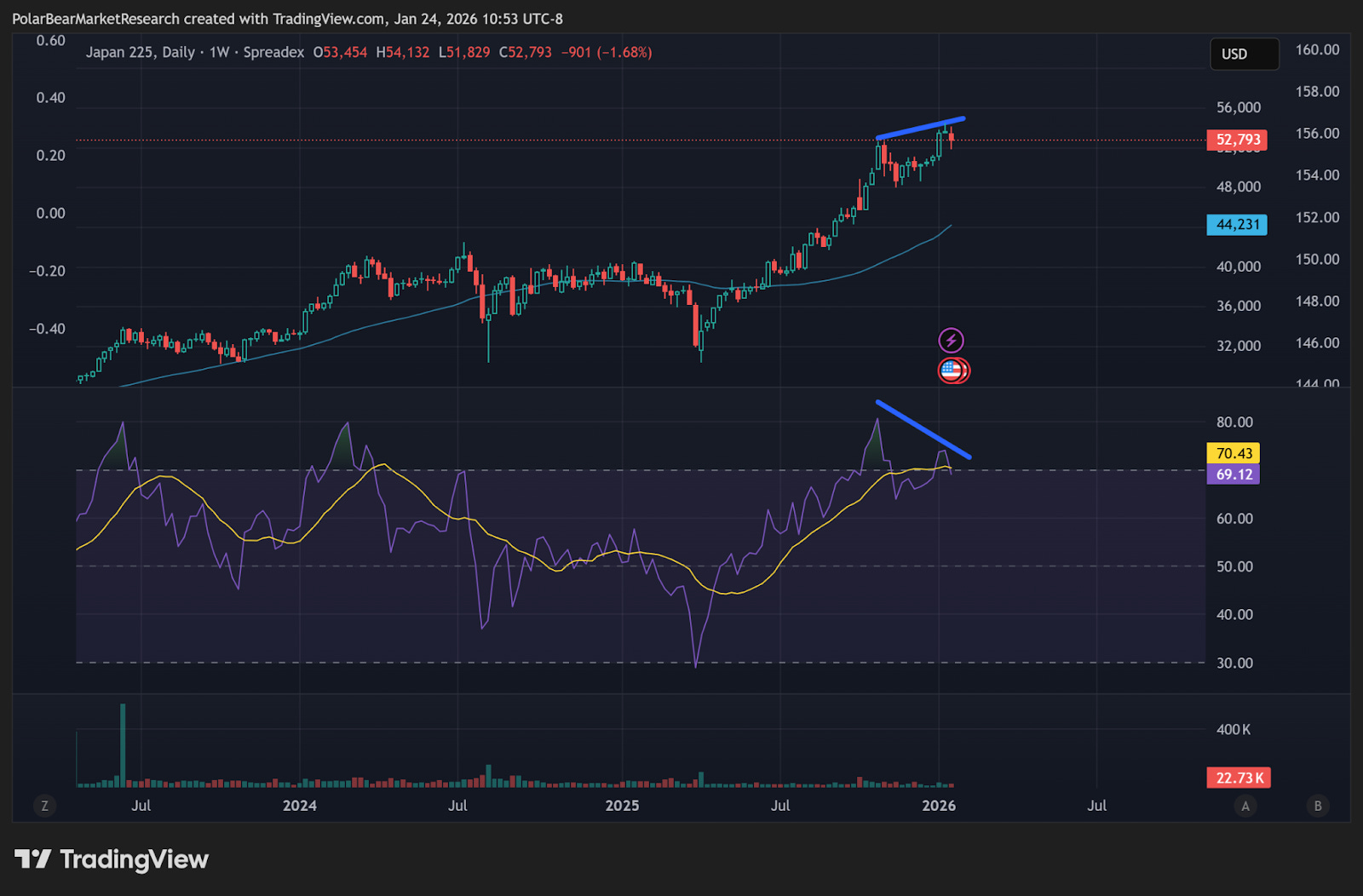
The Nikkei has its first negative weekly divergence since 2024:
And remains almost 1:1 with the US AI trade… ‘all one trade’
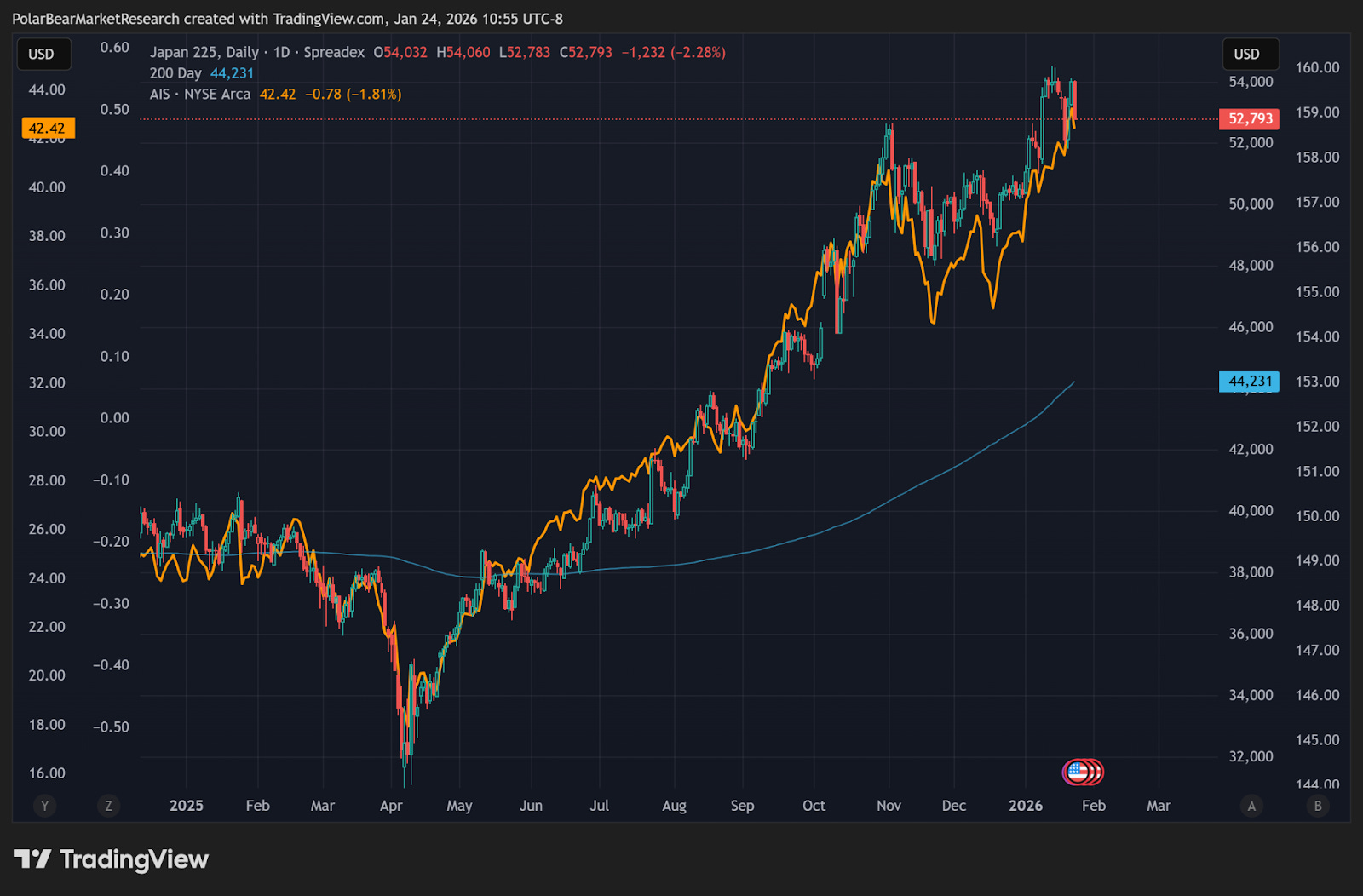
(Orange - AIS US AI Equity Basket, Candles - N225)
Rest of January & Weekly Macro Note Preview
As we wind down January, we’re shifting into an FOMC focus for the week ahead. It’s very unlikely that the Federal Reserve will move rates lower this month, with a less than 10% chance priced currently (probably still too high). Tomorrow we’re going to cover technicals, equity markets at the index level, look at AI performance, talk about energy markets + opportunities, and have the latest portfolio strategy update/commentary.
Weekly Macro Note breakdown:
Macro Week Ahead
FOMC Week
Technical Outlook / Equity Markets
AI Performance
Energy Markets and Opportunities
Portfolio Strategy Update and Commentary

Credit Union Failure Friday Not BFD but BHCEFCU (@RealJohnGaltFla, MacroEdge Contributor)

Friday night the Beverley Hills City Employees Federal Credit Union went tango uniform, aka, failed, aka, conserved. So what is the story behind a credit union failing in one of the wealthiest cities in America?
Let’s dig in together.
First from the NCUA website:
Beverly Hills City Employees Federal Credit Union Conserved
Accounts Remain Protected by Share Insurance Fund; Member Services Uninterrupted
ALEXANDRIA, VA (January 22, 2026) – The National Credit Union Administration today placed Beverly Hills City Employees Federal Credit Union (FCU) in Beverly Hills, California, into conservatorship. Member services will continue while NCUA works to resolve issues affecting the credit union’s operations.
NCUA placed Beverly Hills City Employees FCU into conservatorship because of unsafe and unsound practices at the credit union.
Member deposits at Beverly Hills City Employees FCU remain protected by the National Credit Union Share Insurance Fund, which has the backing of the full faith and credit of the United States. Administered by NCUA, the Share Insurance Fund insures individual accounts at Beverly Hills City Employees FCU up to $250,000. A member’s interest in all joint accounts combined is insured up to $250,000. The Share Insurance Fund also separately protects IRA and KEOGH retirement accounts up to $250,000.
Beverly Hills City Employees FCU members can continue to conduct normal financial transactions, deposit and access funds, make loan payments, and use shares. The office is open Monday through Thursday and every other Friday (open January 30, 2026) from 8:30 a.m. to 4 p.m. Pacific. While continuing normal member services, the NCUA will work to resolve issues affecting the credit union’s operations.
Members with questions about Beverly Hills City Employees FCU operations may contact the credit union at 310.275.3802. Members with questions about the conservatorship may review the Beverly Hills City Employees FCU frequently asked questions posted on the NCUA’s website. Members with questions about their Share Insurance Fund coverage can find more information in the Share Insurance Coverage (Opens new window) section of the NCUA’s MyCreditUnion.gov (Opens new window) consumer website.
Beverly Hills City Employees FCU is a federally insured, federally chartered credit union with 1,542 members and reported assets of $16.5 million according to the credit union’s recent Call Report. Beverly Hills City Employees FCU serves the employees of the city of Beverly Hills, California.
While $16.5 million might not seem like a lot, it certainly does raise an eyebrow or two. From the Credit Union Times article today:
BHCEFCU’ s manages $8.1 million in investments, which makes up half of its total assets. Of that, more than $5.3 million is held to maturity, while $2.7 million is available for sale. The credit union reported $344,226 in accumulated unrealized losses on available-for-sale debt securities, according to its third-quarter Call Report.
Or maybe it’s auto loans that result in nine year old vehicles like this one being put up for fire sale on the front page of their website that might explain it:

This is just the small fry, the tip of the iceberg, etc, etc…
Wait until the community and regional banks are actually expose due to the consumer imploding in such a spectacular fashion.

For more details, please refer to our Terms and Conditions.