


Good Friday evening MacroEdge Readers & Community,
It’s another late, late evening here - as most are - I really enjoy this time of night where the messages cease, the windows are opened, and I can take a step back and get a clear view of everything without distraction. Tomorrow I hit the road again, and then will be heading to New York City later in the week, for a short 3 day stint. On Tuesday, we should have our 1H oil and gas forecast and report out for Oil & Gas Research and Oil & Gas Advisory readers and clients. I know there are many waiting for that.
Weekend Schedule -
Saturday - Oil and Gas Research Macro Note
Sunday - Weekly Macro Note
Back in the days before we could log on our phones and have 40 different forecast variations, weather models, and live cameras to spot storms heading our way, we relied on archaic methodologies and warnings from animals of said storms on the horizon. While that comparison may sound odd, I (and those in our organization) see structural shifts taking place under the hood that will impact what the horizon looks like, both in the short term and over the next 12-18 months. During Powell’s ‘Valhalla Period,’ as I came to label it (from early 2023 to the end of his term), there was almost a guarantee that both fiscal and monetary policy would align to melt up asset prices, particularly equity indices, up and to the right. This phenomenon wasn’t limited to here in the United States. We saw it across our MacroEdge Global Bubble Index components in Korea, Taiwan, Spain, and Canada, and elsewhere in the world from Poland to Brazil, Argentina, Venezuela, and beyond. Enormous structural changes are already underway that won’t be reversed, such as global demographic issues through collapsing birthrates, particularly in West and East Asia. Even so, markets have simply entered an inflation-driven ‘melt-up’ mode as investors rush to bypass the perceived austerity of a life without asset ownership. These dynamics have combined to create a unique parabolic impulse, and our own GBI has enabled us to effectively track the ferocity of this move. The days of life being a little too easy, coupled with all-time high household wealth being tied up in equities in this ‘i-shaped’ macro dynamic, are likely to shift in the next 12-18 months.
In the post-2008 era, the masses have been religiously programmed to expect a bailout any time a mistake, big or small, is made. In the GFC era, the taxpayer saved the reckless banks. During the pandemic, the taxpayer bailed out the largest companies first. And in smaller cases like 2023, the Fed rushed in to save the wealthiest Silicon Valley investors from any consequence of their own poor risk mitigation strategy, in order to prevent anything ‘systemic’ from occurring in regional banking. Big or small, the story stays the same. These interventions and our failed policy dynamics globally are creating a toxic mix: an asset bubble, record-high wealth inequality that continues to worsen, and a fiercely nihilistic society of mostly young people in the under-30 segment. Together, these create the ingredients necessary for things like civil unrest, as we’ve now seen in France. What’s ironic is that we dropped the ever-so-revolutionary ‘AI’ and the subsequent data center buildout on top of all this (the latter of which I call our version of the Chinese ghost cities). Over the last 8 weeks, it appears that the Iran war situation and a potential revenge of the ‘Old World economy’ may set up a major rebirth in the months and years to come. This rebirth will have large consequences. Though we no longer live in an era where we have to rely on astrology or birds to predict and forecast changing winds or storms on the horizon, I do sense that the old world is calling us yet again for a potential reality check on everything it means to live in a hyper-financialized modern economy.
In the meantime, just over a week out from the midterm election - the GOP is dealing with record low economic readings across the board as Project South Africa continues… Ironically or not, I don’t think a revenge of the old economy, as labelled by Jeffrey Currie, will be enough to reverse many of these trends that have been in motion in the post-2008 Frankenstein macro world.
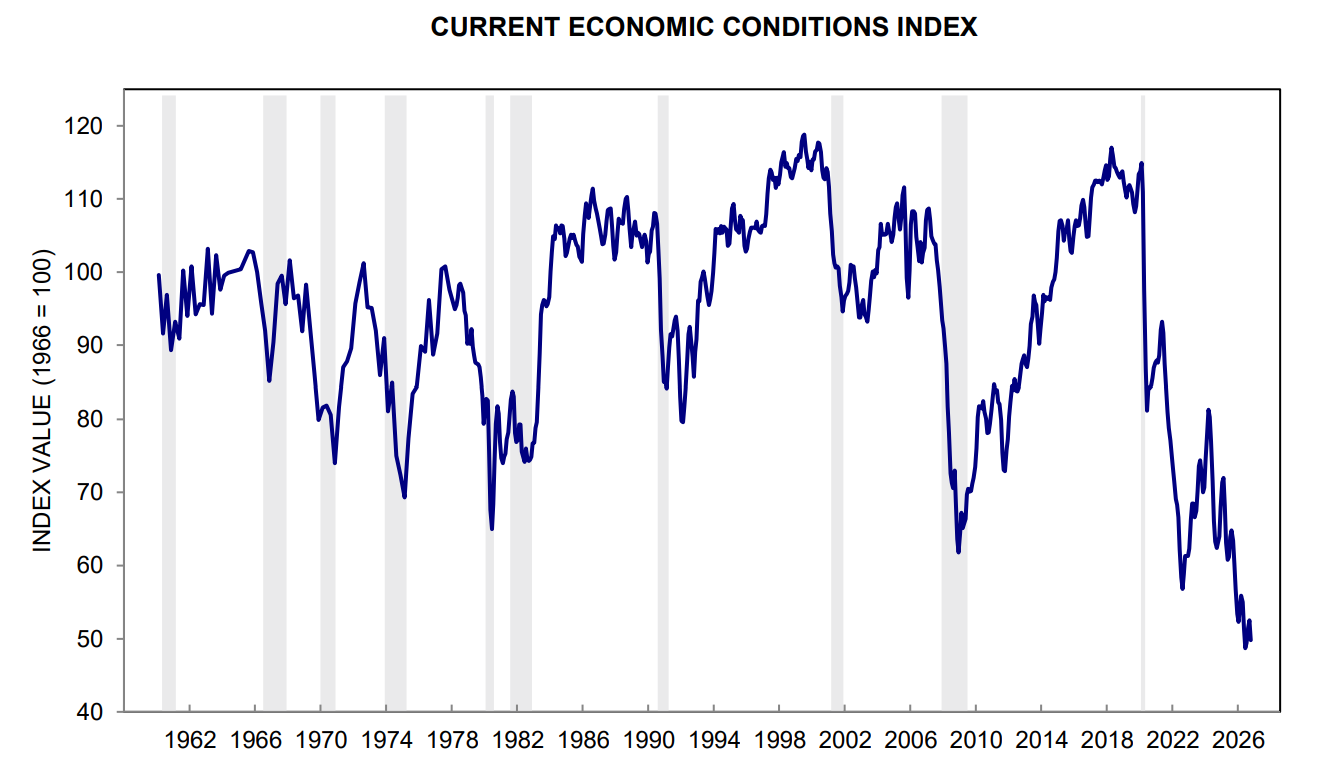
(UMichigan)
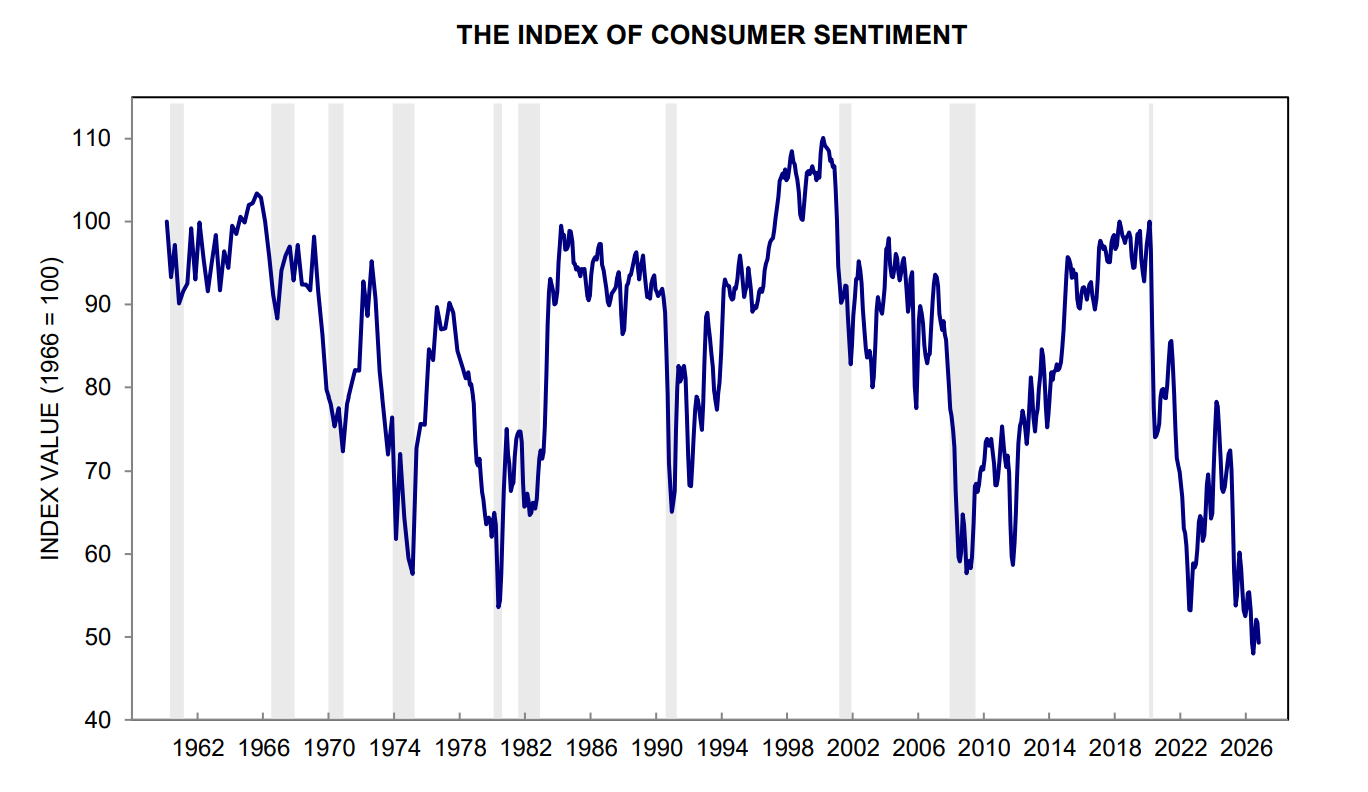
(UMichigan)
What will these mean for markets and where we’re heading? More on that in the sections below, and I will dive into how we’ve adjusted our own macro frameworks to better fit and match this hyper-interventionist world.
Not yet a MacroEdge Ozone subscriber? Upgrade below:
On 11/1 - we are increasing Ozone pricing for both monthly and annual tiers to support our organizational growth, and continue to add capacity to our data tracking capabilities. (From $33.33 to $45/mo and from $350 to $399/yr).
Winds of Change
One of the greatest challenges for investors in the 2023-2026 period has been developing strategies that carry nuance. That means navigating things like our ‘Powell’s Valhalla’ market dynamics while, at the same time, understanding that what we’ve done to markets is enormously harmful. One of the most egregious stretches was April to May of this year, when the Trump Administration decided to pour gasoline on an inflation fire to push equity prices higher in a single impulse move, while the lower 90% of the ‘i’ faced record-high costs across almost every single item in the CPI basket (and outside of it). Since that April to May period, we’ve seen blowoff-style moves across the board that look like final impulse moves into distribution, and we’ll discuss those more in the weeks to come. What I want to emphasize, once again, is that adjustments to our methodologies and tools do not constitute timing instruments on the macro side of things. The reason we introduced the MacroEdge Flagship Growth Portfolio with our partner Plutus is to be able to make agile moves in real time, while my broader macro strategies and frameworks remain in effect on much broader timeframes.
Not yet a MacroEdge Ozone subscriber? Continue reading below.