

Don Johnson (@DonMiami3), Chief Economist
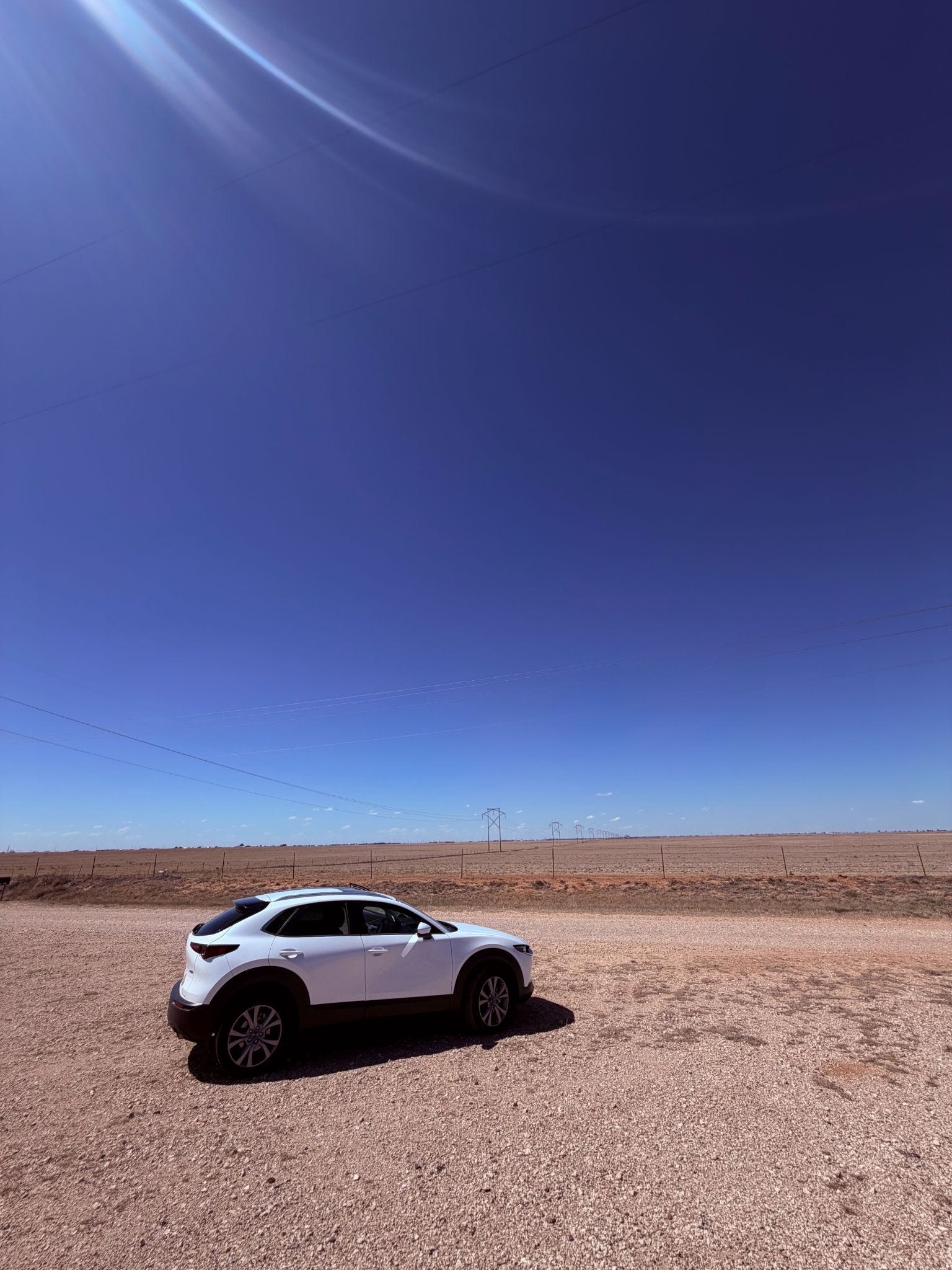
Good Monday evening from Amarillo, everyone. The article below ‘introduction’ is entirely from Six. We’ve had the pleasure of spending 4 days with the world’s foremost experts on wheat, corn, fertilizer, and much more in the Panhandle of Texas. Academics, farmers, brokers, and commodity experts helped us collect this data, and there are several whom I will provide attribution to later in the week. Since I wrapped up my discussions today with some of our thought-leader pool, I haven’t yet had time to put it in proper article form, and we want to get Part 1 out prior to the WASDE report release tomorrow. You’re probably wondering - why corn, wheat, and fertilizer…? Well, the entire ag sector is facing a historically challenging time - waiting for the next round of bailouts to be passed alongside the ‘Farm Bill’... Challenges are compounding, and Part 1 of our ‘On the Ground’ series is a look into what’s going on in the world of agriculture - specifically in the wheat, corn, and fertilizer areas.
To those who participated in our discussions on the ground - I greatly appreciate the time you set aside for us to make these discussions a reality… It made me really understand what a modern marvel our food supply chain is - and you have to see it first hand to get just half-a-grasp on the scope of some of these operations - and how many people are fed downstream from the producers in the High Plains. This is Part I of what will likely end up a three-part series - and my time in the Panhandle does not come to a close until later in the week.
Have a great Monday evening.
Don, Six, and the MacroEdge Team
(ps… what an adventure this has been)...
Introduction
Since the onset of the Iran war, we have been bullish ags. They have made modest price increases relative to their input costs (oil, fertilizers). So, we decided to go straight to the source, and get the information straight from the horses mouth in farm country. Why aren’t ags making larger moves higher? Is our thesis correct, or are the assumptions too inconsequential to actually move the needle in a substantial way?
We set out for farm country to find out what is actually going on in these markets, and had the absolute pleasure of talking with industry experts who were welcoming, helpful, and happy to share their insights. It was truly refreshing to receive these insights from real-economy Americans.
Below, we will double down on our prior bullish grains outlook and highlight why we believe that grains are perhaps the most asymmetric asset class at current levels, as inflation accelerates in the backdrop.
We will begin with an agricultural commodities primer, which you should feel free to skip if you already have a solid foundation in the space.
Ags for Dummies - An Agricultural Commodities Primer
*This section is intended as a crash course in agricultural commodities for those unfamiliar or looking for a basic high level refresher of how ag markets operate, and what drives price fluctuations. Skip this section if not needed*
“Ags” or agricultural commodities, are the raw materials that become food, animal feed, fuel, and fiber. Ags are different from other asset classes in that they are biological, with their own unique challenges. You can’t make wheat grow faster by spending more money. A corn plant takes roughly 120 days from seed to harvest, no matter what. These biological constraints are what create scarcity, volatility, and opportunity within the sector.
For the purposes of this report, we will focus on three primary agricultural commodities: corn, wheat, and soybeans.
Corn:
Corn is the most produced crop in the United States by volume. There are three major demand channels. The two largest demand channels are animal feed at 35-40% of demand each are animal feed (cattle, hogs, poultry), and ethanol production (blended with gasoline). The rest is used in food and industrial products or exported. Corn is planted in April and May and harvested in September and October. It is the most input-intensive major crop. It requires more nitrogen fertilizer, more water, and more general upkeep than wheat or soybeans.
Wheat:
Wheat is the primary food grain in the United States. Unlike corn, which primarily feeds animals and cars, wheat feeds people. There are multiple different classes of wheat grown in different regions. Hard Red Winter (HRW) is grown in the Southern and Central Plains (Texas, Oklahoma, Kansas, Colorado) and is used for bread flour. Soft Red Winter (SRW) is grown east of the Mississippi and is used for pastry flour and crackers. Hard Red Spring (HRS) is grown in the Northern Plains (North Dakota, Montana, Minnesota) and is the highest-protein wheat variety, used for premium bread products. Each class has its own futures contract.
The critical thing about wheat is its planting calendar. Winter wheat is planted in the fall and harvested late spring-early summer. The crop goes into the ground before winter, goes dormant under snow or cold, and then resumes growing in the spring. Spring wheat is planted in April and harvested in August.
Soybeans:
Soybeans or “beans” are the most valuable US crop export by dollar value. The single most important thing to know about soybeans for reference in this report is this: soybeans fix their own nitrogen. Unlike corn and wheat, soybeans have a symbiotic relationship with soil bacteria that allows them to pull nitrogen from the atmosphere rather than requiring it as a purchased fertilizer input. This means that soybeans are largely immune to nitrogen fertilizer price increases through first-order conditions. When nitrogen gets expensive, farmers plant more beans.
How Farming Actually Works:
Every year, a farmer makes one decision that matters more than any other: what to plant. This decision is made in late winter or early spring based on a comparison of expected revenue per acre minus expected cost per acre for each plant the farmer could grow. The crop that produces the highest expected net return wins the acreage at the margins.
These decisions, at the margin, are based on the enterprise budgets laid out by agricultural economists. These standardized budgets lay out every cost line item for each crop, including seed, fertilizer, herbicide, fuel, labor, equipment, land, insurance, and financing costs. When input costs change, the math changes, and acreage allocations adjust.
Inputs:
Growing grains requires five things: land, water, seed, nutrients, and crop protection.
Land is either owned or rented. Roughly 40% of US farmland is rented.
Water comes from rainfall or irrigation. In the Eastern Corn Belt, rainfall is usually sufficient. In the Western Plains and Texas Panhandle, irrigation from underground aquifers supplements rainfall deficits. The Ogallala Aquifer, which stretches from South Dakota to west Texas, is the primary source and is currently being depleted faster than it refills.
Seed are purchased from companies like Bayer, Corteva, and Syngenta. Modern seeds incorporate biotech advancements, increasing pest resistance and herbicide tolerance. Seed cost runs $60-120/acre for corn, $30-70 for beans, and $15-30 for wheat.
Nutrients are the fertilizers. Nitrogen is the dominant cost for corn and wheat. It is manufactured from natural gas using a process called Haber-Bosch, which structurally links grain prices to energy prices.
Crop protection includes herbicides, insecticides, and fungicides. These are purchased from the same major agrochemical companies that sell seeds.
Farming Economics:
Farming operates on thin margins. A simplified example for a Corn Belt farmer growing irrigated corn might look something like this: yield of 200 bushels/acre at $4.50 per bushel = $900 per acre in revenue. Total all in costs of $800-850 per acre, profit $50-100 per acre. That margin is one bad weather event, one input cost spike, or one price decline away from zero. Farmers are highly levered to the price of the underlying commodity being grown, both to the upside and the downside.
Farm to Financial Asset:
A farmer harvests grain with a combine, which cuts the standing crop and separates the grain from the stalk. The grain is dumped into a truck and hauled to a grain elevator, which is a tall concrete or steel structure that stores and handles bulk grain. The elevator weighs the grain, tests its moisture and quality, and pays the farmer a cash price. At this point, the farmer has done his job to completion.
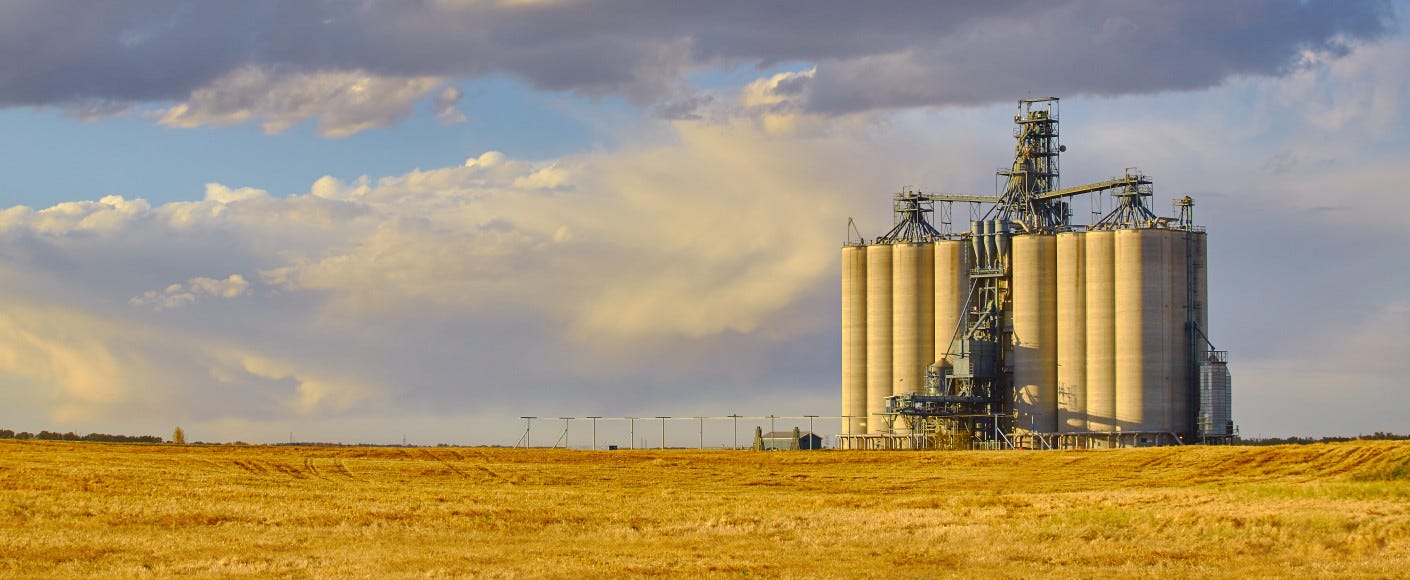
The elevator then aggregates grain from many farmers, stores it, and sells it to end users. Flour mills, ethanol plants, feedlots, and export terminals are primary end users here. Export grain moves by truck, rail, and barge to Gulf ports, primarily New Orleans and Houston, for shipment overseas.
Physical vs Financial Ag Assets:
The two parallel grain markets are the cash market and the futures market. The cash market is where physical grain actually changes hands at a local price. This cash price is determined by a futures price plus or minus a “basis” adjustment that reflects supply and demand conditions, transportation costs, and crop quality premium or discount.
(Continued below: ‘Basis’, ‘How Farmers Sell’, ‘What Moves Grain Prices?’, ‘Ending Stocks’, ‘Farmer Risk Management’, ‘Ags as an Asset Class’, ‘Important Relationships’, ‘Boots on the Ground Discussions Pt. 1’… The CTA & the Broker…
