

Don Johnson (@DonMiami3), Chief Economist
Good Monday evening MacroEdge Readers & Community,
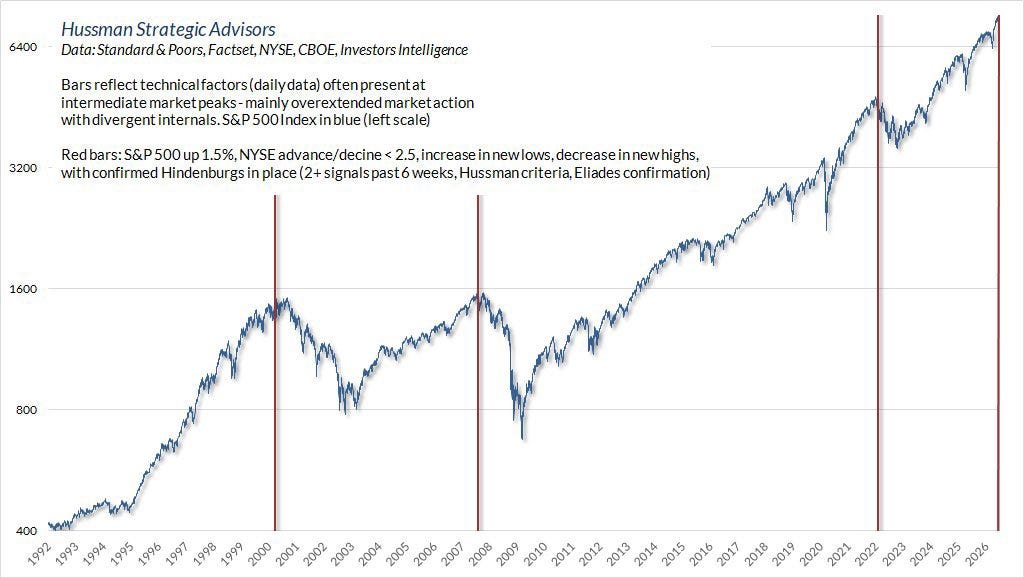
Hope you are all having a fabulous start to this very warm late-June week. The longest day of the year is now in the rearview mirror, and we get to look forward to things like hurricane season (/s) in the months ahead, and markets are once again at a potential turning point for the summer season. With talks of bailouts becoming larger for the AI firms (through things like a sovereign wealth fund, domestically) I expect that investors are going to become more skeptical about the entire AI bubble ecosystem in the months and weeks to come. At some point, we should expect all of these technical, fundamental, and internal warning systems to matter - as the market is once again a table standing on one leg.
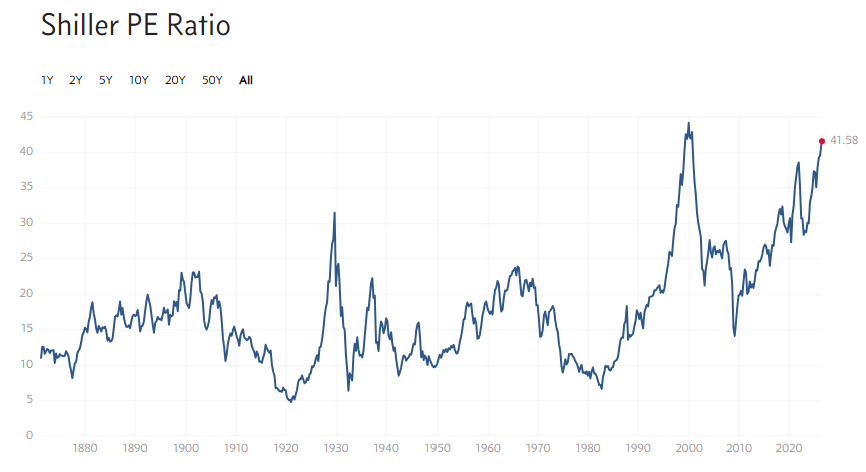
This evening, Six is going to provide a portfolio strategy update, as promised yesterday evening, and I look forward to seeing you all for the Midweek Macro Note on Thursday evening. The signs and warning continue to worsen in Korea (this piece may even be censored there) - and I will discuss the Korea and Japan situation more in the Global Bubble Index on Thursday.
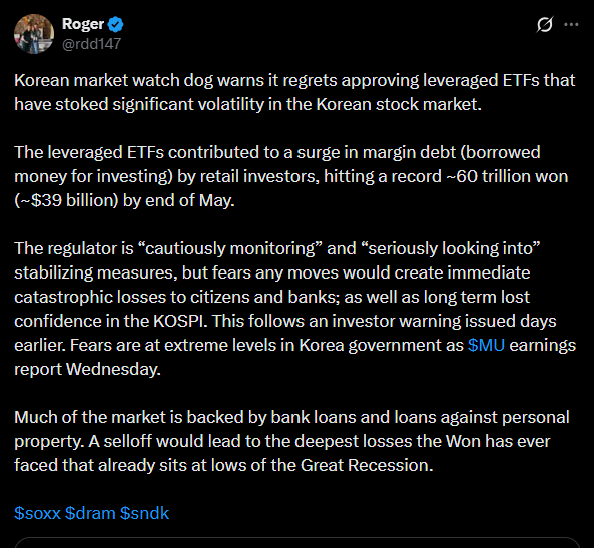
Tomorrow, MU reports, and I expect (sadly) that governments will stand in if the downside is significant. From these levels in Asian markets, they’re at real risk of full-on recession if any sustained downside occurs. The next question is… how will we handle our ‘motherlode’? Or will the can be kicked for yet a few more months…
Not yet a MacroEdge Ozone subscriber? Upgrade below to get all of our research, portfolio strategy, data, and more below:

Hyperscalers: Made in China (@SixFinance, Head of Research)
The Economist cover famous contra opportunity arrives at an interesting time, directly following the throttling of access for the most advanced frontier models to foreign nationals, and in the process removing large quantities of potential demand.
As the US AI strategy by the capital spenders has been the frontier (the newest, best models, experimental), and development of rapidly scaling technology. Demand was subsidized in this phase, heavily. The 2026 large IPOs necessitate a new urgency toward profitability, else the frontier models risk losing access to lower-friction capital raising from the public markets at favorable prices. At the same time, companies are publicly beginning to rein in the blank-check approach to corporate AI spending as costs have ballooned in many cases.
This sets up a “good enough” commodity AI at 5-10% of frontier cost that places Chinese models in an advantaged global position as they can service the large and likely growing price sensitive AI consumer, to whom “good enough” is oftentimes more than enough.
