

Hi everyone -
Of course… pardon typos for these midnight releases, we actually meet and pen near this late hour of the evening… some from iPhones, some from laptops, luckily none from typewriters…
Welcome to the fourth edition of our much more unbuttoned MacroEdge line of releases (only the top two buttons are unbuttoned don’t worry)… Redeye. When we started Redeye I didn’t foresee them becoming our most popular reads for you all but for the last month each Redeye has brought in more & more readers to the MacroEdge community… The first Redeye came about due to my frequent traveling schedule and desire to get critical data out, even on a ‘Redeye’ as I was on that particular evening. Since then, we’ve released Redeye from a mobile device, twice from a flight, and most times with a lovely glass of bourbon. That’s the other great part of these as well - you in the late crew usually are the creative types that are probably out doing special things and maybe don’t have time to catch up on things at a normal hour. We’re continuing on our mission to turn MacroEdge into a household name as our Vision 2025 develops with a whole expanded line of data, services, and offerings for companies large and small, and individuals just like me and you… An exciting facelift is underway for the web interface which was a much-needed refresh for us as we bring more data live to various media sources and companies. This weekend will bring our first-ever Ozone labor market report - covering critical labor market data for February through the MacroEdge lens of reality… With much uncertainty surrounding BLS surveys, data, state-level data and more - we’re striving to bring accuracy to the core of everything that we do. Sunday will bring yet another Ozone weekly research report from the team. Catch it all in Ozone, here:
Enough gab on updates about our 2025 Vision to become a household name - let’s get into the fun stuff with Six and Greg for this evening’s Redeye. Grab your favorite beverage (don't worry Kat - I got a big cube this evening…) and let’s jump right into the Atlantic. In the Atlantic here on Redeye you’ll probably find that I hop all over the map in my discussion, and these things do happen at this hour so bear with me and enjoy the reads from everyone.
As I am sure many of you are probably aware - we got a ton of data today on the labor market front that is helping us paint a clearer picture of the next 4-5 quarters. While there is still uncertainty in the outlook as well as in the markets, the 10y3m is still serving as my general guide and baseline in various data monitoring, particularly when it comes to labor market data. Now I know they will go on the airwaves over the next month until the next revision and shout from the rooftops and tell you that the job market is strong, 15 million jobs this and that (absolute nonsense from a data standpoint), the battle against inflation has been one, etc, etc… but let’s call this what it is: garbage. The reality in the data is much clearer: a labor market that is seeing signs of quicker cooling than we saw when things looked soft last year. While we are in a period of lull for layoffs until the April-May timeframe (and then again until seasonality kicks in during the early Fall months) - things in a lot of states, cities (and even nationally) are starting to paint an uglier picture… Take California for example, which is likely already in the early innings of recession, and saw unemployment rise again to 5.2% - one of the highest readings in the country. California’s problems this cycle are huge - many of these job losses are permanent - meaning they will never return to California even if they do return. Companies (especially in tech) have figured out how to offshore technical roles to India and Southeast Asia - and other positions are being kicked out of state to the Sunbelt in many cases. California’s politicians will have to figure out how to deal with a declining population, freebies for everyone, proposals like zero-interest home loans to migrant crossers, a declining tax base, and a shrinking corporate footprint. California is America’s version of Japan with much larger problems and NO ability to turn on a money printer. This will only further hurt Californians in the long run and the decline will be slow and drawn out if bailouts are again rolled out for states with idiotic policies.
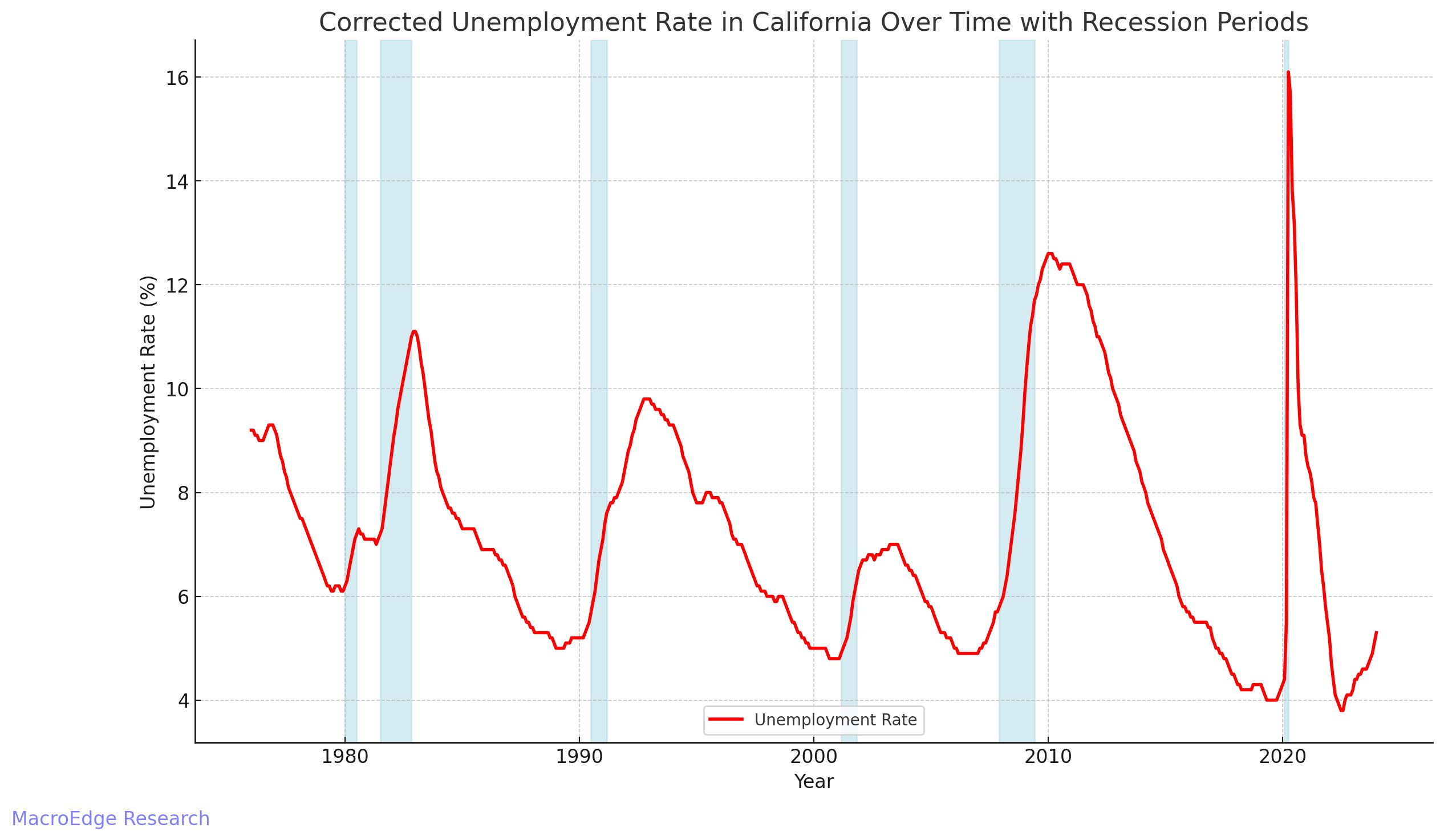
We can talk about New York, New Jersey, Arizona, Montana, Washington, Nevada - or any other number of states seeing their labor markets in the early innings of weakening… What the market is ignoring, eventually will become difficult to ignore. The Sunbelt continues to hold the ‘key’ to larger problems in the labor market - with states like TX, GA, FL, and AL remaining much more resilient than some of their counterparts mentioned above. While this resilience may stand thru the remainder of Q1 and into Q2 - I would be surprised to not see further softening broadly into Q3 especially (when - not if) we see Powell and the Fed finally fold on the hold. Unlike Kenny Rogers - Powell and the rest of the Fed circus act have no idea when to cut using lagging data which is why I estimate that they will hold too high for too long and in the end concede the battle to both mandates. For now - the language has already been subtle but notable but conceding to the 2% inflation target which will become even more difficult with base effects wearing off.
On the job growth front - the media immediately jumps right on parroting another headline faux figure that will almost certainly be revised in the coming months, our net job growth figure powered by MacroEdge and ADP data gives us a clearer picture into the private sector labor health in February (+63,182 estimated job adds):
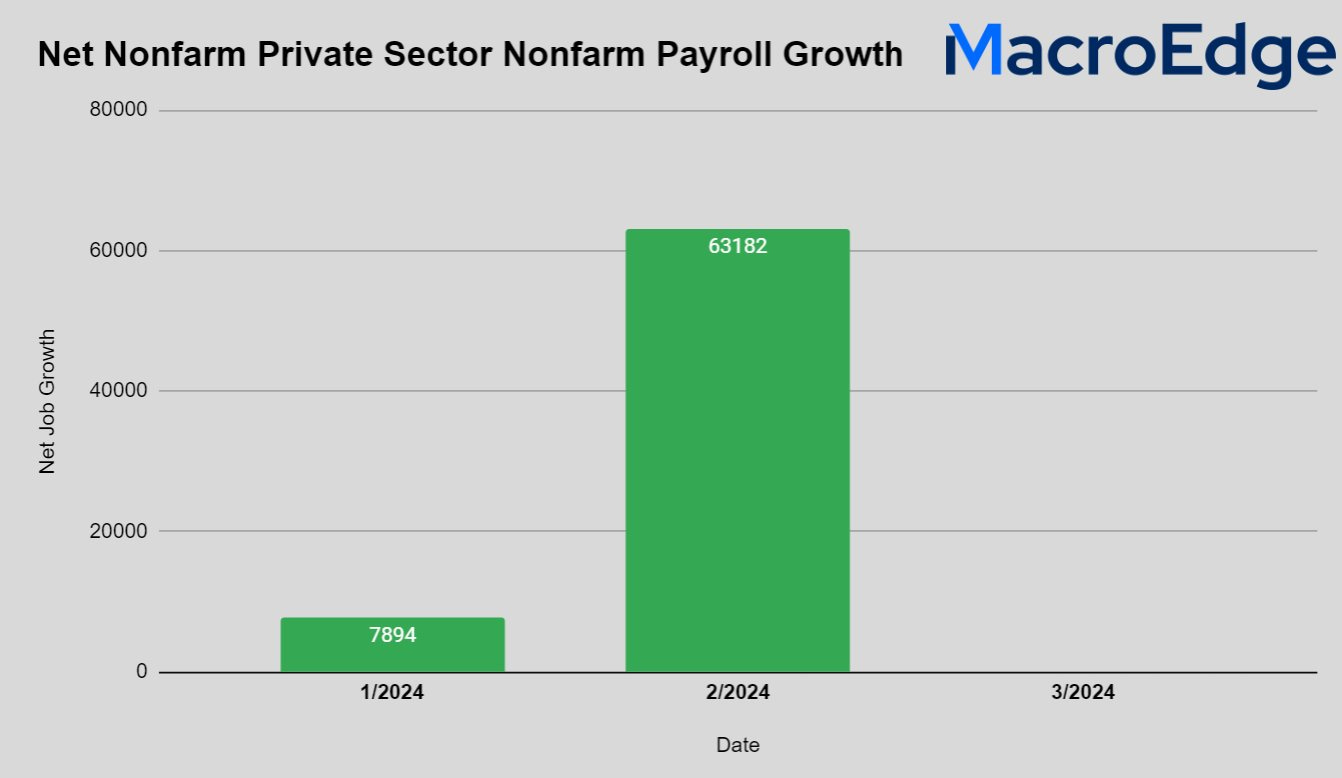
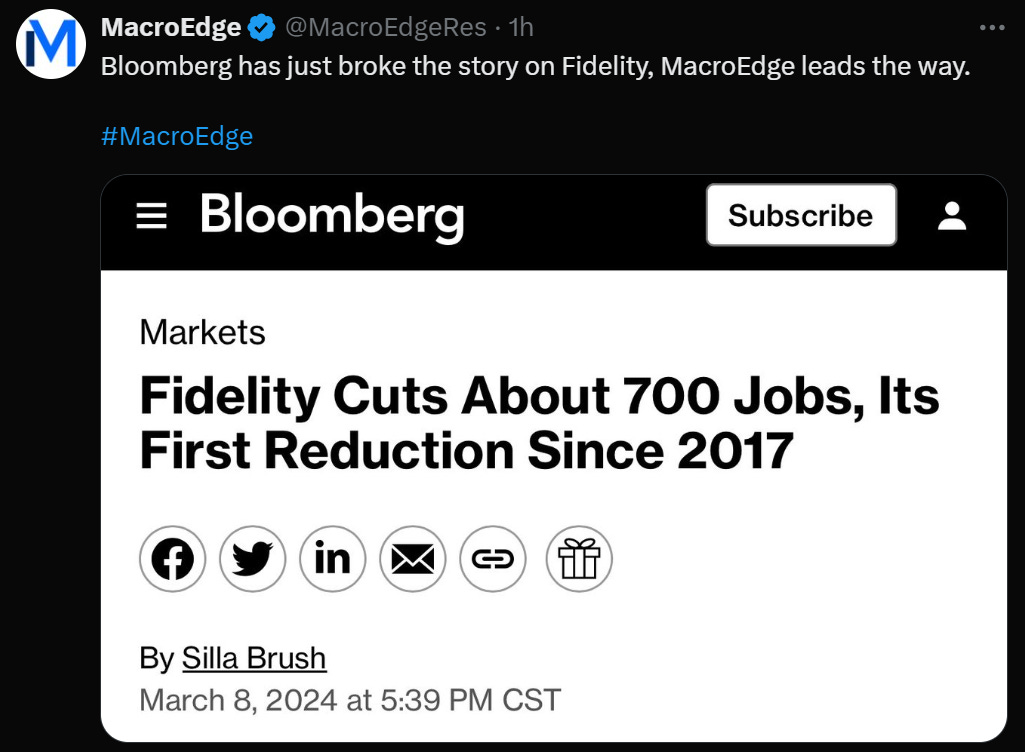
Note that January saw just 7,894 job adds based on our estimate - very near aggregate payroll contraction (which is what PAYEMS - the total nonfarm dataset tracks). Job cuts for the current month stand at around 15,000 - and will probably end the month somewhere near the 50-60,000 range at the current pace. If JoAnn goes belly up - then the figure may go higher if they announce a large store closure plan. Layoffs roll on though, nonetheless:
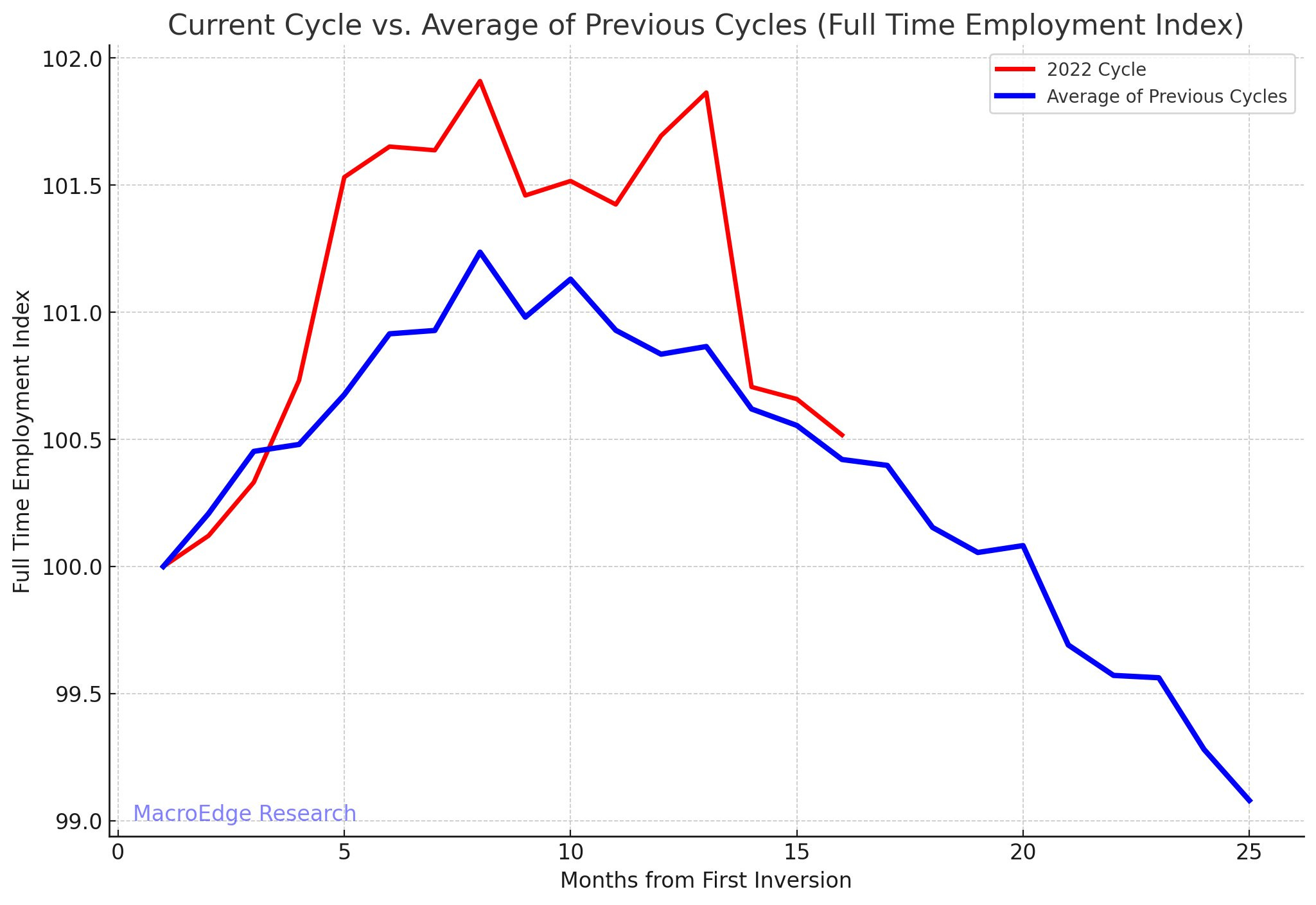
With all the noise and so much data to try and dig through to try and paint at least somewhat of an accurate figure of where things stand - the Household survey is another useful tool to do so, especially when compared against past historical cycles. Things are starting to look… as they usually do at this point in previous cycles? That’s how I see it:
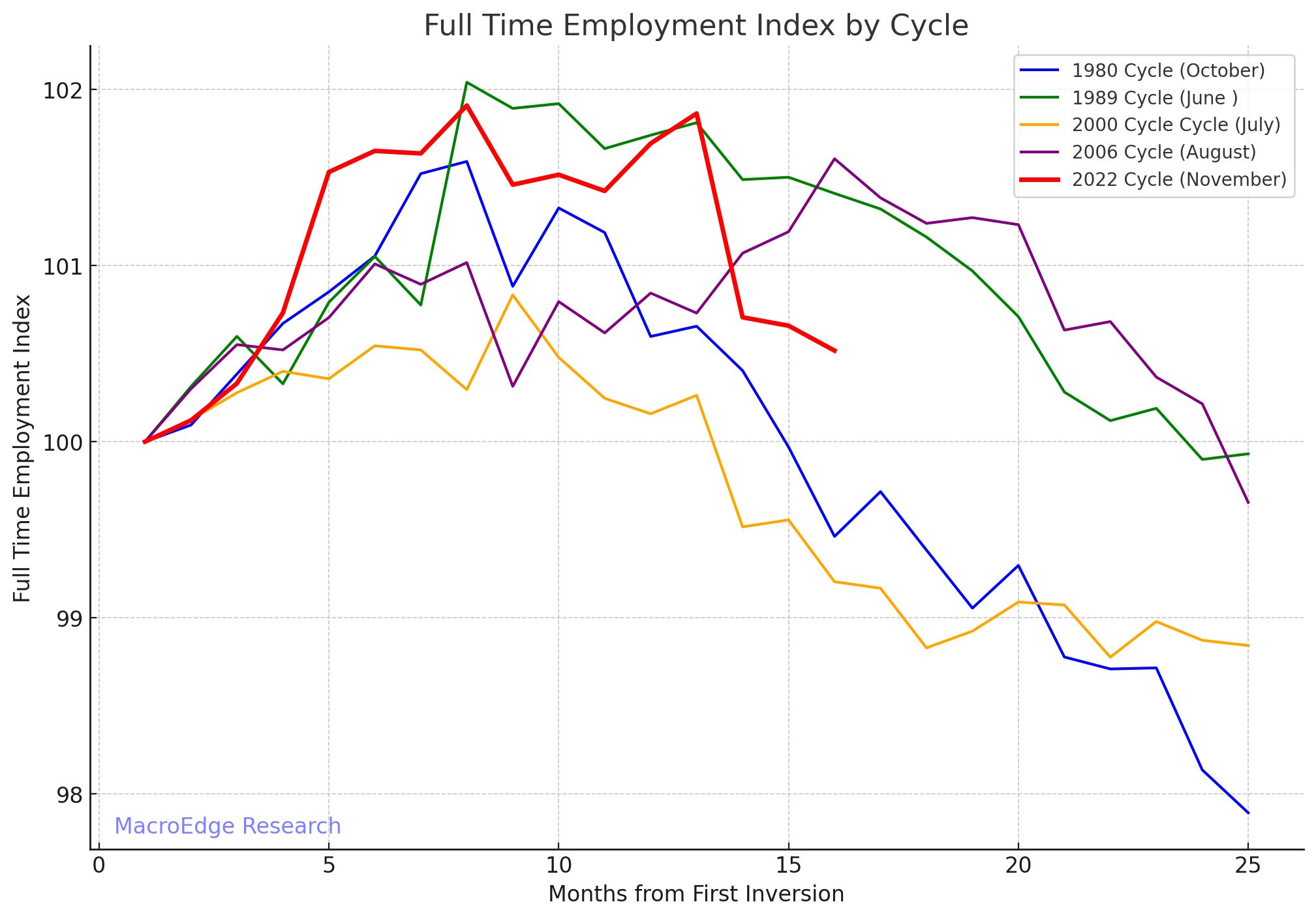
Full-time employment (as measured by the household survey) is starting to contract sharply, and is well in line with the past 4 recessions - in fact, almost perfectly:
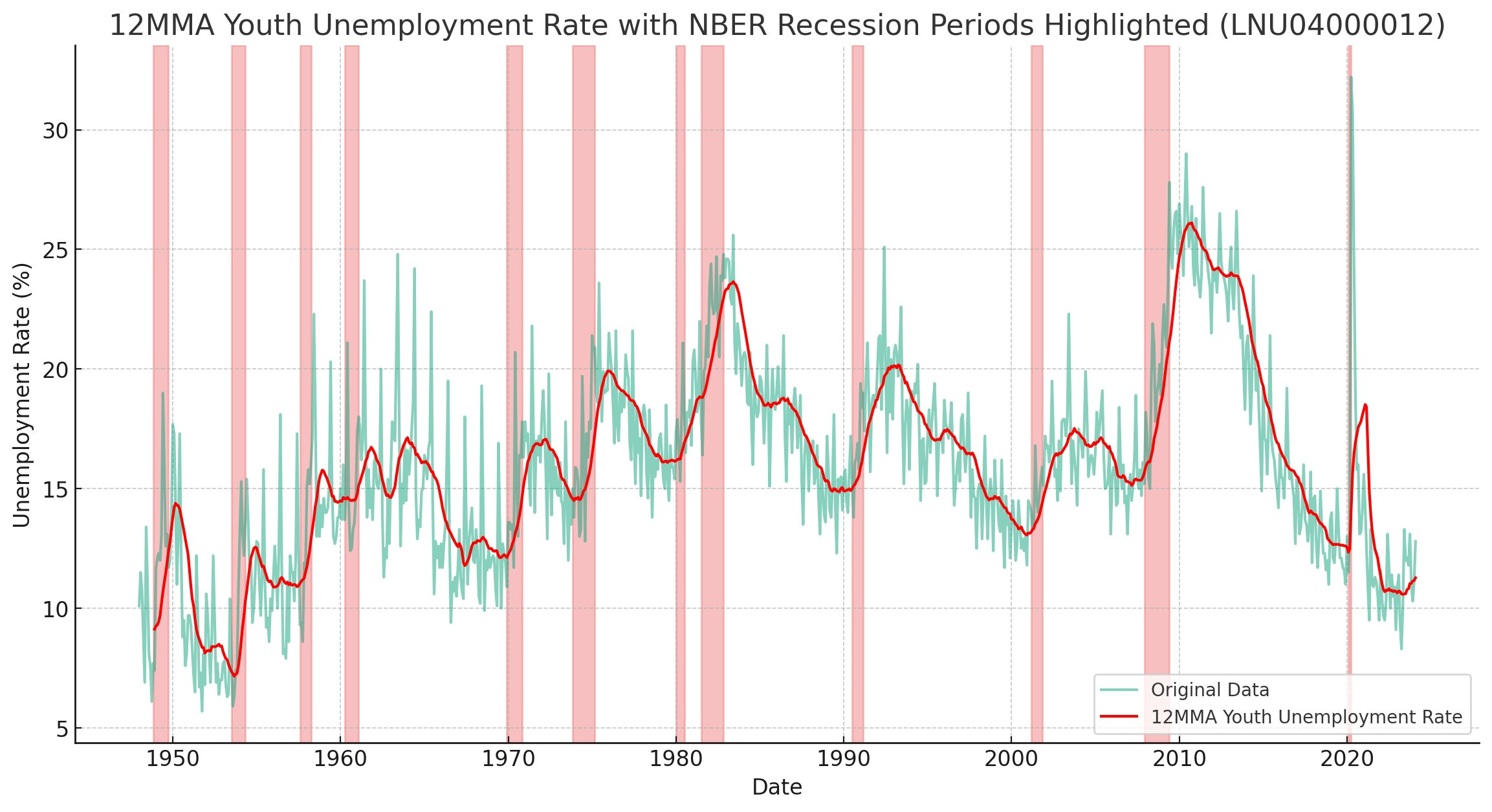
Elsewhere in the household survey we get other relevant data such as things measuring the # of women and men seeking work, as well as the youth (16-19) unemployment rate, which also are starting to paint a more concerning picture:
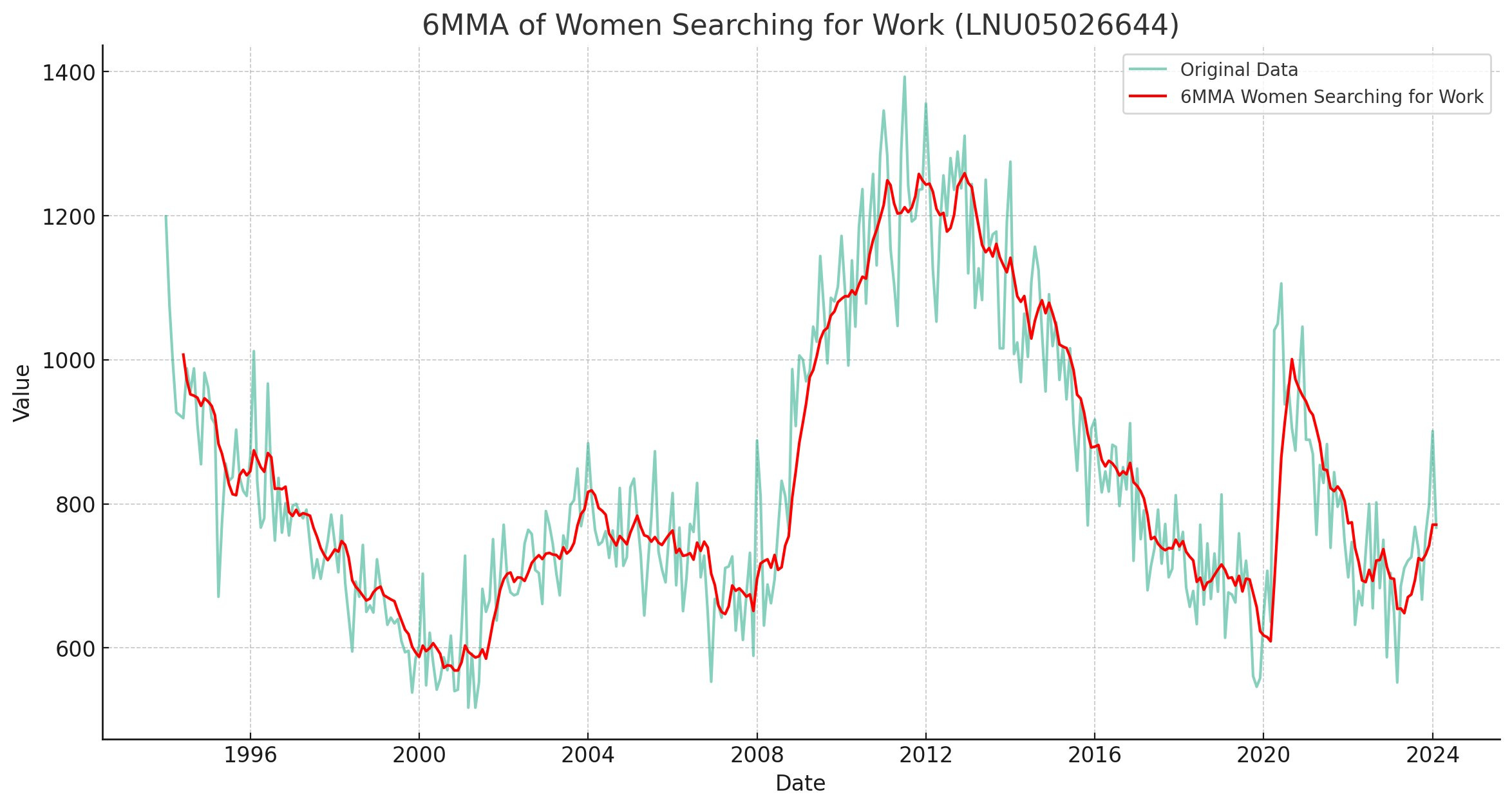
(Above - 6-month moving average of women searching for work, below - 12-month moving average of the youth unemployment rate) - both smoothed to eliminate noise:
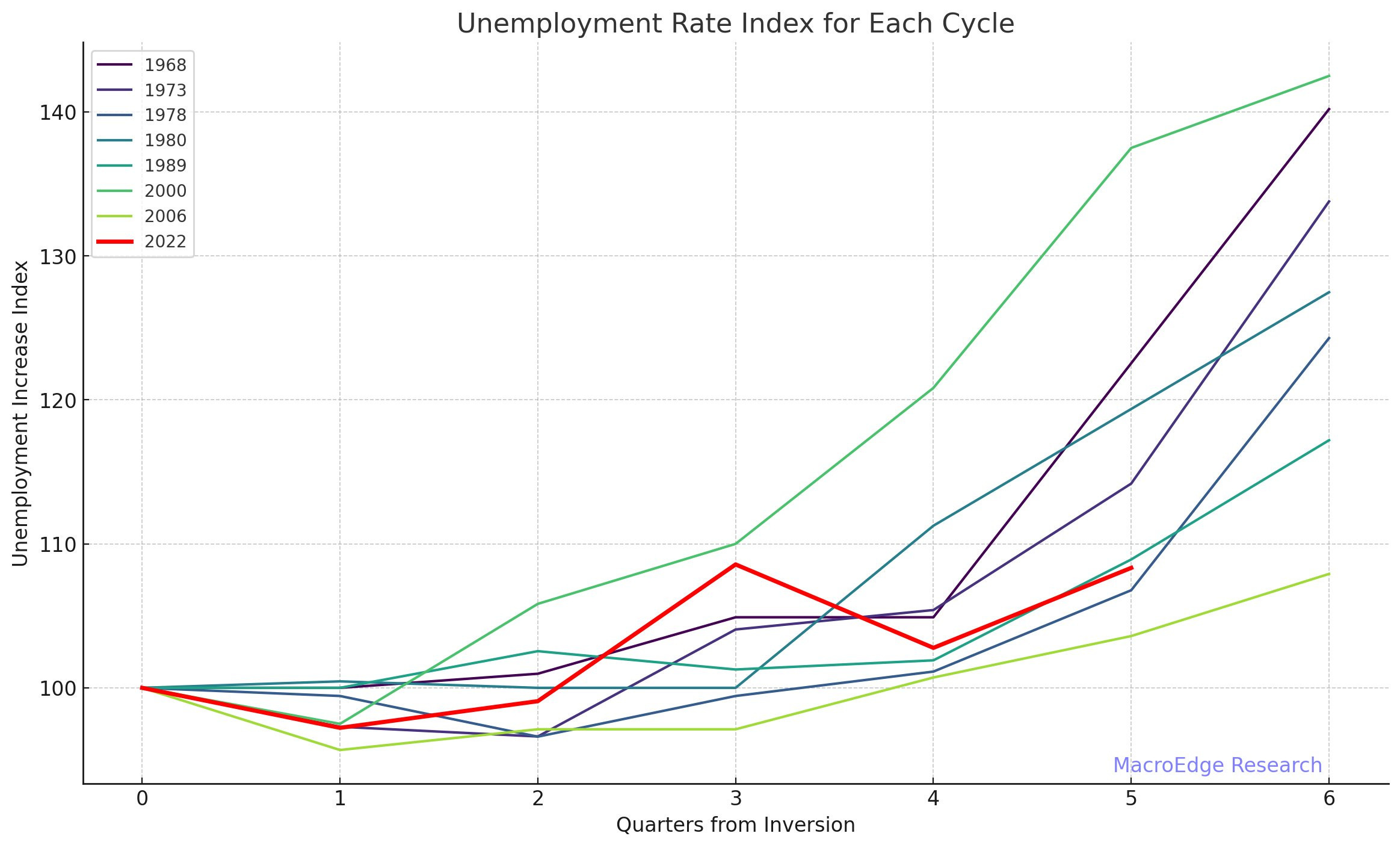
Of course, our unemployment rate index is useful as well:
Like most things in life - economic cycles, especially on the labor market front, move very slow while life seemingly moves very fast itself… especially in the era of watching a few folks make fortunes on things like ‘Boeden Coin’ and ‘ApeYacht Club’ Photos… I guess I am just al little too much of a realist to buy into any of that garbage - literally and figuratively, but before I take up any more ink, I’ll give Six and Greg the floor for the rest of this Redeye…
Have a great start to your weekend and see you tomorrow for more
- Your pal, Don
- - - - - - - - - - - - - - - — - - - - - - - - - - - - - —————- —-
@SixFinance - MacroEdge Head of Research
As I watch the market unfolding over the past few couple months while mostly sitting in cash, with a Birds Eye view, I have tried and sometimes failed to remain as objective as possible. I see the market hitting all-time high after all-time high. A steep climb off the late October lows. AI and meme stock and crypto casino mania. I see people who don’t even know what “options Greeks” are, posting absurd percentage gains on call options. I see a guy who turned a hundred dollars into half a million in 3 days on “Jeo Boden” coin. I see Powell say that we are “well into restrictive territory” while financial conditions are as loose as they were when rates were zero and the Fed was buying 11 figures of treasuries and CORPORATE bonds monthly. I see rampant speculation. I am not sure who he thinks he is fooling. I see the Biden administration say they are “very concerned” about housing. Not sure what concern they are talking about, housing prices measured by their favorite home price indices are at all time highs. Median home sales prices and transaction volumes tell a very different story, however. I see the treasury deficit spending a trillion dollars every hundred days, while Janet Yellen goes on TV talking about how strong the U.S. economy is. I see video after video of working-class Americans who did everything they were told they needed to do to succeed, crying because there’s nothing left after they pay their bills, and they’re living paycheck to paycheck in jobs roles that used to be prosperous, or at least comfortable.
I see the government massaging data. I’d like to think that we are not outrightly manipulating it the way China is (5%+ GDP with their market in the gutter and property giants going bankrupt? Sure.) but when I see things like Nonfarm Payrolls getting revised every month to reflect significantly less jobs added the previous month than were announced, what does that tell you. January NFP came in originally at 317k, and was revised today down to only 177k. Then the February numbers beat by about half of the January revision and the talking heads go on talking about how great the jobs market is doing.
I love this country. I am proud to be an American. What I am not proud of however is that we have replaced hard work with handouts. Long hours in the office with “compromises” on a 2 day work from home, 3 day in office hybrid schedule. Budget surpluses with budget deficits. Congress pointing fingers at each other so that we don’t point fingers at them. And sadly, the American voters for allowing the clowns in Washington to continue to “spend like drunken sailors” as Druckenmiller would say. We have screwed over future generations to avoid the hard truths of capitalism. We have ensured higher tax rates and less support for our children. We have sacrificed our perfect credit rating, and if we continue on this path, more downgrades are sure to follow.
I watch the speculation occurring today and it makes me happy to see people winning. Truly, it does. I have had investments (if you could even call them that) go up by 100x in a relatively quick period and I know the feeling. It is life-changing. I have never been so generous in my life as I have been around those events. It is not eternal. What came in so easily can disappear in an instant. Greed is running rampant. The wealth effect of financial market speculation and asset prices paints a false picture. A future that the treasury is stealing from our children and theirs like a robber baron. Median household prices to median income has never been higher. Not even in the housing bubble that led to the great financial crisis. That’s not to say another ‘08 is around the corner, with average mortgage rate much lower and the general absence of floating rate loans on SFH mortgages. However, the alternative in a very different way almost paints a bleaker picture long term. If housing prices are not to correct, this is a problem that simply stays with us. Larger and larger portions of families’ take-home pay goes to housing and related expenses. I am shocked at how much more my grocery bill is every time I go to the grocery store than it was 4 years ago. My grocery bill is up quite a bit more than the 20% increase in the consumer price index since 2020.
I want to believe in the fairytales that the media and talking heads are spinning. I wish they were true. That inflation gently comes down, that AI grows GDP out of our federal debt, that AI capex for the next few years hasn’t already been pulled forward for an AI arms race, that Americans can prosper while math seemingly no longer matters.
I don’t think we will see that. I think that unemployment is already ticking up, I think we should expect today’s NFP number to be revised down again next month. I think that we will see a recession start sometime this year. I think that anyone investing at these levels, if leveraged, will get burned. I think that this is an asset bubble. I think that we will see another round of QE by the end of 2026… and lastly.. I think that if we don’t do something about the federal deficit, and limit the treasury spending, at some point, maybe 20 years from now, maybe 100, we will be electing a chainsaw-wielding anarcho-capitalist like Javier Milei because people are so sick and tired of being sick and tired.
***written on Gmail for iPhone
- - - - - — - - — - — - — - - — - - - — - - - - - - - — - - - - - - - —
Greg Crennan - MacroEdge Contributor (Chief Economist - The Coastal Journal)
In a harrowing turn of events, gold prices have shattered all previous records, reaching an astonishing $2,165.00 per ounce. This meteoric rise comes at a time of profound unease within the US banking sector, where systemic risks loom ominously, threatening to plunge the economy into recession.
As financial institutions grapple with a toxic cocktail of assets contaminating their balance sheets, including commercial real estate and a surge in delinquent loans like auto loans, the specter of collapse casts a long, dark shadow over the financial landscape. The staggering weight of unrealized losses only serves to deepen the prevailing sense of dread, as investors brace for the storm brewing on the horizon as the BTFP comes to an end.
The Federal Reserve's imminent conclusion of its bank term funding program, initially launched in the aftermath of SVB's catastrophic collapse last March, has only intensified the prevailing sense of foreboding. With the safety net of emergency liquidity measures soon to be withdrawn, the fragility of the banking system is laid bare, leaving little room for optimism amidst the gathering storm clouds.
Against this backdrop of mounting uncertainty, gold emerges as a beacon of refuge in a sea of turmoil. Its soaring ascent serves as a stark reminder of the profound mistrust plaguing traditional financial instruments, as investors flee to the perceived safety of precious metals.
As the prospect of a banking crisis threatens to tip the US economy into recession, the urgency of addressing systemic vulnerabilities has never been more apparent. With the fate of the nation's financial stability hanging in the balance, the need for decisive action looms large, lest we find ourselves engulfed in the depths of an economic abyss.
ps… cc: ‘the casino’:

Gradually, and then suddenly