

*excuse typos
Happy Saturday evening or Sunday morning depending on your time zone (or whenever you might be reading this),
Last week brought a short week but it’s full steam ahead for the team this month leading up to the next holiday (the 4th of July). We have MacroEdge One coming out at the end of next month - our new global research and data coverage focused on Europe and Oceania. More details will be available in the coming weeks. Don’t miss all that we’re doing and get access to MacroEdge Ozone: Driven by Data for two weeks:
This evening I want to dive into the Florida employment data that we are monitoring closely. We’ve talked a lot about waiting for the Sunbelt states to see cooling labor data and this finally appears to be materializing in the data. While labor data is backward-looking (excluding data points like the MacroEdge Job Cuts Tracker), trends in the data tend to be well-established in larger states like Florida. The trend we’ve observed since February/March time has been a cooling of the labor market in the state more broadly with rising unemployment levels and fewer job openings taking hold. If we can see weakness materialize across the Sunbelt further - then we will finally see the headline U3/U6 rise further.
Total unemployed persons in Florida:

Florida is one instance of a state where unemployment did not return to pre-08 lows (like Nevada, as well). Thus far the data this cycle on the employment side looks a bit like 2000, but we should have an apparent picture of the trend with two more quarters of data. We’ve spent plenty of time discussing California over the past 10 months and with the labor market cooling rapidly in the state, we can focus our attention elsewhere.
Take a look at the headline unemployment rate:

As well as a weighted average of the 7 largest MSAs (population centers):

Broken down individually by MSA:

Job openings in the state are just 12% than higher than February 2020 levels, with a substantially larger population base. The trend remains problematic:
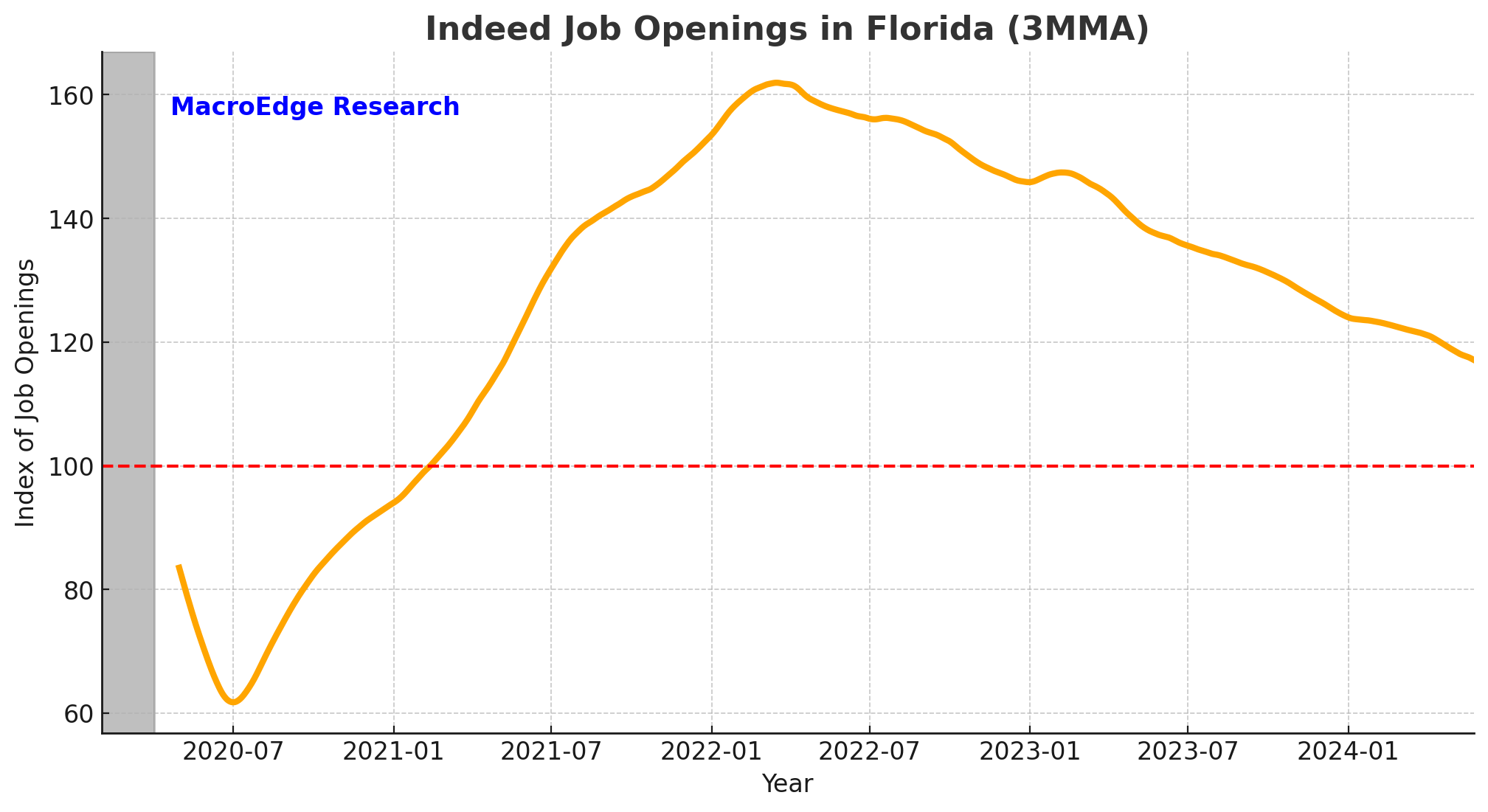
Sunbelt cooling may finally be underway in Texas and Florida, although we still await softer data in Georgia and Nevada which has not be seen up to this point. The dynamic in Nevada may begin to shift with mass layoffs occurring in June and July due to Tesla job cuts, the shutdown of the Mirage, and other announced layoffs we’ve captured in the Job Cuts Tracker.
Overall, the Florida labor market remains cooling remains at the top of our watchlist, and the data released for May will give us added clarity on the direction to expect for the second half of the year.
Labor tends to see it’s largest weakening post-Fed cuts, so softer data would likely play a role in sooner-than-expected policy action, as well.
ECB Policy Error? (+Possible BoC Cuts)
On June 6th - it has been forecasted by markets and telegraphed by ECB members and their chief economist that they will begin to lower the Central Bank’s policy rate. This is on the back of a hotter-than-expected inflation print for May at 2.6% y/y:
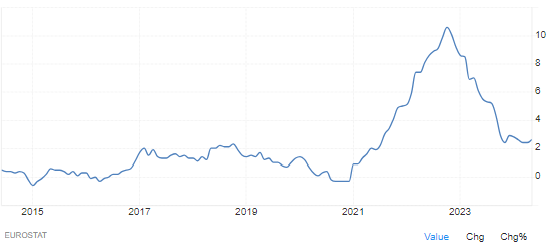
Note that the ECB hasn’t achieved its 2% inflation target since the end of 2020. There are a variety of possible outcomes to look out for in this policy decision - namely how yields respond globally, but particularly in the EU, and how broader markets respond. The correlation between Central Bank cuts and an increase in unemployment is well established in past cycles so if they do begin to cut, all potential outcomes must be monitored carefully. The Bank of Canada may also begin to lower rates, which would start the beginning of a potentially larger global cutting cycle as we discussed about a month ago in a Sunday evening report. Another key factor to determine is how much the ECB and BoC would cut this year, because there hasn’t been an instance of cutting by 25bps and ‘waiting for more data’ in past times. The impacts of cuts will be global, so we should monitor closely this coming week and through the month of June as we wait for American labor data on Friday.
Whether or not this becomes a huge ‘policy error’ in letting off the gas too early with all-time low unemployment in the EU remains to be seen as well. The dynamic is different in Canada with both rising unemployment and a stagnating economy. We will know more soon enough and I’m not sure all ECB members have actually determined what the move will be on the 6th.
Data to Watch This Week (for your screenshotting pleasures):
Japan Yields
Sunday: Jibun PMI, China Caixin MFG PMI
Monday: Eurozone HCOB PMIs, UK PMIs, USA ISM PMIs*, Construction Spend USA
Tuesday: Eurozone employment data, TIPP Economic Optimism Index, JOLTS (BLS - USA)
Wednesday: ADP Employment Change, ISM Services PMIs - USA
Thursday: Jobless claims
Friday: Non-farm payrolls
See you tomorrow evening for the Weekly Sunday Ozone report.
Have a great rest of the weekend,
Don & MacroEdge Team