

Weekly Macro Update (@DonMiami3)
Another busy week ahead in the markets - a much larger piece coming next week to wrap up the month. The MacroEdge team has been especially busy developing our website infrastructure and preparing the full MacroEdge Experience for all of you interested in higher-level commentary, data, and research.
Looking at the data from this week thus far - we only have the NAHB index released today - along with a rate cut delivered by the People’s Bank of China (PBoC).
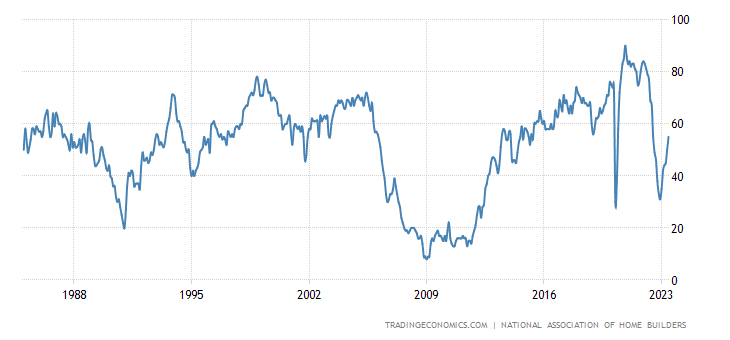
The NAHB/Wells Fargo Housing Market Index surged by 5 points to 55 in June 2023, surpassing expectations and reflecting increased builders' confidence. Factors such as strong demand, limited inventory, and improved supply chain efficiency contributed to this positive sentiment. However, challenges in accessing loans may reduce lot supplies, affecting the industry's expansion. Current single-family home sales rose to 61, the sub-index for future home sales climbed to 62, and the gauge for prospective buyers increased to 37. (Source: National Association of Home Builders)
There’s a ton of economic data coming out this week (which I will be releasing this week on my Twitter @DonMiami3). We’re also working with a lot of data from last week as well.
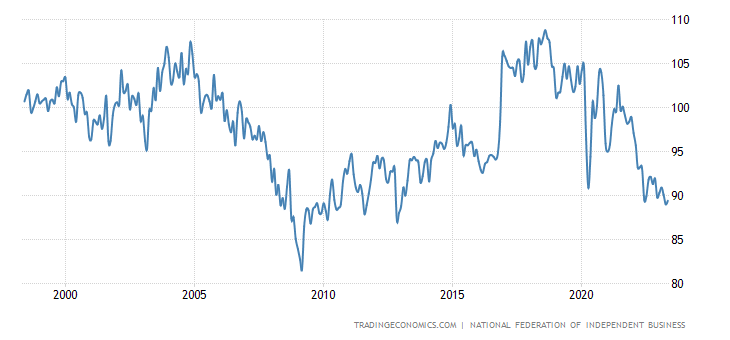
Last week we saw a small bounce in the NFIB small business optimism index (from 89 to 89.4) - which is below the 49-year average of 98. A relatively small and inconsequential bounce for now on this index (above). Below you can see the core inflation reading we got - still remaining very elevated above the Fed target at 5.3% but rolling over now. Given other readings - it’s likely we see a continued decline in the Core CPI measurement in the next few readings (although there are other gauges like meat prices starting to see inflationary pressures again which the Fed absolutely does not want. Count housing prices in some markets in on this inflation as well).
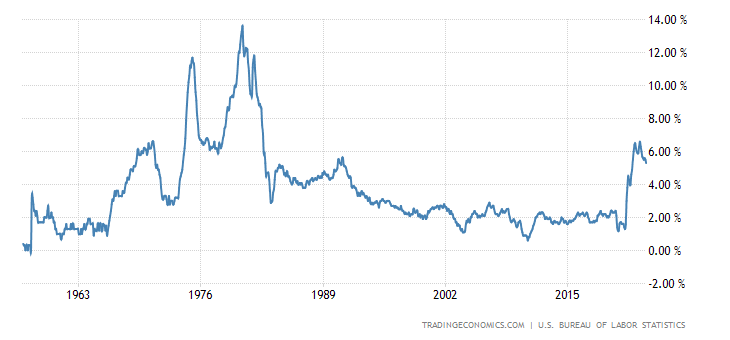
PPI remained very subdued - and the Fed decided to ‘pause’ aka skip a rate hike for now - so it’ll be quite interesting to see whether or not they navigate their way to another rate hike in July based on hot economic data or not. Leaning towards a hike currently with the data and persistent Core CPI - along with pretty solid economic data still coming across and a resilient labour market.
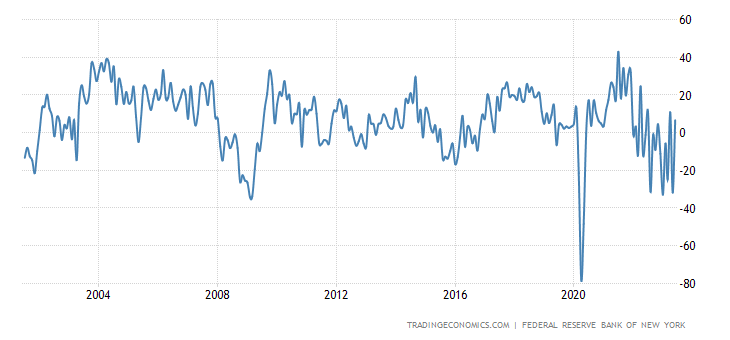
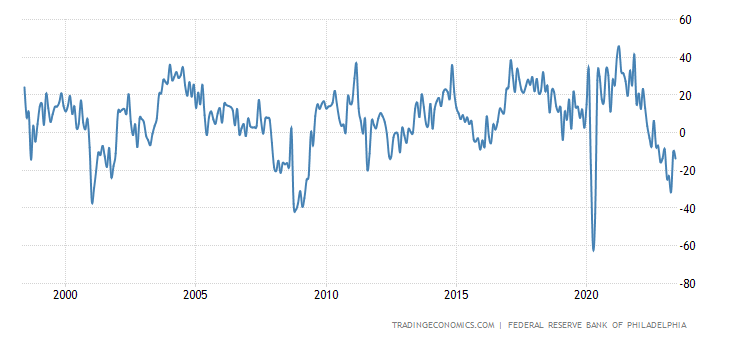
Above is the NY Fed Empire State manufacturing index which has been boomeranging back and forth for the last few months - posting a positive reading of 6.6 up from -31.8 - although that’s just the second positive reading of the last seven months. This came in alongside relatively resilient retail sales data (+.3% m/m) - although the Philly Fed Mfg. Index did decline further in activity after posting a bounce in the Spring:
Also very interesting is the Philly Fed Business Conditions which bounced sharply from historically low (recessionary) levels:
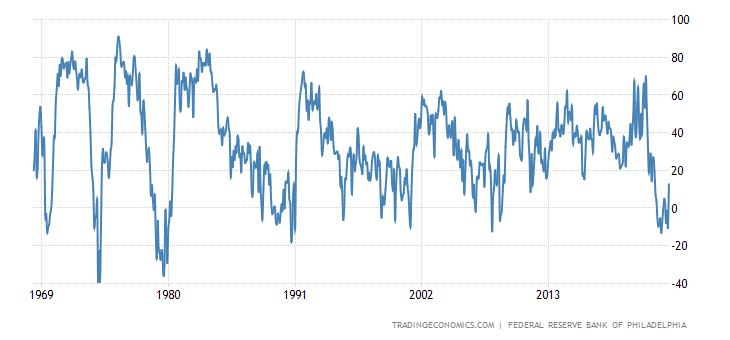
In past times when we’ve seen it this low - we’ve also seen a recession (although with the housing market bouncing and employment still strong… yes…. could this time really be historically unprecedented?). It’s not our base case still at MacroEdge although the severe GFC like recession that people have beat the drum on still remains well outside of the picture.
That’s it for me this week - really appreciate all of the support for this project we’re building together and look forward to seeing you all on Twitter (or all of you who interact with me on there) - have a great rest of your Monday evening and a lovely start to the week if you had today off (or a great Tuesday if you had work). Cheers!
Florida Real Estate Update: Endless Sunny Days Ahead or Could Dark Clouds Be Forming on the Horizon? (@TrishFLSun)
We’ve all seen the headlines, since the pandemic-induced lockdowns that kept residents shut down in their home and sent them in search of less restrictive shelter, Florida has been one of the southern states who have been the primary benefactors in domestic migration. But while the lifestyle and tax benefits presents significant appeal, do increasing home prices, risings costs, & other factors present a risk to market sustainability?
Supply, Demand, and Volatility in Pricing
For decades the endless miles of beaches and warm weather Florida offers has drawn year round residents, vacationers, retirees looking for winter homes, investors, and speculators.
While property owners are excited by rising property values, quickly escalating prices and rapid increases in construction has often been followed by prolonged periods of depressed activity & pricing corrections.
For this reason, it’s important to remember that like any other commodity, supply and demand will dictate trends in value. But, what makes real estate so complicated to predict is the multitude of data points and how they correlate and factor into the equation. And due to the prolonged time to produce inventory and the lagging characteristics of the data, far too often we focus on limited aspects and the excitement of the ‘wealth effect’ that home price appreciation creates to accept a narrative that may not tell the full story.
Migration
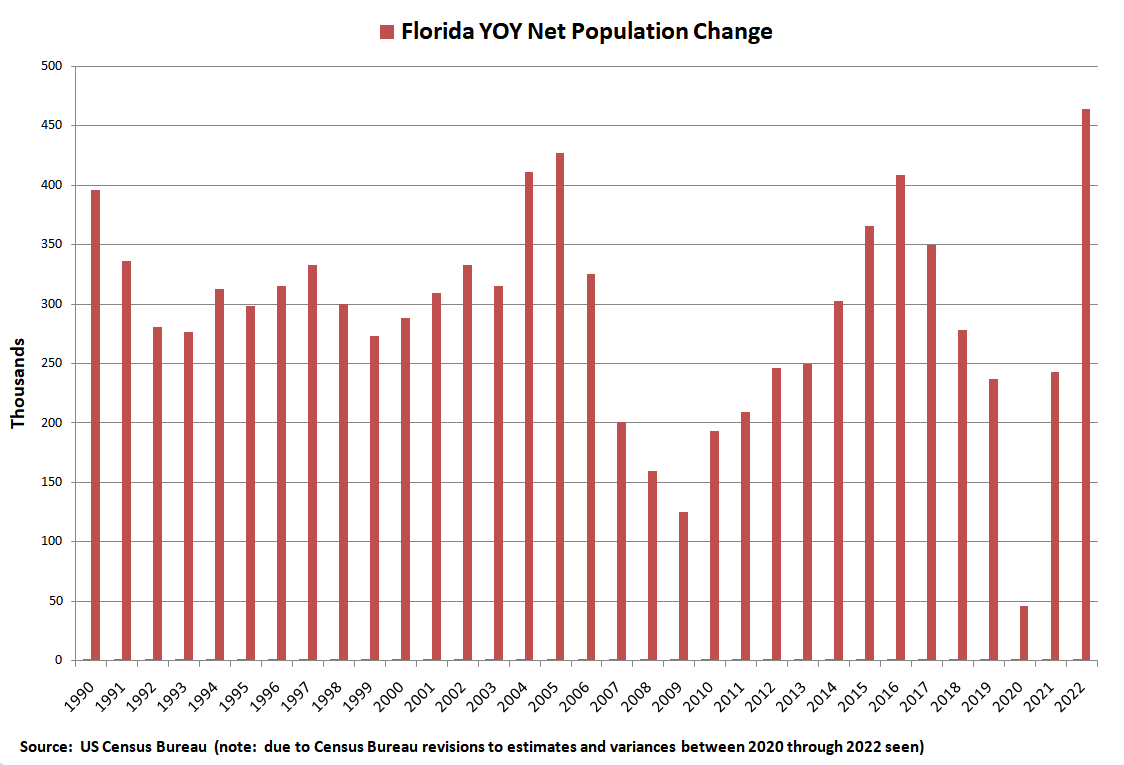
While headlines would lead one to believe that the state is being overwhelmed by the number of new residents flocking to Florida from other states, in reality, Florida has had one of the fastest growing populations for decades. In fact, 2020 had some of the lowest rates of net migration due to the outward international migration during Covid. Since 2000, the average annual net migration into Florida has been 281,000 new residents.
Affordability & A Rising Rate Environment:
Since April of 2019 to April of 2023, the median priced single family home that sold in Florida has risen from $259,4700 to $410,000. The impact of the rapid rise in home prices that was fueled by record low interest rates and tight supply on the market has had devastating impact on affordability.
In April of 2019, for a buyer to purchase a home with 20% down and obtain a 30 year fixed mortgage at the average rate according to Fannie Mae week ending 4/25/2019 (4.2%) would required a $52,000 down payment, the mortgage payment (just principle and interest) would have been $1,015. That same buyer in April of 2023 would need a $82,000 down payment and have a mortgage payment (6.43% as of 4/27/23 w/e) of $2,058, more than double the 2019 mortgage! This greatly reduces the pool of buyers who are able to qualify for financing and reduces demand.
In fact, an increasing amount of marketing effort is being focused on affordable home ownership programs that are intended to provide down payment grants and encourage low down payment financing through FHA. The Hometown Heroes program through the Florida Housing Finance Corporation, initially offered only to those in specified industries, was expanded in June of 2023 to all first time home buyers. The program while on its surface was well intended, encourages higher risk loans including 3.5% down FHA loans which historically have a higher incidence of foreclosure. The program highlights are:
Eligible full-time workforce, employed by a Florida-based employer can receive lower than market interest rates on an FHA, VA, RD, Fannie Mae or Freddie Mac first mortgage, reduced upfront fees, no origination points or discount points and down payment and closing cost assistance.
Borrowers can receive up to 5% of the first mortgage loan amount (maximum of $35,000) in down payment and closing cost assistance.
Down payment and closing cost assistance is available in the form of a 0%, non-amortizing, 30-year deferred second mortgage. This second mortgage becomes due and payable, in full, upon sale of the property, refinancing of the first mortgage, transfer of deed or if the homeowner no longer occupies the property as his/her primary residence. This loan is not forgivable.
And while much is said about the interest rate ‘handcuffs’ that will keep inventory suppressed due to sellers not wanting to give up their low interest rates, this also means fewer buyers in the market which equally suppresses demand. For every one less of these sellers, there’s one less buyer.
Rising Costs
The wealth effect that comes from increasing home values, that gain is only recognized when the asset is sold or refinanced to draw on the equity. In fact, for those with no intention of doing either, rising home values bring increasing costs and tends to have negative effects on most homeowners. In a state like Florida with a high percentage of second home owners, often on fixed incomes, the increasing costs are often a cause for selling.
Florida has faced significant challenges in the insurance markets which was already under duress to due to increasing litigation. According to Guy Fanker, the founder of Cre8futures LLC, a thought leader in the insurance industry, there were 107,585 lawsuits against insurers in Florida in 2021, 81.25% of the national share of loss-based litigation nationwide. Regulators placed 15 and eight insurers into receivership in ’21 and ’22, respectively. And, there are currently 11 property & casualty insurers currently in receivership. Even with new legislation passed in 2022 to tackle the issue, 15 home insurers have stopped writing new policies.
Combine the increased cost of litigation with surging replacement values, the insurers that remain have had no choice but to aggressively raise premiums and drop coverage for many homeowners. This has resulted in an ever increasing number of homeowners obtaining coverage through Citizens, the state run insurer of last resort or, opting to forego insurance all together.
But due to legislation passed last December, even Citizens holders are about to incur more costs as all Citizens policy holders will need to start carrying flood insurance, regardless of flood zone in the next couple years. As the state with the second most coastlines in the nation, and much of the development focused within a close proximity of it, flood insurance is a major factor in cost. With FEMA’s Risk Rating 2.0 now in effect, rates of new policies in flood zones and elevations most at risk, have seen flood insurance premiums skyrocket. The increases have been so steep even FEMA estimated in a 2022 internal memo that about 900,000 policyholders would drop their coverage, largely because of increased policy prices. And with recent changes to maps, some property owners or homes under construction have seen their flood zones change to higher risk rated zones.
And while permanent residents in Florida enjoy a Homestead exemption that caps the annual increase in property taxes to no more than 3 percent, for non Homestead owners have only a 10% cap which they are enduring consecutively.
Supply is on the Way
With record low levels of active listings and a business friendly climate, small and national builders alike have begun to flood the markets with new construction. Much of which though remains backlogged due to the tight materials market.
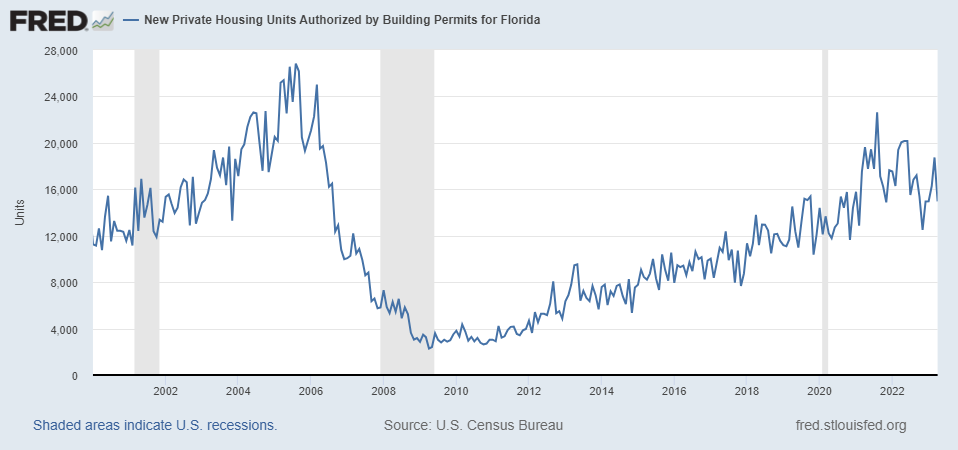
But inventory levels for active listings have already begun to recover from their lows and while we’ve seen inventory begin to dip again in 2023, according to data from FloridaRealtors®, year to date as of April 2023, new listings (109,806) exceeded new pending sales (102,527) indicating the drop in active listings is due to properties going off market due to the listings expiring or sellers cancelling or withdrawing listings.
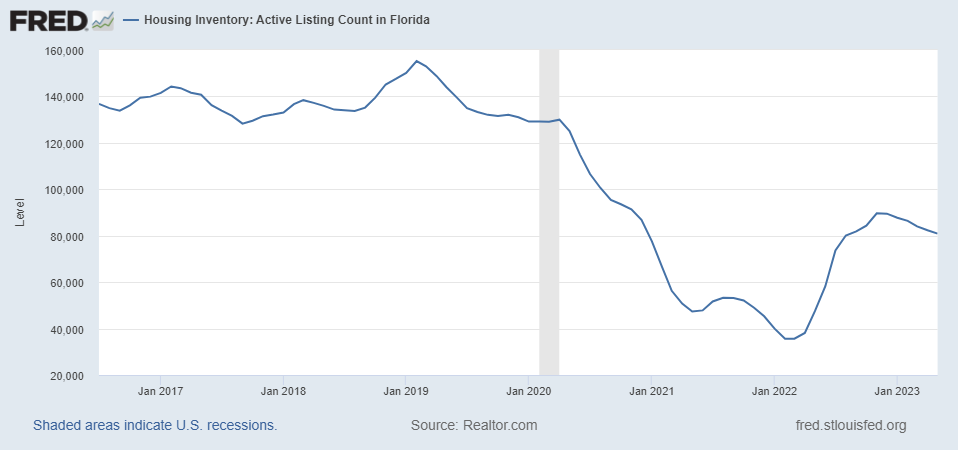
So where did the inventory go?
Investor Activiy:
With record low interest rates and quantitative easing, many investors flooded the real estate market seeking yield and many of these investors targeted our Southern State. Data analyzed by Redfin shows the significant surge in investor purchases seen since 2020 in our largest metropolitan markets.
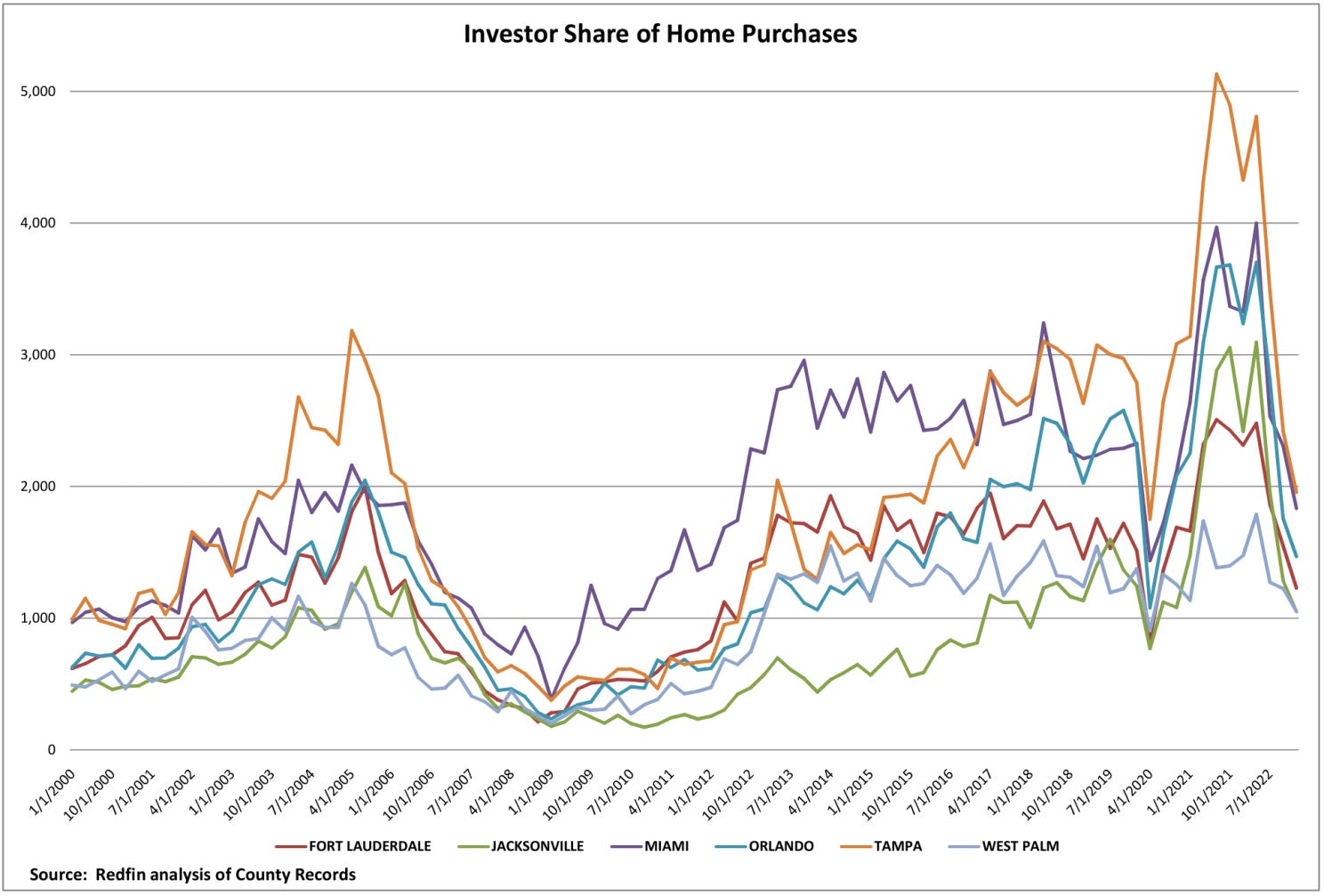
As the prevalence of corporate landlords and short term rental investors grew, the lines between residential and commercial lending were blurred. A popular loan product marketed to smaller borrowers has been a form of investor loan which requires no tax returns and using projected rental income to qualify.
But commercial lending wasn’t limited to the small ‘mom & pop’ vacation rental borrower. Large corporate landlords have packaged large portfolios of single family homes used as long term rentals in to mortgage back securities. And as the prices escalated, the terms of these loans appeared riskier and riskier reaching loan to value as high as 99.5%.
Take for example the following mortgage that represented a portfolio of single family rental homes taken out in June of 2022. While the properties were acquired in multiple states, I was able to verify the properties on the list in my county were purchased in the prior year after the surge in prices.
Source: Mortgage Filing in County Records in the State of Florida
And with publicly traded corporate landlords like Invitation Homes and American Homes for Rent now being net sellers of single family homes, could riskier loans of residential homes pose the risk of large supplies of inventory coming to market if vacancies begin to rise?
With Covid Related Programs Expiring, Downward Pressure is Being Applied to Rents
Little attention has been paid to the Treasury’s Emergency Rental Assistance program but over $46 billion in payment assistance has been offered since 2020 that kept tenants in homes and paying rents at rates they could otherwise not afford. While detailed data is hard to find, the largest benefactor was likely the corporate landlords who provided assistance in helping obtain benefits. And in Florida alone, more than $1.5 billion dollars in benefits received.
The results of tight supply and stimulus programs that boost tenants’ ability to pay led to surging rental rates. According to Florida Today, a study that examined 107 rental markets released in June of 2022 found that 10 of the 14 most overvalued rental markets in the country are in Florida.
Market
Percent Overvalued
Avg Monthly Rent
Miami-Fort Lauderdale-West Palm Beach
22.07%
$2,846
North Port-Sarasota-Bradenton
18.68%
$2,331
Fort Myers
18.09%
$2,073
Tampa
16.91%
$2,055
Port St. Lucie
16.01%
$2,266
Lakeland
15.17%
$1,808
Daytona Beach
14.15%
$1,788
Jacksonville
13.49%
$1,748
Orlando
13.48%
$1,999
Melbourne
13.04%
$1,881
(source: Florida Today)
As of March 2023, U.S. student loan debt totals $1.78 trillion. Of the 45 million Americans that have federal student loan debt, 26.6 million are currently in forbearance, more than 100x the number in forbearance as of December 2019 when it was only 2.6 million. That’s 59% of a collective group that that have foregone debt repayment on more than $1.5 trillion in debt, effectively increasing their disposable income for potentially more than three years. (Sources: https://www.usa.gov/financial-aid)
According to a 2022 study by the Joint Center for Housing Studies of Harvard University, the distribution of renter households is primarily concentrated among 25-39 year olds who also make up a disproportionate share of the renter households. Now with rental assistance programs ending, student loan payments resuming, will we begin to see households consolidating to split the rents? Or as this age group of adults begin to couple up to start families and move in together will we see a reversal of the household formation of the past couple years?
A recent Redfin article with the headline, “Rent Prices Flattened in April as Landlords Faced Rising Vacancies” acknowledged that an increasing supply of new rentals and economic uncertainty is leading to a cooling in rental prices. With downward pressure on rents, vacancies increasing, the significant presence of corporate landlords in Florida could become a potential source of surges in inventory as investors see values fall or as overleveraged operators fail.
Condo Legislation
After the tragedy that occurred in the summer of 2021 with the collapse of the Champaign Tower in Surfside, state legislators passed a new law that modifies certain rights and duties of condo associations across the State of Florida. The legislation is focused on preventative maintenance, inspections, and maintaining reserve funds. The new legislation will mandate certain milestone studies and mandate fully funding the reserves of a building for future capital improvements. While the new legislation is taking effect over the next couple years, it will expose financial vulnerabilities of many properties and could result in an increased amount of condominium inventory coming to market & presents the risk of falling values.
The Risks Posed by High Rates of Second Home Ownership
According to NAHB estimates, as of 2020, Florida has the largest stock of second homes was Florida (1.04 million), accounting for 10.8% of all second homes. It’s safe to assume that number has only increased since. As costs rise, second homeowners don’t have the interest rate handcuffs that might keep primary homeowners tied to their existing home. Rising costs are often justification for selling. Additionally, with an aging demographic, the justification is much greater as widowed property owners choose to stay closer to family.
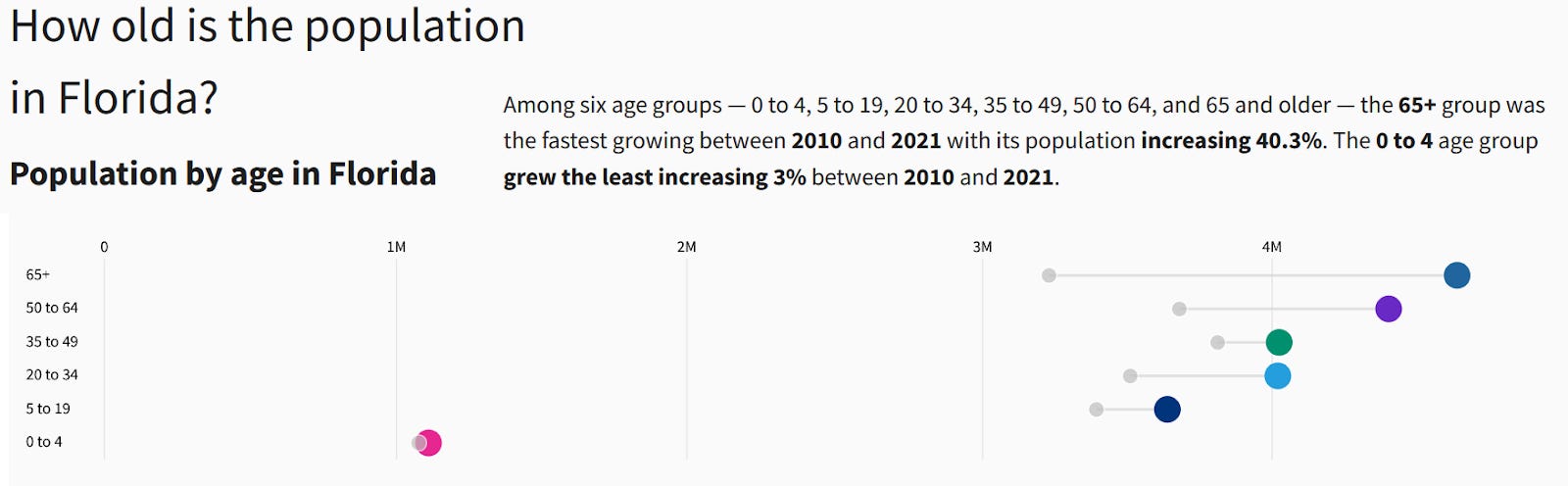
And while the retiree market has traditionally dominated the second home market, since Covid, remote work demand has also driven the second or investment home demand but that data is hard to quantify.
A survey of 3,000 managers polled by beautiful.ai said It is “likely” and/or “extremely likely” that remote workers will be laid off first, according to a majority (60%) beautiful.ai,. With return to office initiatives in place and increasing risk of a recession and layoffs in the near future, will Florida see an outward migration from some primary residents and those that bought a second home?
Is It Really Different This Time?
I still remember in the mid-2000s the story in Florida was the tremendous number of homes we would need to satisfy the demand from the baby boomers looking for retirement homes. The end result was a glut of vacant homes that took five years of declining prices to absorb and wreaked havoc to our economy. But this time, we’re told it’s different. But as it’s been said, while history may not repeat itself, it often rhymes.
While active available inventory remains below pre-Covid levels and sales dollar volume is still historically high, year over year data is showing lower transaction volume, longer days on market, and multiple sources of potential inventory in the coming future. Data is indicating a continued reversal of the trends that drove home price appreciation in recent years as affordability strains both prospective buyers and current residents alike.