November Employment Data Comes in Warmer than Aspen Temperatures (@DonMiami3, MacroEdge Chief Economist)
Happy Sunday evening everyone & it is almost time for the holidays!
What we’re watching for closely continues to be the labor market data and the labor market (on the surface level proved to be resilient) - adding 199K on the headline numbers for November. Under the surface, however, our November update for the MacroEdge Cyclical Leading Employment Index (CLEI) contracted further with the latest revisions in November and October - down below 99 on the index with the lowest print for this cycle. We saw continued contraction in the HR, temp hires, and retail sectors - while the four other elements in November saw employment growth (technology - slight, manufacturing, construction, and hospitality). December may see a smaller headline job growth number than November given the shorter work month, time off, and persistence of holiday shutdowns in HR departments in the United States.
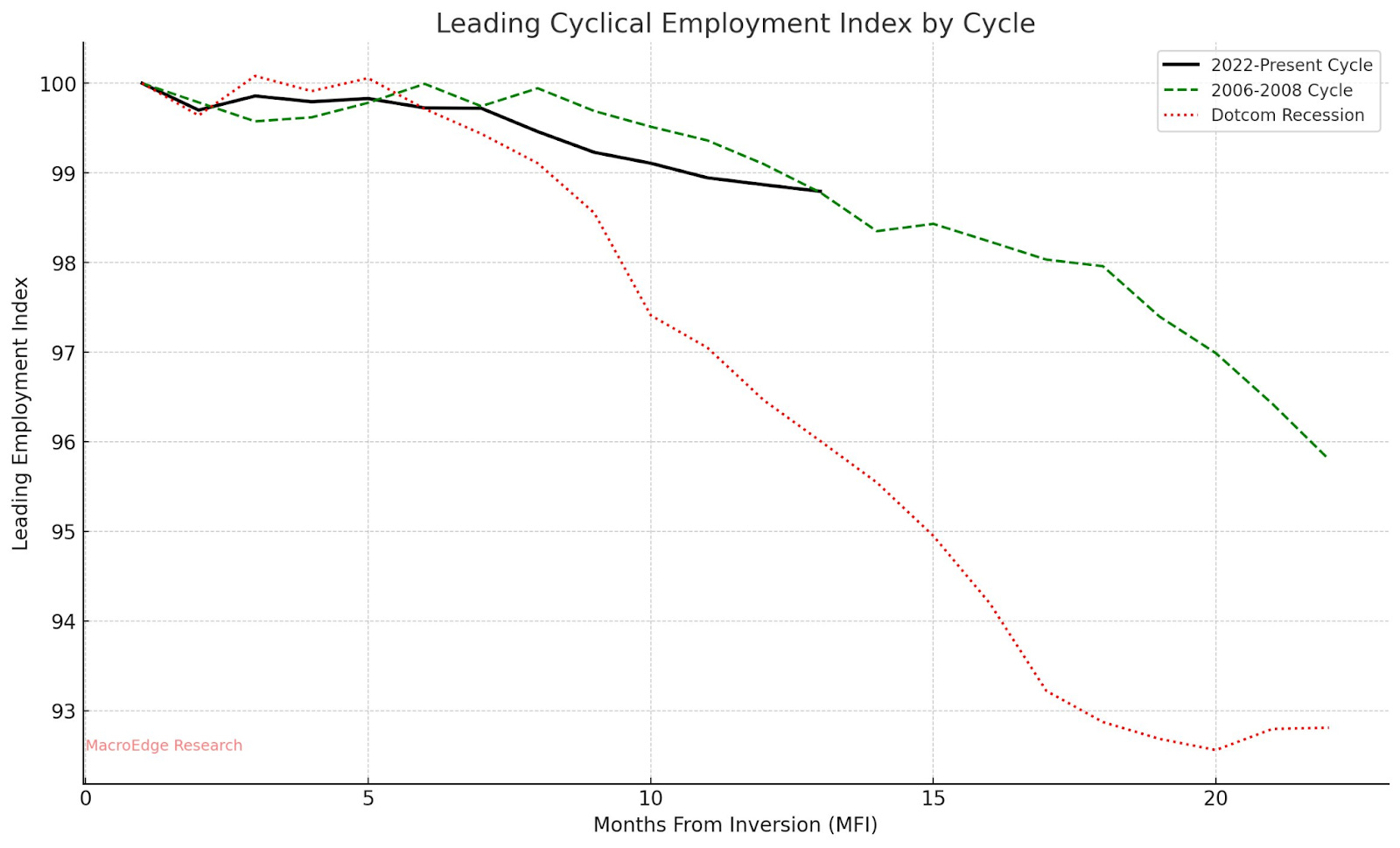
December job cuts have slowed down substantially from November….
Full article included in this week’s MacroEdge Weekly Report only available at MacroEdge.net.

A Non-recovery (@SquirtLagurtski, MacroEdge Contributor)
On December 1st the Institute of Supply Management released the November Manufacturing PMI (purchasing managers index) which marked the thirteenth consecutive month of declines for the sector. Furthermore, the share of sector GDP registering a composite PMI at or below 45% was 54% in November (meaning a larger portion of the sector is contracting to just over half), compared to 35% in October and just 6% in September. Three of the top industries…
Full article included in this week’s MacroEdge Weekly Report only available at MacroEdge.net.
Economic Insights: Lower Job Revisions & Fooling Demos, Echoes of 'Last Christmas (@GregCrennan, MacroEdge Contributor)
The festive season is upon us, and while the November jobs report may seem like a cause for celebration, there's a need to go beyond the surface cheer and uncover the potential tears that lie beneath. As we unwrap the layers of economic data, we find ourselves navigating through a landscape where promises may be as fleeting as those made in the classic Wham! hit, "Last Christmas."
Investor Deception: The Google Gemini Dilemma
In the world of corporate giants, Google stands as a shining star. However, recent revelations about their Gemini AI project serve as a stark reminder to investors to exercise caution. The captivating demo, akin to a holiday romance, may not reflect the true state of affairs. Instead of showcasing current capabilities, it paints a picture of aspirations. Investors might now echo Wham!'s lyrics, "Now I know what a fool I've been." It might be prudent for investors to keep their distance until the promises materialize into reality.

Investing in AI: Learning from Wham!'s Lessons
The parallels between the 2000 Internet bubble and today’s Tech AI bubble and the lyrics of "Last Christmas" are undeniable. Investors find themselves in a familiar predicament, having committed resources based on captivating demos across the industry, only to realize that the actual capabilities of AI are yet to match the presented visions. It's a lesson to approach investment in the tech sector with the same caution one would apply to matters of the heart.
Unveiling the Economic Reality: A Less Rosy Picture
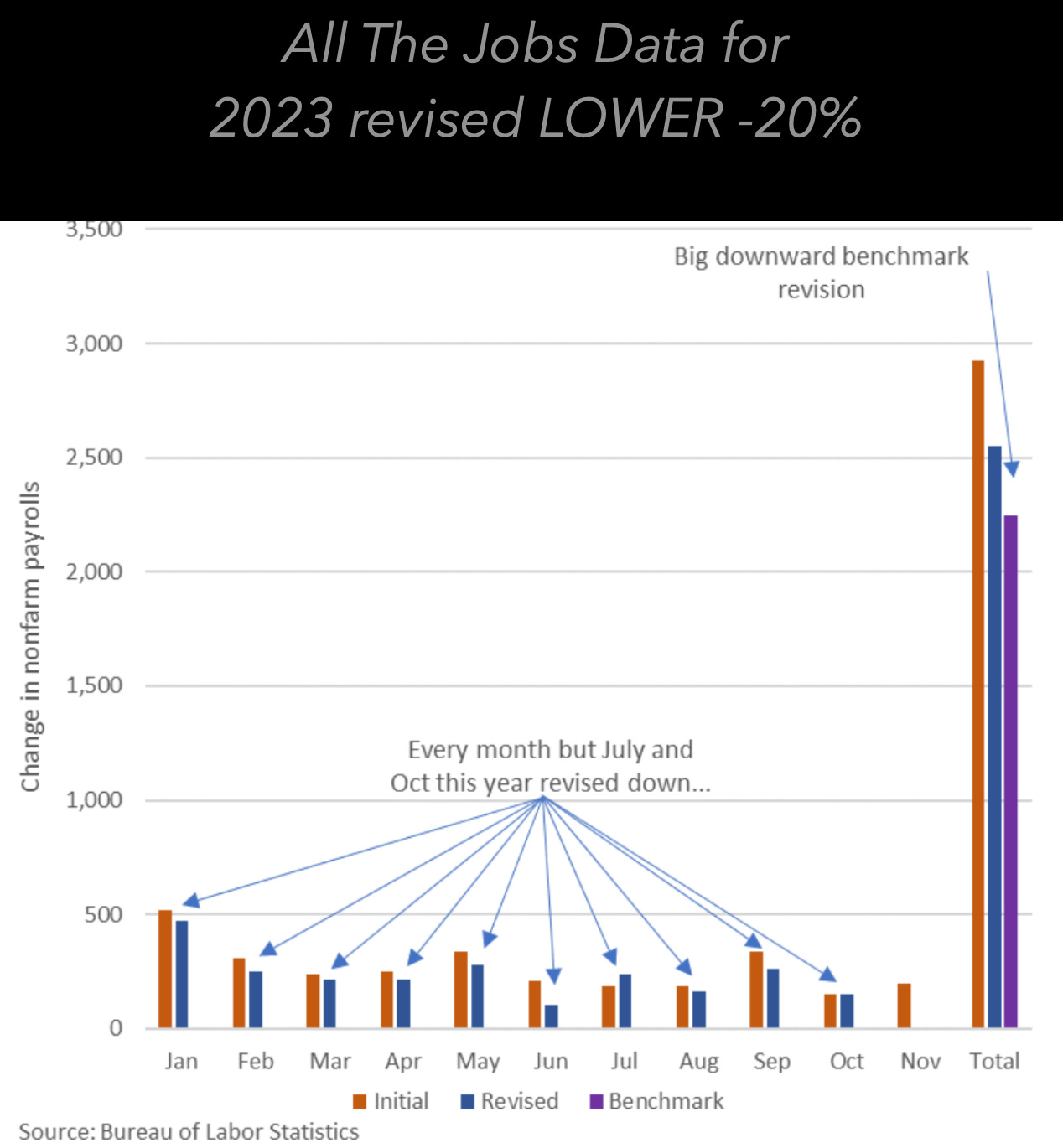
Beyond the glamour of tech giants, the broader economic landscape presents its own challenges. Recent revisions to the job growth figures reveal a reality 20% less jobs created than initially reported for 2023. This discrepancy mirrors the sentiments of "Last Christmas" - we thought we were adding jobs to the economy, only to realize that the very next day, we gave it away.
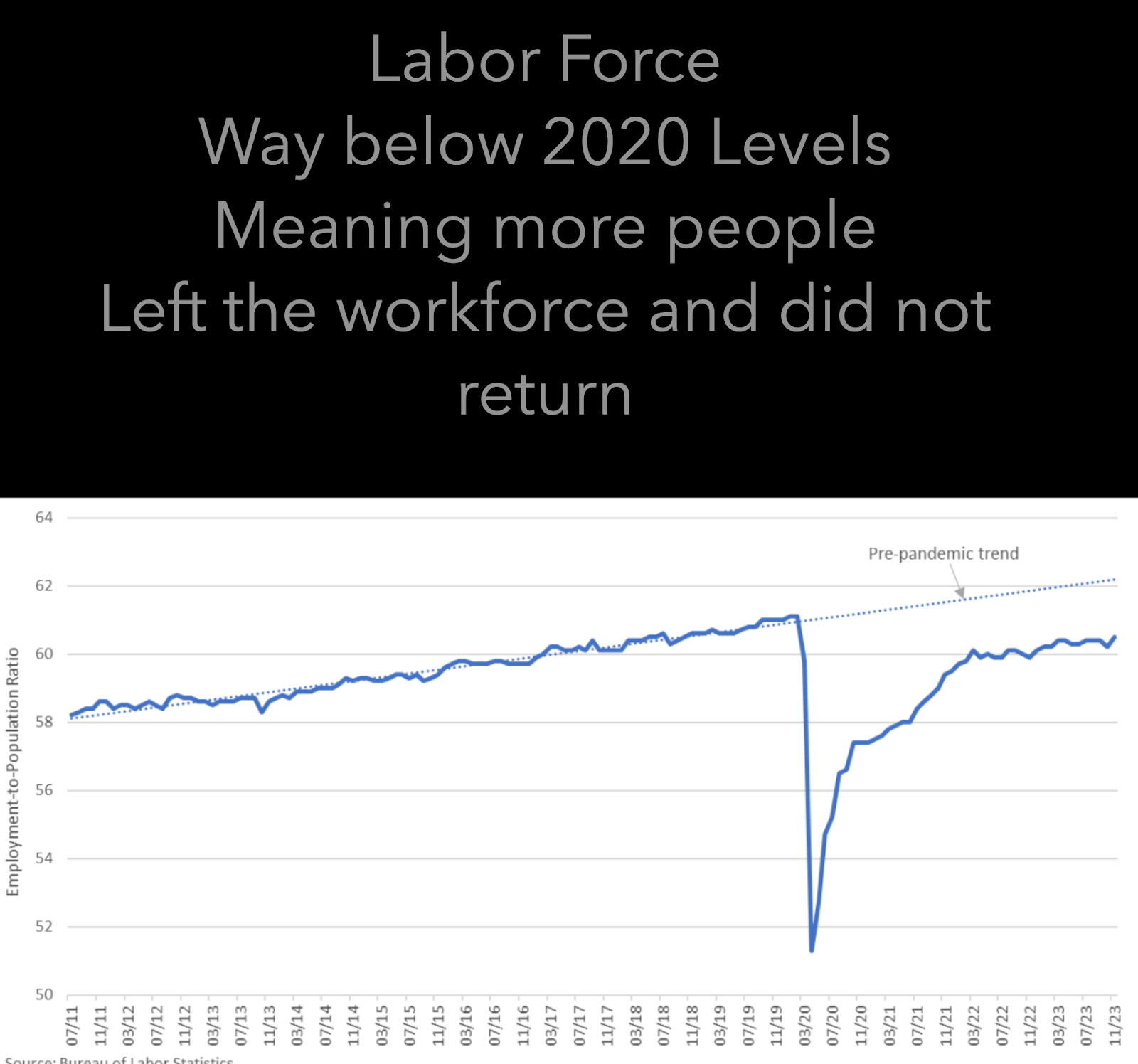
Labor Participation Still Lags 2020 Levels
Despite the touted recovery, labor participation struggles to regain 2020 levels. Unemployment rates may be celebrated by removing those who stopped looking for work at 3.7%, but the true measure, including those who've dropped out of the labor force, stands at 7%. A concerning trend affecting over 11 million Americans this Christmas season.
Conclusion: Navigating the Economic Landscape with Caution
As we navigate this economic landscape, let's learn from the lessons of the jobs report and investment pitfalls of the past. This holiday season, let's reflect on the importance of due diligence, transparency, and cautious optimism.
Wishing you a thoughtful and prosperous holiday season, and as Wham! wisely suggests, "share it with someone special!"