

California Employment Update (@DonMiami3)
Hope you all had another great weekend. Cannot believe we are staring down the barrel of Thanksgiving. I enjoyed the Formula 1 Las Vegas weekend madness and am now looking forward to the holiday winding down into Christmas and New Year's.
As we progress through November - we’ve continued to see a steady stream of job cut announcements, although the true # of job cuts has been far fewer than in October (more than likely due to the UAW job cut announcements rolling off and the UAW rehiring). I anticipate that we may see some pick up in the # of absolute companies announcing job cuts in December - although I think it would be a stretch to think the # of job cuts will exceed this month's or October’s total:
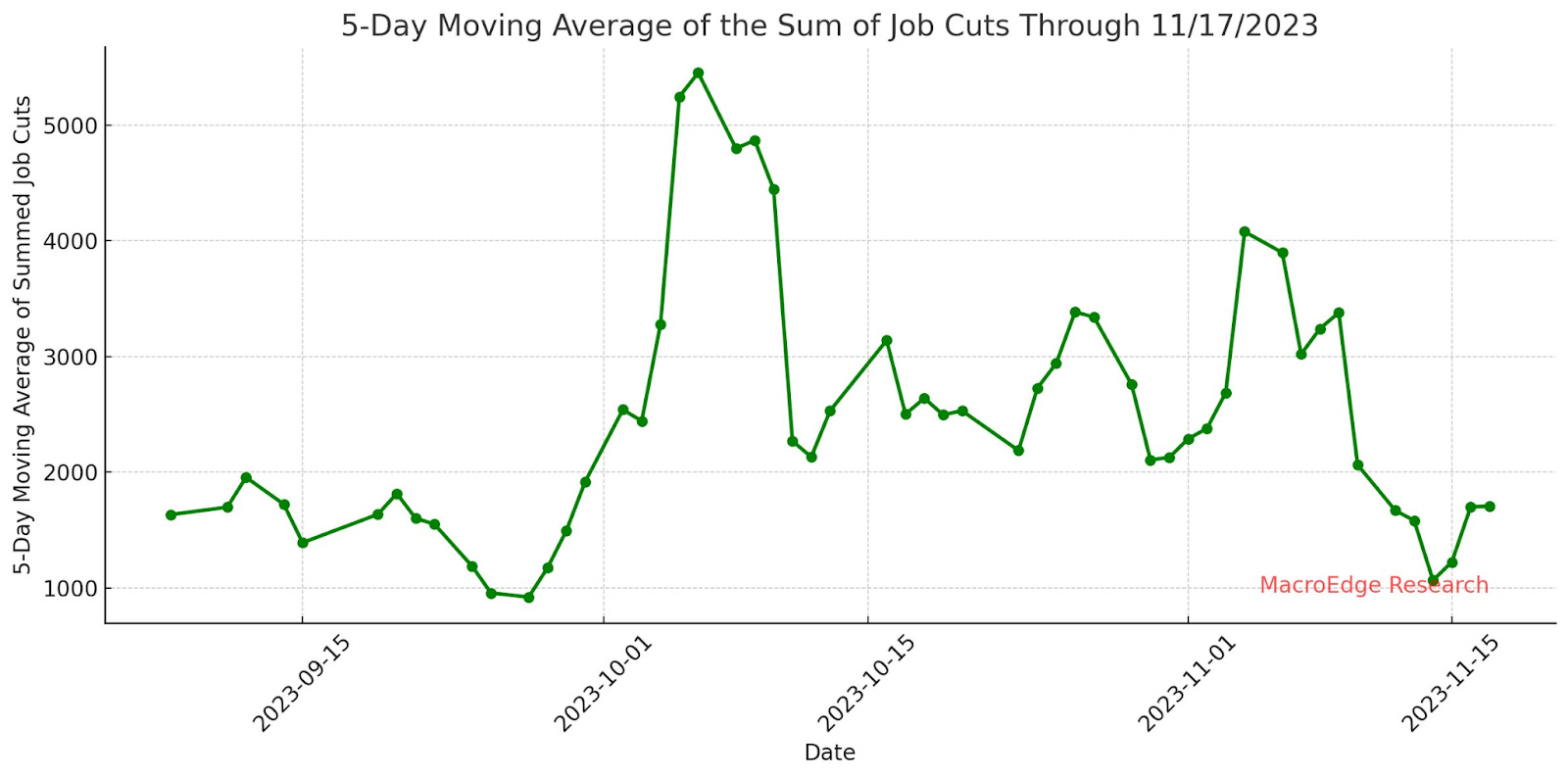
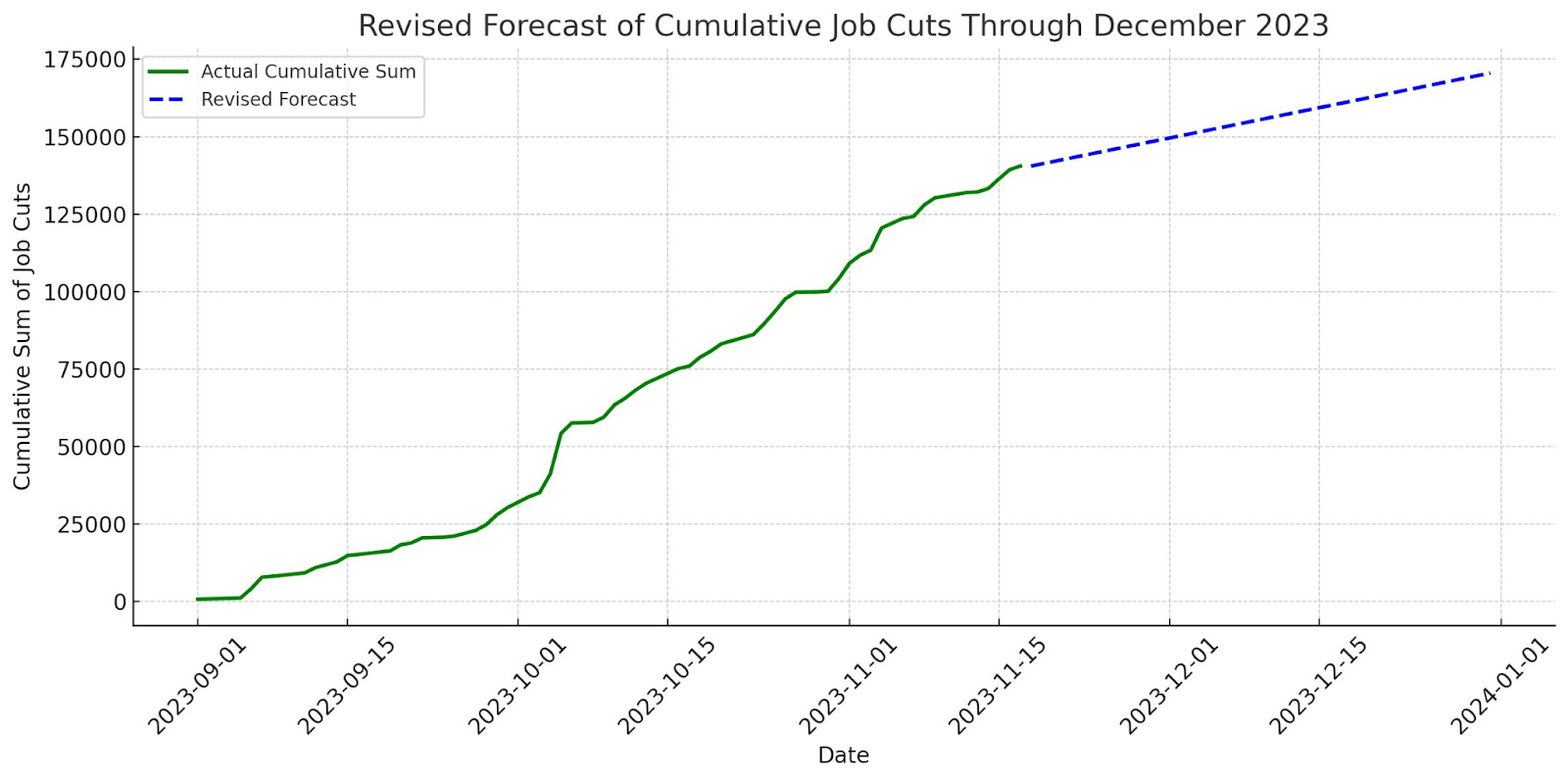
Here is the 5-day moving average of our job cuts tracker. Note the sharp drop in job cuts towards the end of the month. The story of the market continues to be one of a ‘soft landing’ regarding the labor market. Investors are still more than confident that the Fed will continue to be able to see a lack of job cuts that keep the economy at maximum employment… Here’s the current forecasted trend for job cuts through December:
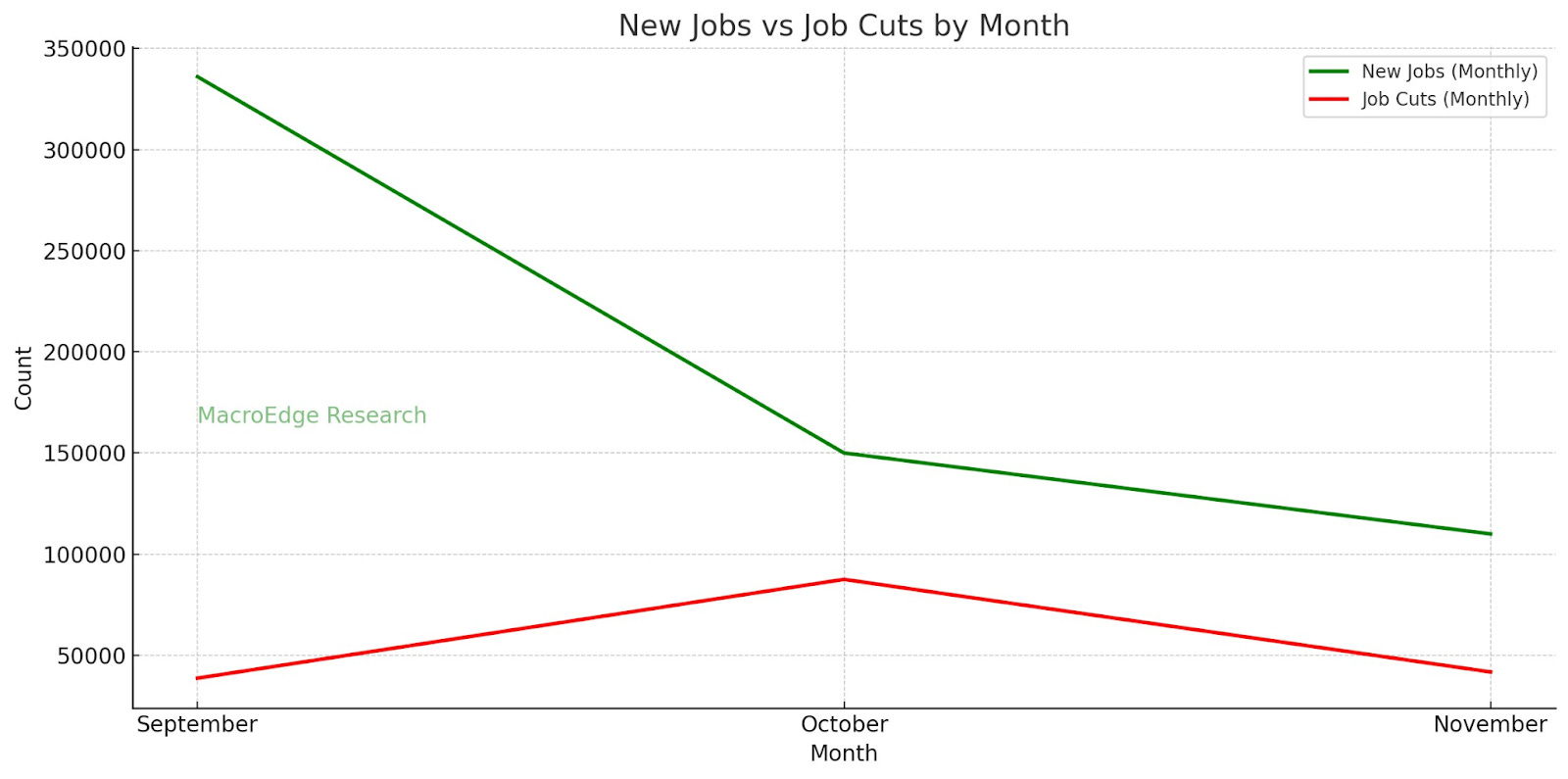
Our warning sign for the labor market would be when job cuts > job growth, this does not remain the case. Note that this figure is utilizing the TEForecast for expected November job adds (110,000), and this figure may be lower or higher. With just 6 workdays left for the month now, we anticipate that job cuts will probably finish somewhere in the 45,000-55,000 come to the final release in early December. Unless job growth comes in below that, there’s still little concern about cuts outpacing growth. Here’s the trend visualized for the last 3 months:
We’ve seen continuing claims continue to spike higher as BLS seasonality has kicked in, boosting the number to its highest level in nearly two years:
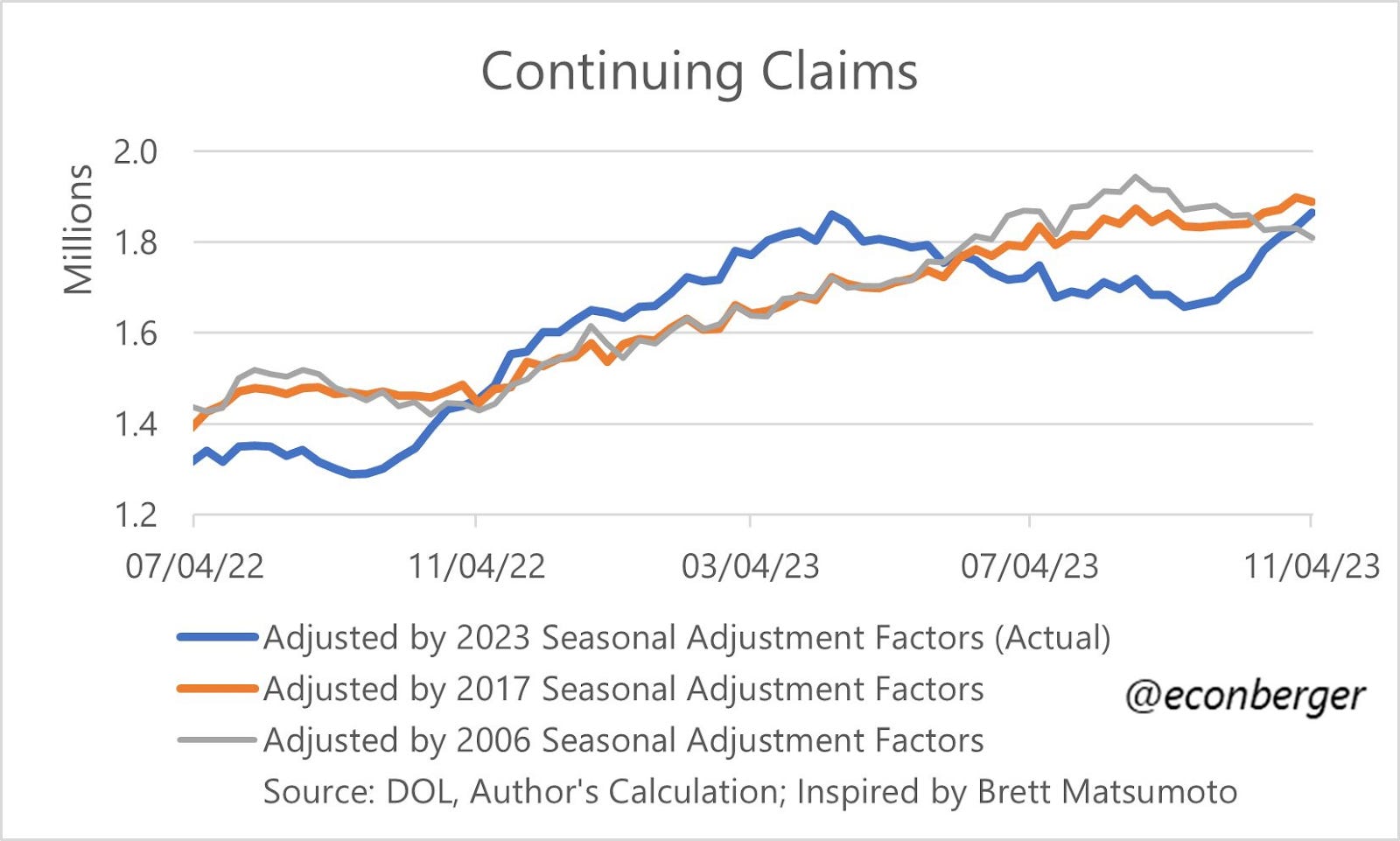
What’s fascinating about the BLS figure is that using the same methodology regarding seasonal adjustments from the pre-GFC era, claims would be trending downward, instead of their current upward trend.
Here are a few charts I continue to watch on California for potential warning signals as well… thus far the only one that continues to be concerning is the rise in unemployment (up 10 bps to 4.8% last month, from 4.7% in the month prior). Job growth continues to outpace every modern cycle and tech employment also expanded in October (pre-revision).
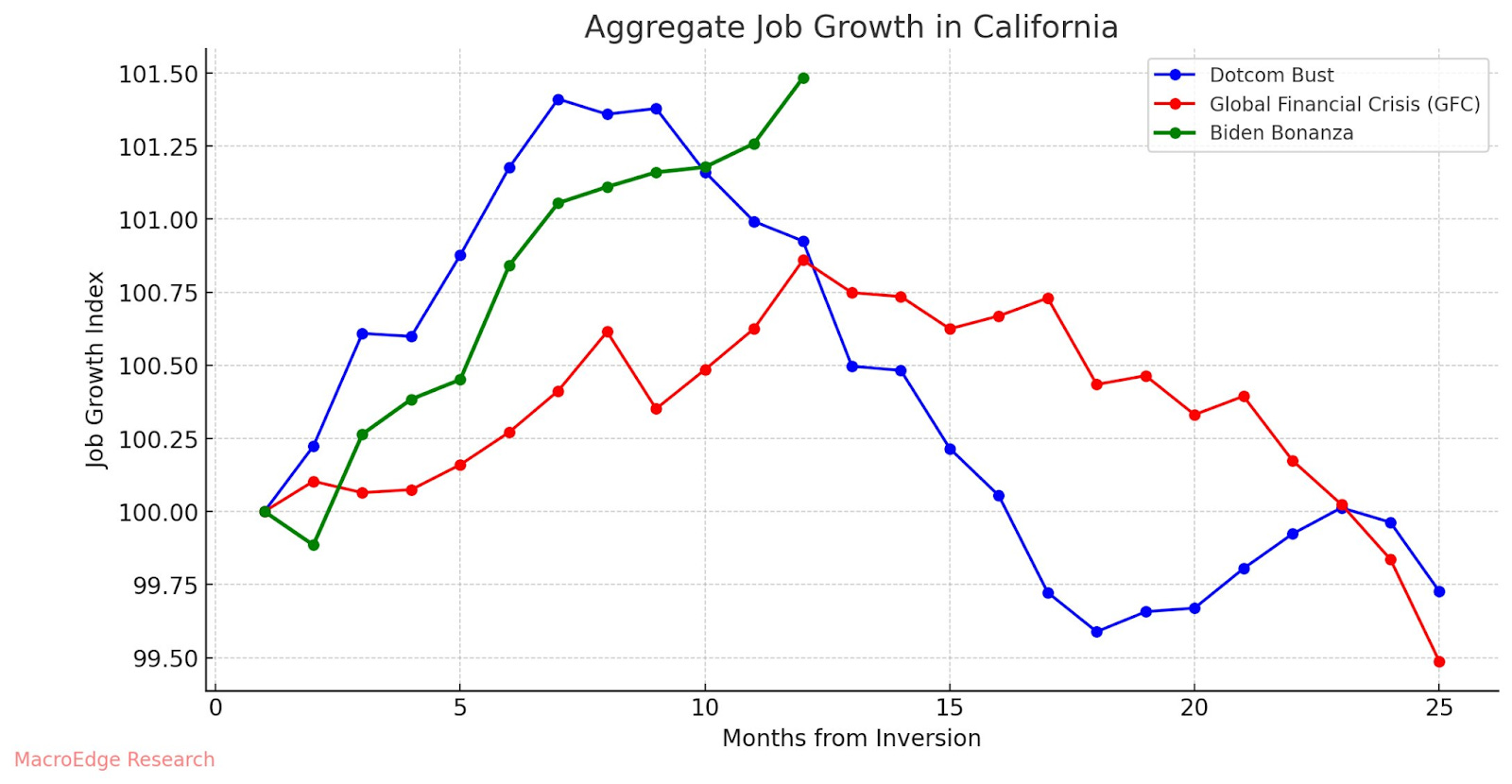
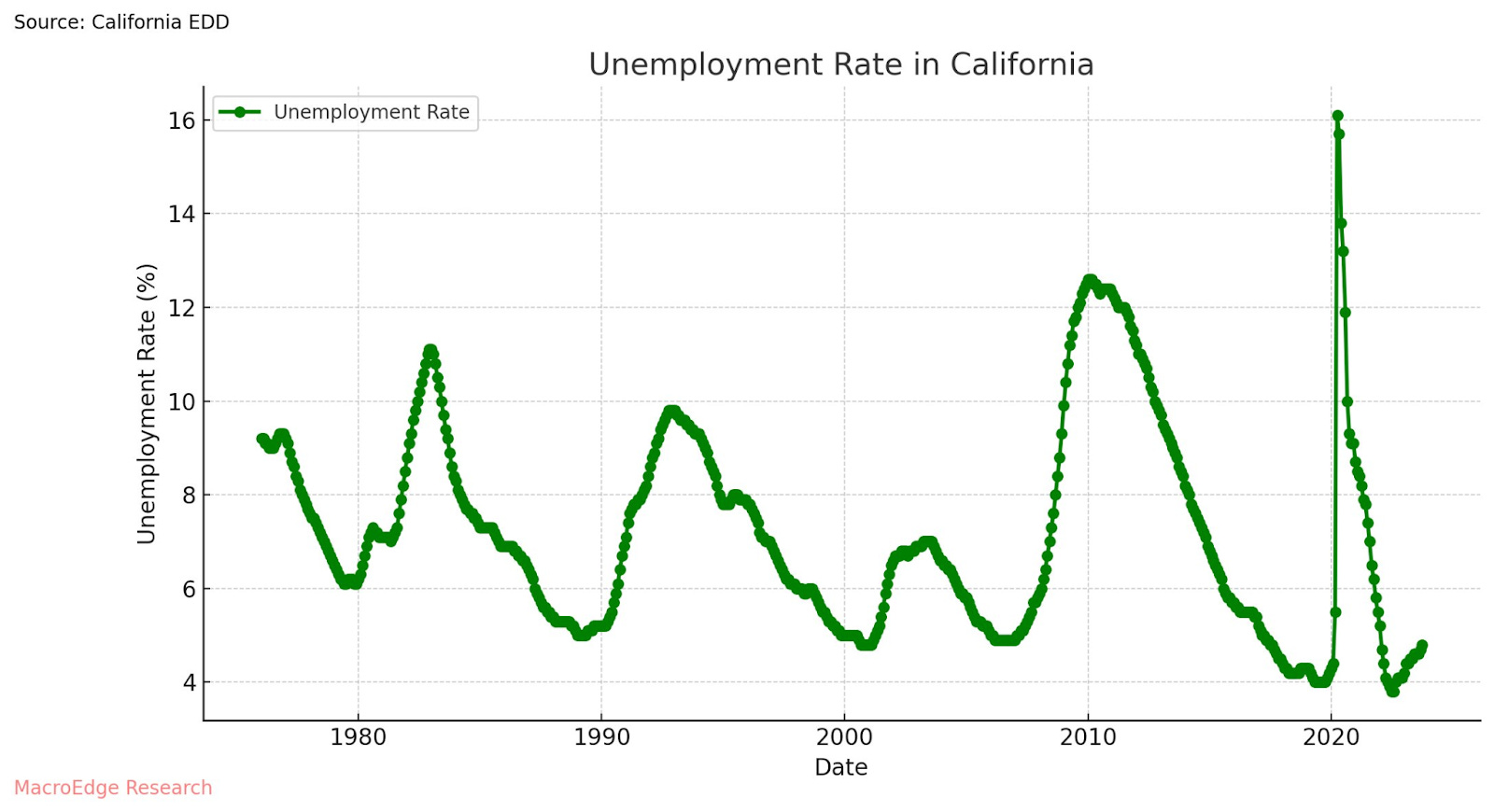
Unemployment (above) does not look like a soft landing and has risen more than in 1994 when there was a soft landing… Maybe more like 1980?
Jobless claims also fell in California to the lowest level since late 2022:
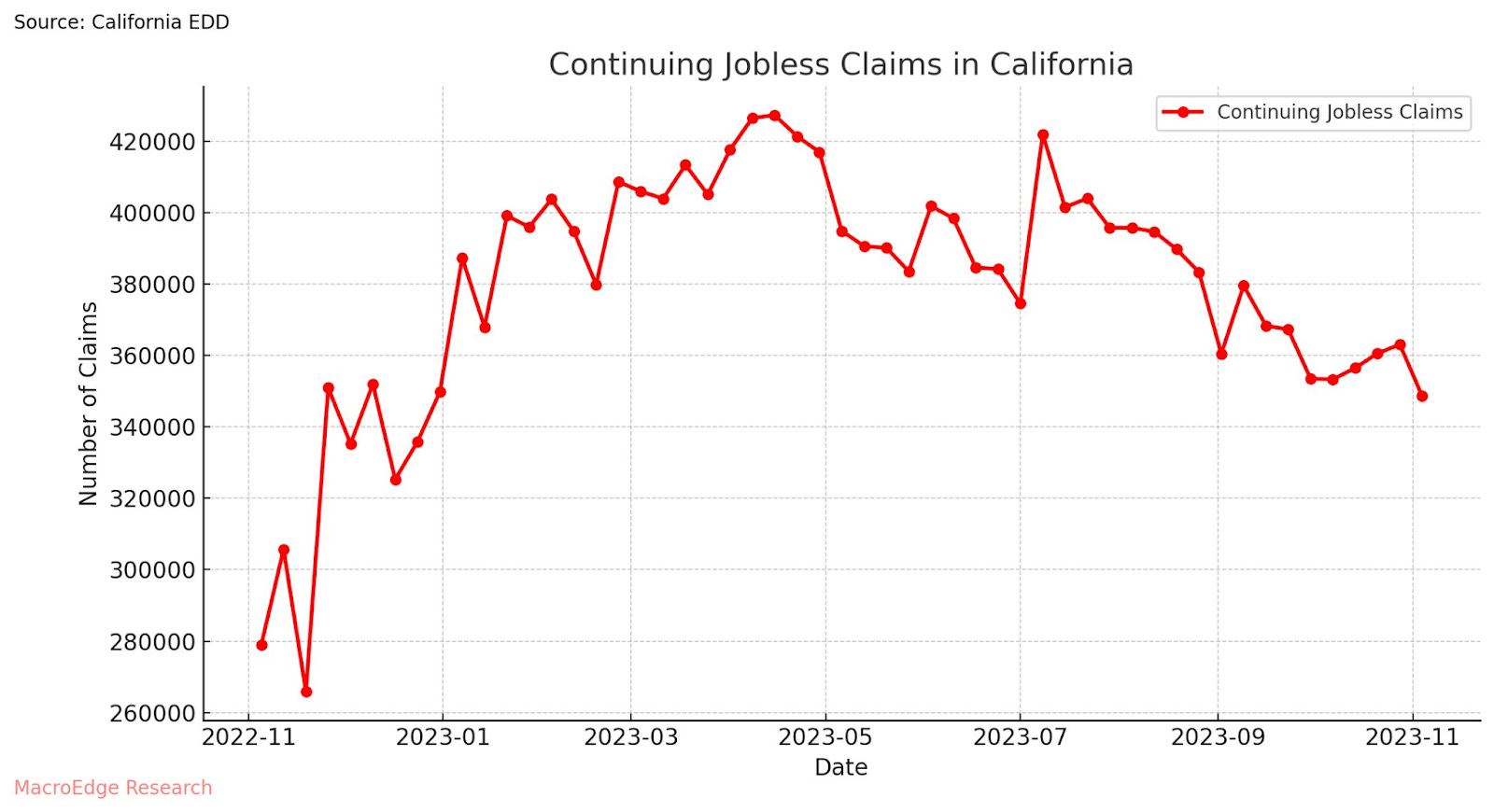
For now, we’ll continue to watch and focus on all of the labor data since that’s what I feel will control sentiment/markets/economy going forward and I will be particularly paying closer attention to any more signs that the Golden States labor markets might be losing their ‘shine’.
Weathering the Economic Storm: The Ripple Effect of Restaurant Industry Bankruptcies (@DedKatBouns)
In the dynamic world of global economies, the restaurant industry stands as a sensitive barometer of fiscal health and consumer confidence. Recent waves of high-profile bankruptcies have swept through the industry, each unfolding a tale of financial hardship and operational challenges. These developments offer a compelling glimpse into the intricate interplay between economic forces and business viability.
Decoding the Bankruptcies: A Symptom of Deeper Economic Malaise
The downfall of SouthRock Capital, a Brazilian operator of Subway and Starbucks, serves as a stark reminder of the global impact of macroeconomic shifts, particularly inflation and rising interest rates, on large-scale food and beverage operations. Their debt of 1.8 billion Brazilian Real ($370 million USD) highlights the vulnerabilities of businesses in the face of these economic headwinds.
Similarly, the bankruptcy of Premier Kings, a Burger King franchisee, underscores the challenge of adapting to a rapidly evolving market. Amidst substantial losses, Premier Kings' struggles reflect systemic issues within the fast-food franchise model, emphasizing the need for operational agility and adaptability.
In the realms of niche markets, Clover Food Lab and Icebox Cafe faced bankruptcy due to a combination of low sales, high rents, and aggressive lending practices. Their struggles illustrate the financial vulnerabilities of specialized food businesses and the importance of adaptable business models.
Even well-established brands have not been immune to the economic turbulence. The bankruptcies of Denny's, Popeyes, and Wendy's franchisees highlight the challenges exacerbated by the pandemic, including leadership changes and broader struggles within the fast-food segment.
Furthermore, the bankruptcies of Green District and Corner Bakery demonstrate the difficulties of managing expansion amid high interest rates and catering to specific market segments, like office workers and commuters.
The Hardee's franchisee, Summit Restaurant Holdings, serves as a reminder that financial struggles can pervade even diversified restaurant entities.
The Consumer Behavior Factor: A Pivotal Influence
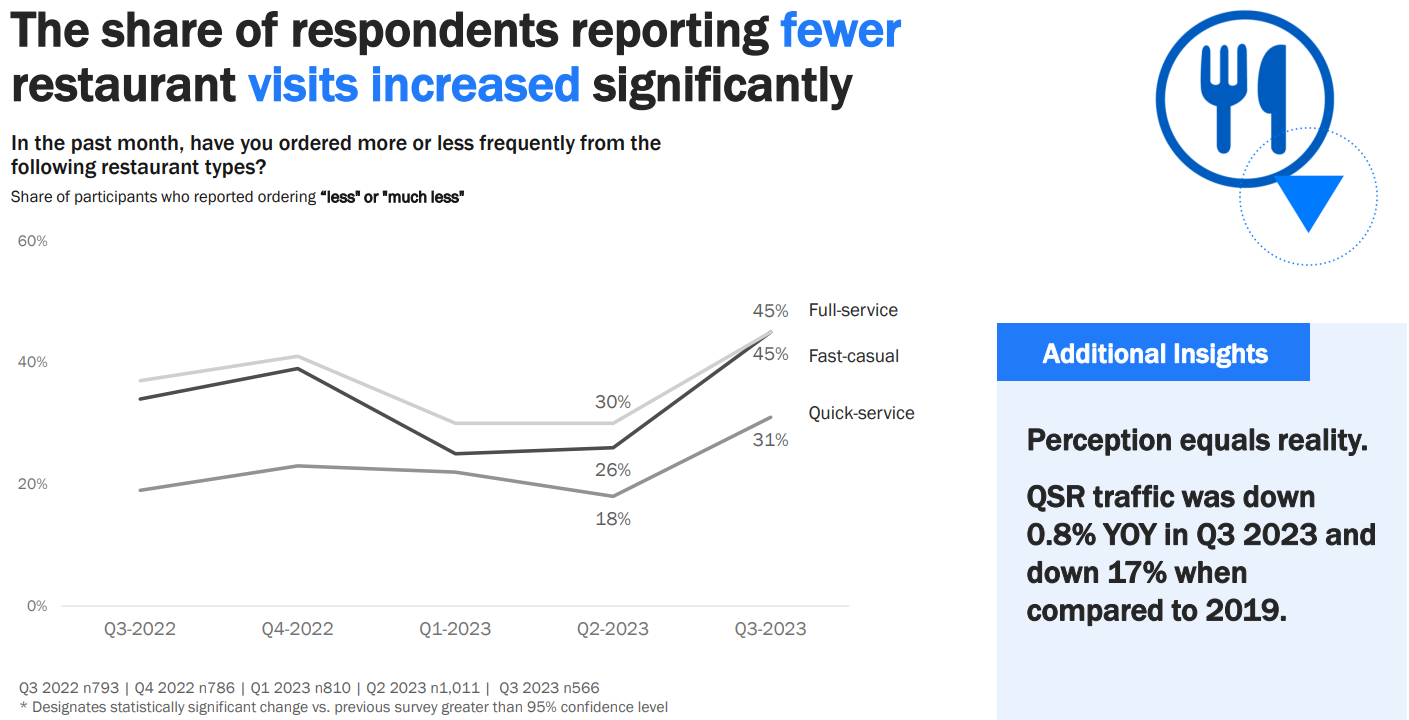
A significant portion of the population is reducing restaurant expenditure, according to the "Restaurant Consumer Insights Q3 2023" report. This shift in consumer spending patterns, crucial to the financial stability of the industry, has been driven by various factors, including economic uncertainty and concerns about rising prices. The industry's response to increased operational costs, through price hikes, has created a challenging balance between financial sustainability and customer value perception. While price increases are necessary to maintain profitability, they can also lead to a decline in customer visits
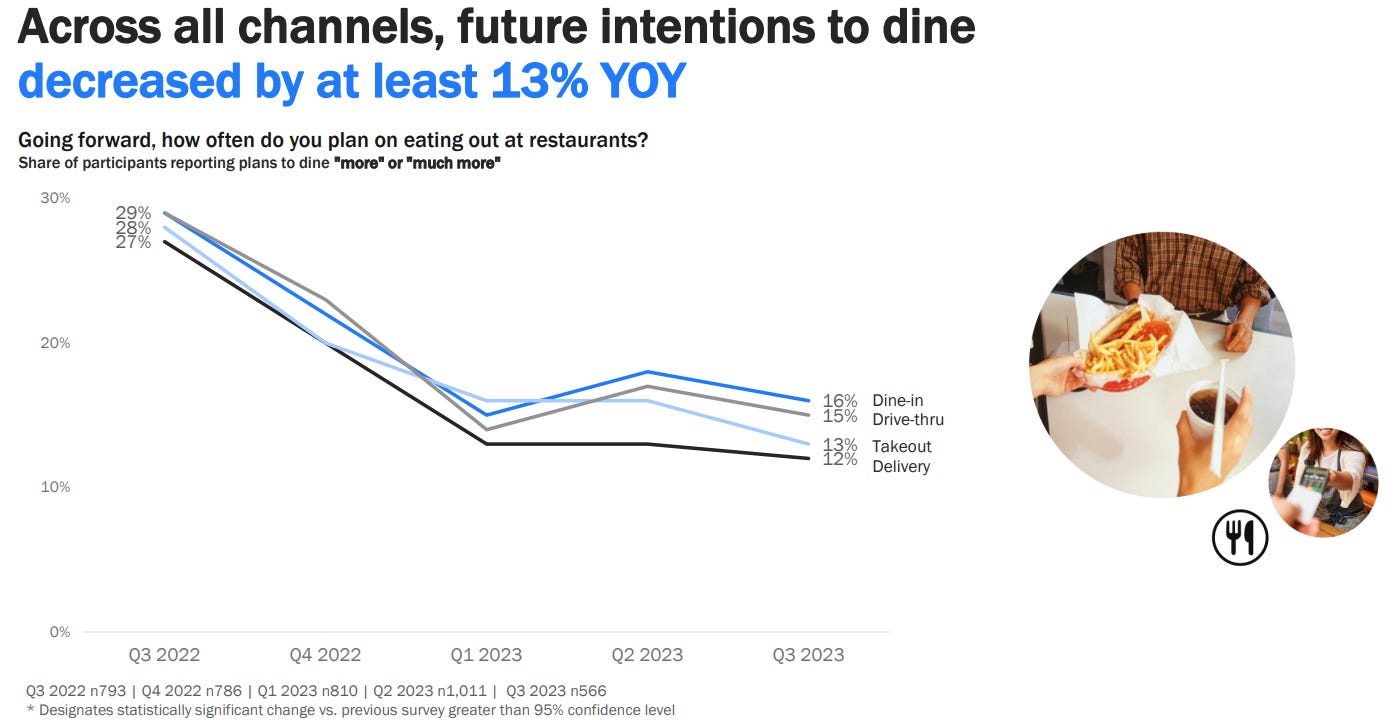
.
Downstream Economic Impacts: A Far-Reaching Ripple Effect
The bankruptcies in the restaurant industry extend far beyond the individual companies, creating a domino effect that impacts employees, suppliers, landlords, and local economies. As banks become more selective amidst economic uncertainty, restaurants find it increasingly difficult to secure financing for operations and expansion, limiting recovery and growth prospects. Vacant restaurant spaces can lead to decreased property values and rental incomes, affecting local and regional economies.
A Tougher Lending Market
The operating environment for the restaurant industry has been challenging in recent years, with many brands entering the pandemic with financial difficulties, including poor operations and excessive debt burdens. During this period, lending standards within the industry have noticeably tightened. Banks have become more discerning about lending, and the cost of borrowing has surged alongside rising interest rates. One notable example of this changing lending landscape is Raising Cane's Restaurants LLC. The fast-food chain has sought to borrow $500 million to pay down part of a $1.2 billion credit facility from the junk-bond market to address its upcoming maturities. The initial price talk on the senior unsecured notes indicates a yield in the high 9% to 10% range, reflecting the increased cost of borrowing in today's economic climate.
Quality Prevails in Today's M&A Landscape
In recent years, the M&A market has cooled, impacted by high interest rates and narrowing margins. This led to a more selective approach from private equity firms and lenders alike. Many franchisees faced challenges in selling their restaurants, exemplified by Pollo Tropical's two-year search for a buyer, which ended with a minimal premium on its stock price. However, the market for high-quality acquisitions remains active.
Navigating the Turbulence: Charting a Course for Sustainable Growth
The current wave of bankruptcies in the restaurant industry serves as a stark reminder of the sector's sensitivity to economic shifts and changing consumer trends. These developments underscore the need for adaptability, strategic foresight, and financial prudence in navigating today's complex economic landscape. The industry's future success hinges on its ability to balance operational efficiencies with evolving market demands. For economists, business leaders, and industry stakeholders, understanding these dynamics is crucial in charting a sustainable path forward.